Shipping or processing?
A container sold for external shipping and storage should not be counted as an in-fab process carrier merely because both handle wafers.
Electronics & Semiconductor
Wafer activity, equipment investment and container purchases move on different clocks. Follow the product to understand the demand.

The demand connection
A shipment is an activity; a container is an asset. Trace the usable pool before converting wafer movements into purchases.
A circulating asset.
A separate purchasing decision.
A stock-and-flow framework. No reuse life or retirement rate is assumed.
For a container supplier, the question is how many usable boxes a shipping system needs—and how often that pool has to be replenished.
Opening usable stock + purchases + usable transfers in − retirements − transfers out.
Repeated trips within the same pool do not create repeated sales. Define the owner, the boundary and the period before reconciling the numbers.
Look at loaded shipments, fill levels, return time and the reserve kept for disruption. A box waiting for return is still part of the pool, but unavailable for the next shipment.
A faster return can release capacity. A stricter acceptance rule can remove it. These are different reasons for changing purchases.
Choose a condition to examine its effect. These are qualitative scenarios, not market forecasts.
At unchanged shipment frequency and fill, longer circulation time increases the pool needed to sustain activity. Spare stock or usable transfers may meet that need before new boxes are ordered.
If the acceptance rule removes boxes earlier, purchases may replenish an existing pool. Separate loss, physical damage and qualification-related retirement from growth in activity.
Higher average fill reduces loaded shipments at constant wafer volume. The effect on box purchases still depends on round-trip time, spare stock and retirement.
A wafer diameter is a starting point. It does not establish one interchangeable container market.
A container sold for external shipping and storage should not be counted as an in-fab process carrier merely because both handle wafers.
Entegris lists single-wafer and other 200 mm shipping formats separately. Loading configuration changes the relationship between wafer movements and containers.
The same catalogue lists a reuse kit for the H93 single-wafer shipper. A component sold to keep a box usable is a different transaction from buying a complete box.
The manufacturer catalogue establishes distinct offers. Actual customer reuse practices and market shares require separate evidence.
Start with what the product does. Then check which measure, applications and producer group the report actually covers.
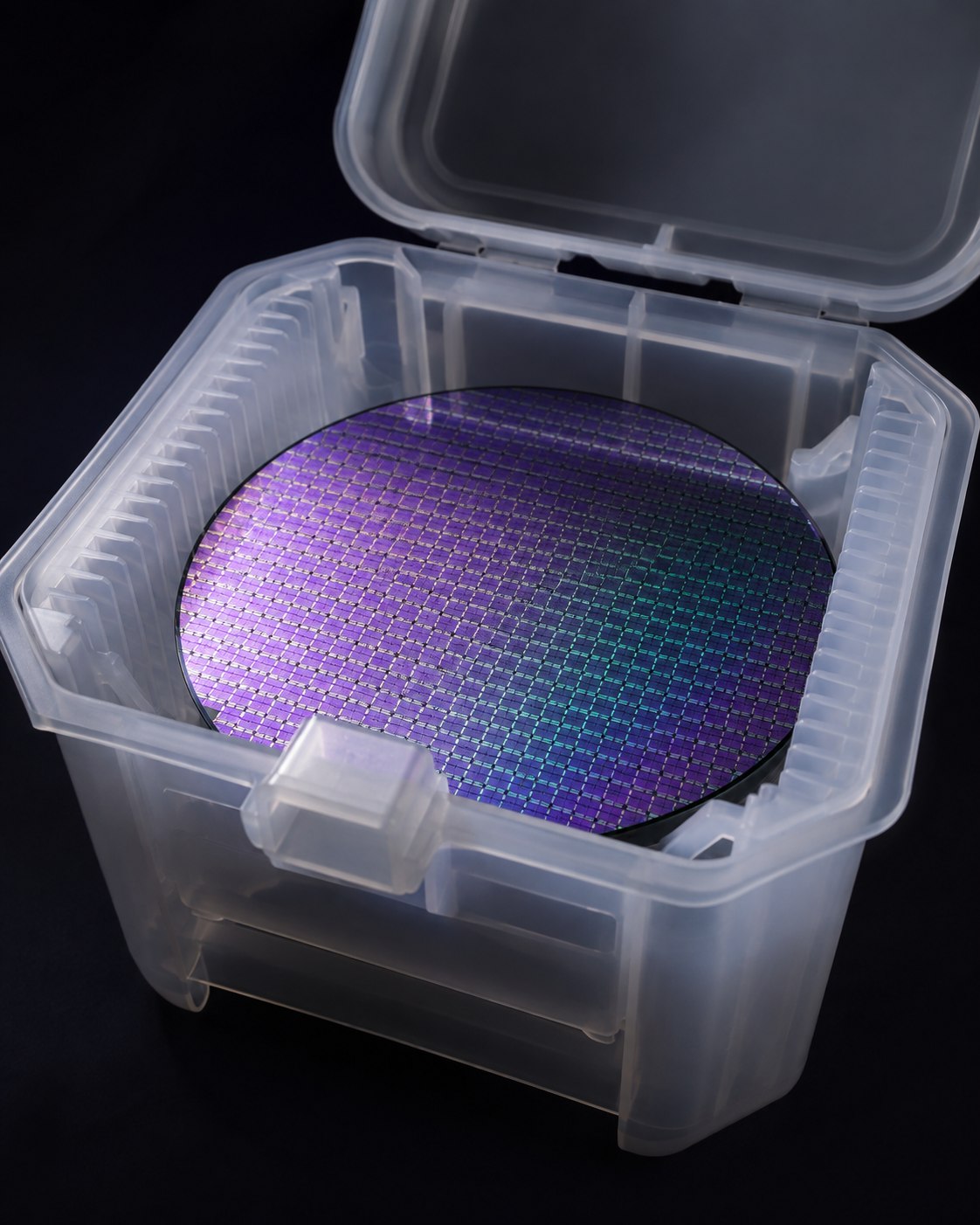
Published research
Read the definition, compare the research series and use the chapter guide to locate production, demand and supplier coverage.
Explore the reportBrowse semiconductor researchA pump supplied with new equipment, a replacement pump and service work are distinct transactions. Trace the installed equipment and purchasing channel before applying a semiconductor growth rate.
Explore vacuum equipment researchFollow two further products through the decisions they create.
Hybrid bonding
Denser interconnects create requirements upstream of the bond itself. A manufacturer of cleaning, polishing or inspection equipment needs to understand which process route is adopted, where it is qualified and which stage limits accepted output. Announced bonding capacity alone cannot allocate that opportunity among tools or consumables.
Map the customer's chosen wafer-to-wafer or die-to-wafer route. Estimate process steps and qualified output separately, then test whether an existing tool can meet the revised surface and alignment requirements.
Change the view if the route changes, acceptance criteria tighten or yield losses move to another step. Seek line configuration, surface measurements, defect attribution and production acceptance—not just a roadmap pitch.
imec — wafer-to-wafer hybrid bonding
Research example of interconnect scaling. It does not measure equipment demand.
Silicon carbide substrates
A larger substrate changes gross area per wafer. It does not establish usable device output without edge exclusions, the device layout, defects and downstream process yield. Substrate makers and equipment suppliers therefore need different demand bridges from the same vehicle or power-electronics outlook.
Keep substrate diameter, material quality and the epitaxial route visible. Reconcile substrate shipments with device demand through a defined die design and accepted yield; separate inventory building from consumption.
Revisit the bridge when qualification shifts between diameters, a defect limit changes or die size falls. Distinguish demonstrations, customer-qualified supply and regular commercial shipments.
Wolfspeed — materials portfolio
Manufacturer material offering; not a measured industry yield or market-share estimate.
Related product markets
Follow a product into its scope, applications and research editions.
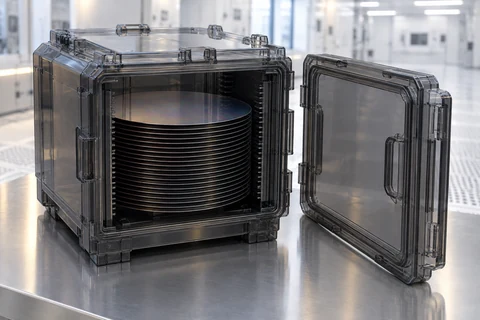
Handling & transport
Wafer carriers protect semiconductor wafers during storage, transport and automated handling; shipping boxes and in-fab pods serve different stages of the wafer journey.
Wafer carriers protect semiconductor wafers during storage, transport and automated handling; shipping boxes and in-fab pods serve different stages of the wafer journey.
Reusable wafer boxes turn shipment demand into purchases through circulation time, available stock and retirement, rather than a one-to-one shipment-to-box ratio.
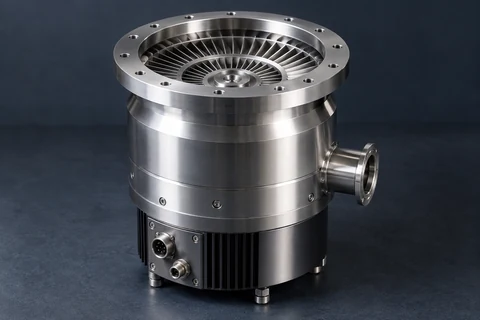
Process equipment
Turbomolecular pumps transfer momentum from rapidly rotating blades to gas molecules to generate high vacuum in processes with stringent contamination-control requirements.
Turbomolecular pumps transfer momentum from rapidly rotating blades to gas molecules to generate high vacuum in processes with stringent contamination-control requirements.
Chamber gas conditions, conductance and backing pressure determine usable pumping performance, making process compatibility central to equipment qualification.
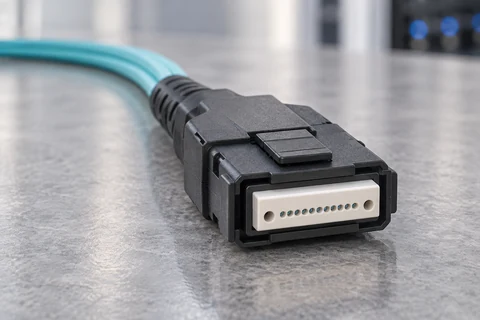
Optical connectivity
An MPO connector aligns multiple optical fibres in one precision ferrule, providing a detachable interface for high-density fibre connections.
An MPO connector aligns multiple optical fibres in one precision ferrule, providing a detachable interface for high-density fibre connections.
Higher fibre counts concentrate more connections in one interface, so alignment and repeatable optical performance shape qualification and deployment.
Representative product and service imagery. The selected report defines the research scope.
Product distinctions draw on the sources below. Demand connections and scenarios are APO editorial interpretation.
Discuss the product, geography and decision you need the research to address.