An operating task
Define a completed handover and the exceptional cases. A vehicle count or software login is not a customer outcome.
Service & Software
A deployment creates value through a working customer process. Software, integration, equipment and continuing support contribute different economics.
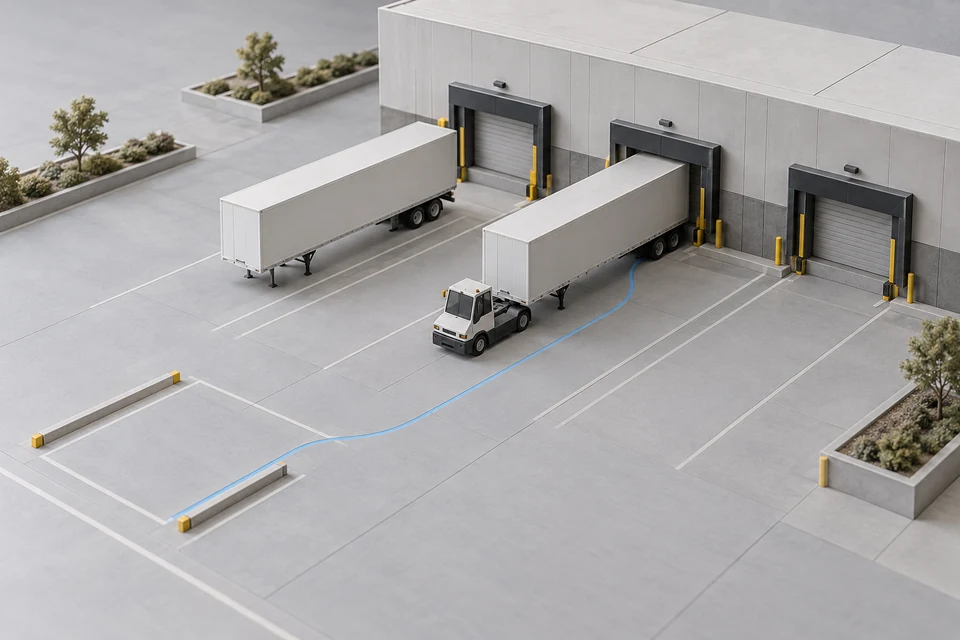
Autonomous yard operations
Moving a trailer includes assignment, coupling, travel and handover. The software supplier's market depends on which responsibilities it can repeat across sites and which remain local service work.
Detect, resolve and verify the task state. Remote or local assistance belongs in the operating account.
The exception branch can arise at any stage. A workflow model; no autonomy or reliability rate is assumed.
A deployment becomes repeatable when the customer workflow, interfaces and exceptions can be supported. Equipment, software access, integration and ongoing support carry different obligations. Go-live alone does not establish operating adoption or recurring revenue.
A yard truck's movement is only part of a trailer-handling task. The trailer must be identified, assigned, coupled and moved to an available location, with a completed handover. Equipment interfaces, traffic, site rules and exceptions influence whether that task can be completed as intended.
Outrider describes an integrated offer combining management software, autonomous vehicles and site infrastructure, with remote monitoring and support. That is evidence of a system boundary. It is not independent proof that every yard has the same task reliability, staffing reduction or operating cost.
For the supplier, investigate completed tasks alongside assistance requests, unresolved tasks and the service effort required. A demonstration route can hide unusually favourable conditions. At a second site, vehicle mix, docking geometry, communications and customer-system integration can alter the work content and the deployment margin.
Recurring software revenue and recurring service cost can grow together. Separate reusable modules from one-off integration; distinguish equipment sales, software access and ongoing support in the contract. Renewals become more interpretable when the reader can see the workflow being sustained and the supplier's obligation when it fails.
Trace the changed condition through the specific purchasing decision below.
A similar-looking yard can have different trailer interfaces, traffic rules and integration needs. Identify reusable capability before assuming the next installation needs the same engineering effort.
If assistance rises, a provider may need more remote or local support even when the vehicle count is unchanged. Inspect completed tasks and the cost of resolution together.
Taking responsibility for more workflow stages can change both value and delivery risk. Define the equipment, software, infrastructure and support that the customer actually buys.
A customer can buy a connected system while the supplier still has to separate recurring product value from continuing delivery work.
Purchased or contracted vehicle scope
Who owns, maintains and replaces the equipment.
Paid unit and enabled functions
What remains available and how the contract renews.
Site and system-specific work
What can be reused, and what needs a new project.
Remote or local operating service
Staffing, exceptions and the responsibility to restore service.
A contract-reading framework. It does not assert the pricing structure or margin of a named supplier.
Follow the progression from a bounded demonstration to connected tasks, repeat sites and renewal. Keep software versions, interfaces and operating conditions visible. Older deployments may require different support or migration work; an installed-system total cannot describe the current reusable product or the contracted service burden.
A product-history research agenda. Dated evidence is retained; no complete historical market series is claimed.
Connect the addressable customer and operating conditions to the decision.
Define a completed handover and the exceptional cases. A vehicle count or software login is not a customer outcome.
Separate access, integration, hardware and operations, including responsibility for downtime and changes.
Compare renewal income with support and delivery effort. Expansion can add both revenue and obligations.
Follow two further products through the decisions they create.
Manufacturing execution systems
A factory can install software without connecting every equipment interface or using every planned function. A process MES may connect recipes, material genealogy and quality results. The useful market measure depends on the adopted scope, repeat use and the work required to sustain it.
Separate software licences or subscriptions from implementation and ongoing services. Compare accepted modules, connected workflows and expansion rights rather than multiplying all factories by one licence value.
Revisit the expansion case when the customer changes recipes, equipment or data ownership. Seek workflow records, acceptance, change requests and renewal terms; supplier capability descriptions do not establish realised savings.
Siemens — Opcenter Execution Process
Manufacturer-described MES functions; no adoption rate or typical return is assumed.
Equipment monitoring subscriptions
Monitoring access is different from a resolved quality or maintenance issue. A subscription may include hardware, analytics, training and support, with capabilities that change when the subscription ends. The supplier needs to understand which actions customers use and what each account costs to serve.
Define the paid unit, enabled functions and service responsibilities. Compare active use, decision records and renewals with the support required; avoid treating every connected machine as an equivalent paying account.
Change the view when alerts are not acted on, performance requirements change or the paid bundle changes. Investigate the actual customer process and contract, not a universal predictive-maintenance saving.
EOS — Smart Monitoring subscription
One manufacturer's bundled offer; no customer renewal rate or measured savings is inferred.
Related product markets
Follow a product into its scope, applications and research editions.
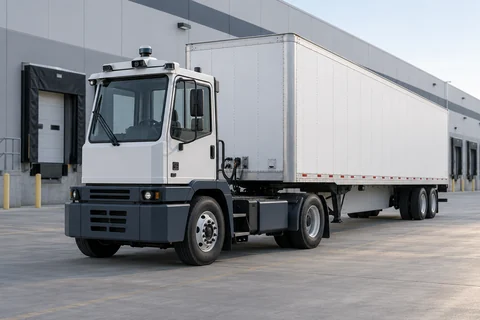
Yard operations
Autonomous yard truck solutions combine vehicle control, perception, dispatch and site integration to automate defined trailer movements within logistics yards or terminals.
Autonomous yard truck solutions combine vehicle control, perception, dispatch and site integration to automate defined trailer movements within logistics yards or terminals.
A completed trailer move depends on vehicles, dispatch and site controls together, making accepted site operations more informative than vehicle counts alone.
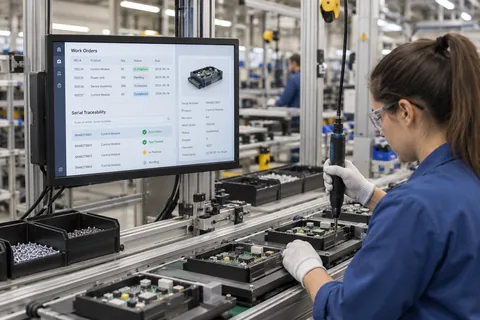
Production software
A manufacturing execution system coordinates and records shop-floor production, connecting planning to work dispatch, execution, traceability and quality records.
A manufacturing execution system coordinates and records shop-floor production, connecting planning to work dispatch, execution, traceability and quality records.
MES adoption depends on connecting production orders to execution and traceable shop-floor records, making workflow integration part of deployment value.
Business systems
Enterprise resource planning software connects business functions through coordinated applications and shared records, with the deployed scope determined by selected modules and integrations.
Enterprise resource planning software connects business functions through coordinated applications and shared records, with the deployed scope determined by selected modules and integrations.
Shared operating records connect business functions, while software access, implementation and support define separate costs and revenue streams.
Representative product and service imagery. The selected report defines the research scope.
Product distinctions draw on the sources below. Demand connections and scenarios are APO editorial interpretation.
Discuss the product, geography and decision you need the research to address.