Specify the function
Identify the substrates, layer function and required adhesion or sealing behaviour. Keep EAA, EMAA and other chemistries distinct in the market boundary.
Chemical & Material
A growing end market becomes a resin opportunity through a qualified grade, a defined function and the amount used in each product.

The demand connection
End-market activity reaches a resin producer through application area, qualification and material intensity. The complete structure determines the function.
The pack can grow.
The resin intensity can fall.
Conceptual layers, not to scale. The structure and the resin must be specified for the application.
For EAA in an extrusion-coated structure, total packaging growth is too distant a measure to explain grade demand.
The result is incorporated resin mass. Purchased resin also depends on process losses, recovery and inventory changes.
More packs do not guarantee more of one polymer. A redesigned structure can change the chemistry, the layer thickness or the application share a grade can serve. Track these separately to explain the sales outcome.
SK Functional Polymer describes PRIMACOR 3003 as an EAA grade for adhesive or sealant layers in extrusion coating and lamination. Its stated processing values are typical, condition-dependent values; customer performance needs testing.
A technically possible application is an opportunity to investigate. Repeat production is a different level of evidence.
Identify the substrates, layer function and required adhesion or sealing behaviour. Keep EAA, EMAA and other chemistries distinct in the market boundary.
Evaluate the complete structure under the customer's process and use conditions. Record what failed as well as what passed.
Check adopted specifications, regular production and actual consumption. A trial quantity does not establish a recurring commercial market.
CEFLEX treats materials, barriers and other components as design choices within a flexible pack. A change intended to improve compatibility still has to protect the product and run on the customer's line.
Evaluate the proposed structure, local collection route and processing conditions separately. Design guidance is not proof of realised recycling.
The resin producer and the packaging converter need related evidence, but they are choosing different things.
For a resin producer
Separate growth in application area from material intensity and qualification.
Read the EAA analysisExplore EAA & EMAA researchFor a packaging converter
Compare saleable output, losses and customer approval—not only nominal line speed.
Read the packaging analysisBrowse packaging researchFollow two further products through the decisions they create.
Thermal gap fillers
A bulk conductivity value is only one input to a thermal interface. The gap, contact conditions and applied thickness affect the heat path; viscosity, cure and dispensing affect manufacturability. A compound supplier needs to link a specified assembly to the volume actually dispensed, including losses.
Compare the customer's thermal and assembly requirements together. Separate material incorporated into accepted units from purge, rework and other process consumption before estimating purchased tonnes.
Revise the addressable grade set if the gap changes, clamping conditions change or the process moves from liquid dispensing to a preformed interface. Request the qualified design and production records.
Henkel — gap-filler development (July 2026)
Manufacturer development context: conductivity, bond line, dispensing and cure. No universal performance or usage factor.
Structural polyamides
Replacing a metal part with a reinforced polymer may change wall thickness, reinforcement, joining and the number of parts. Moisture and temperature conditions also matter to material selection. One tonne of displaced metal cannot be treated as one tonne of new resin demand.
Work from accepted component designs and their polymer mass. Separate resin, reinforcement and purchased assembly value, and distinguish a promoted application from qualified recurring production.
Reopen the substitution case when durability requirements change, geometry becomes heavier or another material wins qualification. Use part-level test results and customer production evidence.
BASF — advanced metal replacement materials
2023 manufacturer application examples; not an industry substitution rate.
Related product markets
Follow a product into its scope, applications and research editions.

Functional polymers
EAA and EMAA are ethylene copolymers containing acrylic acid or methacrylic acid groups, combining thermoplastic processing with adhesion and sealing functions.
EAA and EMAA are ethylene copolymers containing acrylic acid or methacrylic acid groups, combining thermoplastic processing with adhesion and sealing functions.
A qualified resin grade earns its place through a defined layer function and processing window; package volume alone cannot describe the addressable resin requirement.

Adhesion
Ethylene acrylic acid adhesives use EAA copolymer as a bonding material, supplied as solid resin, waterborne dispersion or an adhesive modifier for a defined substrate and process.
Ethylene acrylic acid adhesives use EAA copolymer as a bonding material, supplied as solid resin, waterborne dispersion or an adhesive modifier for a defined substrate and process.
Resin, dispersion and modifier forms serve different application routes, so adhesive demand needs a defined substrate, formulation and conversion process.
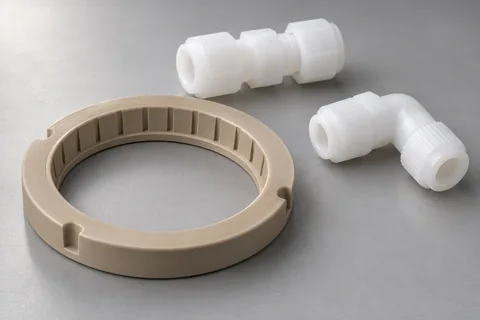
Engineered materials
These engineered polymer components perform fluid-handling, wafer-handling or mechanical functions inside semiconductor equipment, where geometry, cleanliness and process exposure determine suitability.
These engineered polymer components perform fluid-handling, wafer-handling or mechanical functions inside semiconductor equipment, where geometry, cleanliness and process exposure determine suitability.
Part geometry, contamination limits and process exposure qualify the component as a whole; polymer selection alone does not establish equipment suitability.
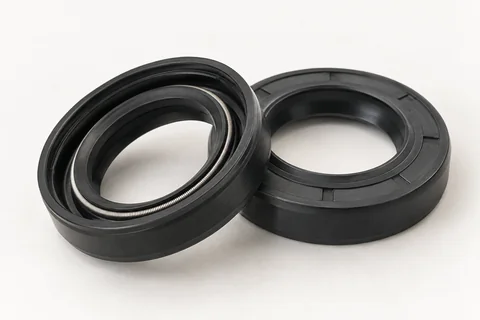
Product research
Rotary seals contain fluid or exclude contamination around a rotating shaft. Lip seals establish a contact interface with the shaft; other rotary sealing constructions use different contact or fluid-film arrangements.
Rotary seals contain fluid or exclude contamination around a rotating shaft. Lip seals establish a contact interface with the shaft; other rotary sealing constructions use different contact or fluid-film arrangements.
Shaft finish, eccentricity, lip loading and lubrication determine contact behaviour. PTFE lips and elastomer lips have different construction and operating boundaries. Pressure, speed and temperature ratings should be evaluated together rather than as independent maxima.
A replacement seal inherits the shaft’s condition. Installed seal count alone does not show the frequency or value of successful repair. Separate radial shaft seals from mechanical face seals and complete rotary feedthroughs when comparing product units.

Product research
PTFE gaskets seal static joints using polytetrafluoroethylene in sheet, expanded or other engineered constructions.
PTFE gaskets seal static joints using polytetrafluoroethylene in sheet, expanded or other engineered constructions.
Creep and stress relaxation affect the retained sealing load. Flange finish, bolt loading and gasket geometry must therefore be considered with chemical and temperature compatibility.
A gasket purchase addresses a loaded joint over time. Material choice and installation practice connect the part to leakage and replacement demand. Separate gasket blanks, cut parts and complete joint kits. Chemical resistance of PTFE alone does not establish the sealing performance of a bolted flange.

Product research
Polycarbonates are engineering thermoplastics used in transparent and other applications requiring specified mechanical, thermal or electrical behaviour.
Polycarbonates are engineering thermoplastics used in transparent and other applications requiring specified mechanical, thermal or electrical behaviour.
Drying is important before melt processing. Moisture and excessive thermal exposure can degrade material and affect the finished surface and properties.
Stress, geometry and contacted chemicals influence service behaviour. Optical, flame-retardant and reinforced grades serve different duties.
Demand follows accepted components, sheet area and the grade required by each application. Base resin, modified compounds, sheets and moulded products have distinct supply scope.
Representative product and service imagery. The selected report defines the research scope.
Product distinctions draw on the sources below. Demand connections and scenarios are APO editorial interpretation.
Discuss the product, geography and decision you need the research to address.