Load at a location
Distinguish connected capacity from coincident demand. Identify the existing network and the service configuration.
Energy & Power
Translate load growth into equipment classes, procurement timing and the output a manufacturer can deliver.

The demand connection
Unit counts, electrical ratings and revenue describe different requirements. A factory investment needs the product mix and the limiting production stage.
Almost the same capacity.
A very different unit count.
| Share of units | Share of capacity | |
|---|---|---|
| Single-phase pole10–100 kVA | 72.1% | 27.6% |
| Three-phase pad1,000–5,000 kVA | 1.1% | 27.7% |
Shares of the full estimated installed fleet, not annual sales. NREL, November 2024, Table 1. These two classes do not describe the whole fleet.
The relevant market is defined by where the load appears, which assets serve it and what the buyer decides to replace.
Distinguish connected capacity from coincident demand. Identify the existing network and the service configuration.
A new connection, a failed unit and a higher rating imply different order mixes. An uprated replacement is still one purchased unit.
Match phase, mounting, rating, delivery timing and customer qualification. An investment announcement does not identify the supplier's obtainable order.
This framework connects load requirements with equipment demand. Current utility orders require separate purchasing evidence.
The mix of ratings and designs matters when deciding what manufacturing capability to add.
Translate the proposed product mix into material availability, winding and assembly work, testing and customer acceptance. A common revenue growth rate cannot identify the limiting stage.
Revise the investment case when the rating mix changes, a qualification is delayed or the constraint moves. More floor space alone does not establish deliverable output.
A focused analysis of the US distribution fleet shows why unit counts and electrical capacity lead to different manufacturing questions.
Energy & Power
Examine the fleet composition, the forecast base and the distinction between installed assets and annual equipment demand.
Read the transformer analysisSee how a forecast statement is reconciledFollow two further products through the decisions they create.
Battery energy storage
Cell or pack energy, AC power and the energy delivered during a specified duty are distinct measures. Usable operating limits, conversion losses, temperature and degradation enter the bridge. A storage capacity announcement does not identify the order opportunity for an inverter, enclosure or replacement module.
Define the system boundary and service: duration, power, operating window and grid connection. Translate projects into the component classes your factory supplies, retaining commissioning and replacement as separate events.
Revise the component mix when duration, chemistry or connection requirements change. Seek operating specifications and accepted project designs rather than treating all announced kWh as identical.
US Department of Energy — inverters and grid services
Conversion and grid-service context. It does not establish storage demand or usable-energy ratios.
Heat pumps
A building that can technically use a heat pump is not yet an equipment sale. Heat load, distribution temperature, retrofit work, electricity access and replacement timing shape the purchase. A manufacturer's obtainable mix depends on the capacities and configurations customers actually specify.
Separate new buildings, replacements and conversions. Trace the building and installed-system cohorts, then test the economics and installation constraints for each customer group.
Revisit adoption assumptions when energy tariffs, incentives, installer availability or retrofit requirements change. Record the outlook date: a past market commentary is not a current order book.
IEA — heat-pump market commentary
Dated market context. No historic growth rate is applied as a product forecast.
Related product markets
Follow a product into its scope, applications and research editions.
Grid equipment
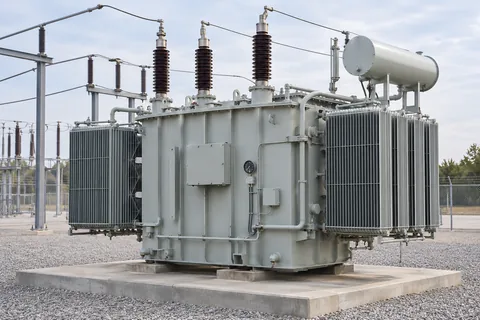
Power transformers transfer alternating-current electrical energy between circuits through electromagnetic coupling, with windings, insulation and cooling designed for the specified voltage and load.
Power transformers transfer alternating-current electrical energy between circuits through electromagnetic coupling, with windings, insulation and cooling designed for the specified voltage and load.
Voltage class, load duty and replacement needs shape transformer purchases, making unit counts insufficient to describe manufacturing requirements or order value.

Energy storage
Lithium-ion batteries are rechargeable electrochemical cells in which lithium ions move between electrodes during charge and discharge; chemistry and cell format define distinct product configurations.
Lithium-ion batteries are rechargeable electrochemical cells in which lithium ions move between electrodes during charge and discharge; chemistry and cell format define distinct product configurations.
Cell chemistry and format enter a pack with controls and operating limits, so cell capacity and usable system energy describe different commercial boundaries.
Hydrogen production
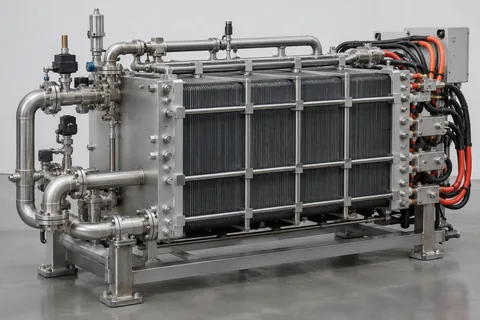
A water electrolyzer uses electrical energy to split water into hydrogen and oxygen; the electrochemical stack and its supporting systems form distinct equipment boundaries.
A water electrolyzer uses electrical energy to split water into hydrogen and oxygen; the electrochemical stack and its supporting systems form distinct equipment boundaries.
Stack performance and auxiliary loads determine the plant-level hydrogen result, so installed electrical capacity needs a defined equipment and operating boundary.
Product research
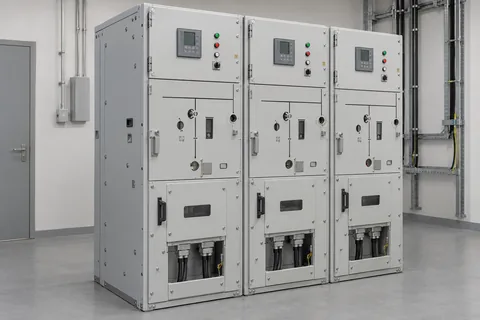
A 10–33 kV gas-insulated switchgear assembly distributes and protects medium-voltage circuits using enclosed conductors and switching apparatus; its insulation medium does not identify the circuit-breaker’s interruption technology.
A 10–33 kV gas-insulated switchgear assembly distributes and protects medium-voltage electrical circuits using enclosed primary conductors and switching apparatus.
Gas insulation and fault interruption perform different tasks. A design may use a vacuum interrupter inside a gas-insulated assembly; the insulation medium therefore does not identify the circuit-breaker's interruption technology. Busbar and switching compartments, cable terminations and pressure supervision must suit the selected architecture.
Primary-distribution installations generally require feeder protection and substantial switching duty; secondary networks may emphasize compact sectionalizing and ring connections. Continuous current, short-circuit duty, insulation level and extension arrangements determine whether two similarly sized lineups are interchangeable.
Panel dimensions alone do not describe the installed system; cable access and future extension often decide the usable layout. The scope is the assembled switchgear within the named voltage band. Protection systems, site installation and complete substations may enter a supply package but should be identified separately.
Product research
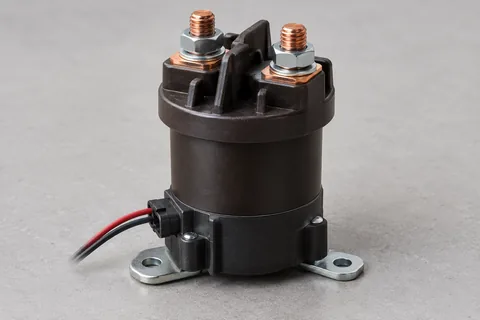
A DC contactor switches a specified direct-current power load through electrically operated main contacts, with its drive and arc-control arrangement matched to the circuit’s making, carrying and breaking duty.
A DC contactor is an electrically operated power switching device whose main contacts are designed for a specified direct-current load duty.
The power path uses fixed and moving contacts, current-carrying conductors and an insulating structure. Main terminals may be studs, lugs or other connections sized for the application's current and installation. The drive can use a continuously energized coil, an economized holding circuit or a bistable arrangement that retains its state until a further command. Auxiliary contacts, where provided, supply position feedback to the control system; their signal duty is separate from the power path.
Opening DC contacts must extinguish an arc without relying on the periodic current zero available in an AC circuit. Designs can combine contact travel, arc chambers, magnetic blowout and an appropriate surrounding medium to lengthen, move and cool the arc. Some magnetic arrangements are polarity-sensitive; a contactor's continuous carrying ability in either current direction does not establish equal breaking ability in both directions. A bidirectional battery or regenerative drive therefore needs the manufacturer's approved switching duty, rather than a reversed connection assumed to be equivalent.
Making a capacitive load can cause inrush, while interrupting an inductive load involves stored energy and the circuit's voltage response. Precharge, load sequencing and suppression elsewhere in the system affect the contactor's stress and life. DC motor starting and reversing, battery isolation and converter supply switching consequently require different duty assessment. A normal command-operated contactor is not automatically a short-circuit protective device; its operation must be coordinated with the rest of the circuit protection.
Read the making, carrying and breaking conditions together with the drive and load circuit; a headline current rating alone cannot describe the complete duty. This family covers contactors selected for their main DC power-switching duty, including general and dedicated applications. A DC control coil on an AC-rated device is not sufficient identification. Solid-state switches, mechanical disconnectors and complete motor starters or battery junction assemblies are separate supplied products. DC and broader low-voltage contactor catalogues overlap; their quantities should not be added as independent markets.
Product research
A capacitor bank connects multiple capacitor units for a defined compensation duty, with connections, switching, discharge and protection configured for the network’s reactive demand and harmonic conditions.
A capacitor bank is an electrical assembly that connects multiple capacitor units into a coordinated circuit.
A bank includes more than its dielectric elements. Capacitor units connect through busbars or cables in the required phase arrangement; switching devices, fuses or other protection, discharge provisions and support insulation suit that arrangement. Low-voltage assemblies commonly enclose several steps in a ventilated cabinet, while higher-voltage banks may use exposed racks with defined electrical clearances. A controller is an option for automatic staging, rather than a defining feature of every bank.
Capacitive reactive output depends on frequency, connected capacitance and the square of the applied AC voltage. A fixed step therefore does not deliver unchanged compensation at every bus voltage. Switching steps changes the connected capacitance as demand changes. Discharge timing and capacitor-switching duty matter when reconnecting a recently disconnected step; an ordinary contactor or breaker is not automatically suitable for that duty.
Adding capacitance changes the network's frequency response. Where nonlinear loads create harmonics, the bank, supply impedance and any series reactors must be evaluated together. A detuned bank places the capacitor-reactor branch resonance away from problematic harmonics; a deliberately tuned filter serves a different design purpose. Overcompensation at light load, thermal loading and protection coordination can outweigh an apparent improvement in nominal power factor.
The purchasing decision connects measured reactive demand, harmonic conditions and switching behavior. Installed kVAR alone does not show whether the bank will work well across the operating day. Treat a bank as compensation equipment, separate from a single capacitor unit, a standalone reactor or controller, and an active electronic VAR compensator. Low-, medium- and high-voltage report groupings describe the study scope; local voltage conventions and equipment requirements determine the actual design.
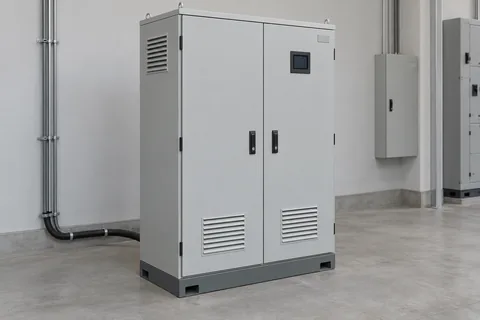
Representative product and service imagery. The selected report defines the research scope.
Product distinctions draw on the sources below. Demand connections and scenarios are APO editorial interpretation.
Discuss the product, geography and decision you need the research to address.