APO Research

Automobile & Transportation

The vehicle changes.
So does the opportunity.

For a component manufacturer, growth depends on the part, the platform and the purchase that actually replaces it.

Suspension jounce bumper. Editorial illustration; geometry simplified.

The demand connection

Vehicle production. Installed vehicles. Separate purchases.

Original equipment and replacement components follow different populations and channels. A shared vehicle outlook cannot explain both on its own.

Two populations. Different purchasing clocks.
01

Vehicles being built

Programme schedule · Fitment · Supplier allocation

Original-equipment demand
02

Vehicles in use

Fleet age · Repair event · Replacement choice

Aftermarket demand

A demand framework. Vehicle output and the installed fleet are separate starting points.

One vehicle market.
Two demand models.

A new-vehicle forecast cannot stand in for a replacement forecast. Begin with the population that creates the order.

Original equipment

From a programme
to a purchase order.

Build schedule
Identify platforms, production sites, derivatives and launch timing.
Content per vehicle
Match the part to actual fitment, specification and assembly scope.
Obtainable business
Check nominated suppliers, allocation, localisation and ramp readiness.

A platform award and realised shipments belong to different dates. Separate design wins, scheduled releases and delivered units.

Replacement

From a vehicle in use
to a repair event.

Relevant fleet
Segment vehicles by age, design, use and geography.
Replacement event
Distinguish failure, planned service and an associated component repair.
Purchased item
Identify the part or kit chosen and the channel supplying it.

Keep repair incidence separate from stock on the road. Neither a large fleet nor a service recommendation establishes annual part sales.

Which change reaches the component supplier?

Explore a condition. These are research scenarios, not measured market forecasts.

Capacity may be ready before demand arrives.

A postponed vehicle programme moves original-equipment releases. It does not erase replacement demand for older vehicles already in use. Review the programme mix before applying one decline to the whole business.

Evidence that could change the view
Customer release schedules, launch milestones, inventory ownership and the share of tooling tied to the delayed programme.
The business decision
Decide whether production can be reassigned, and distinguish a timing gap from lost lifetime programme volume.

Compare like with like.
Especially when the part evolves.

Revenue may move because more components are sold, because specifications change, or because the supplier takes on more of the assembly.

Material

A formulation or grade

Define chemistry, form and the function for which it is qualified. Material tonnes do not directly count finished components.

Component

A specified part

Establish geometry, performance and fitment. A price comparison needs an equivalent product and supply boundary.

Module or service kit

A larger purchase

Identify included parts, assembly and channel margin. A higher invoice may reflect a wider scope rather than like-for-like inflation.

A dated development · 2015

Integration changes the unit of comparison.

BASF described a top mount combining a microcellular polyurethane element with a glass-fibre-reinforced polyamide housing. This adjacent suspension example shows how material and component roles can become a combined offer. It does not establish adoption across vehicle platforms.

For research, the implication is to hold the sales boundary constant—or explain why it changed—before attributing revenue growth to vehicle demand.
Follow a small part
through a large industry.

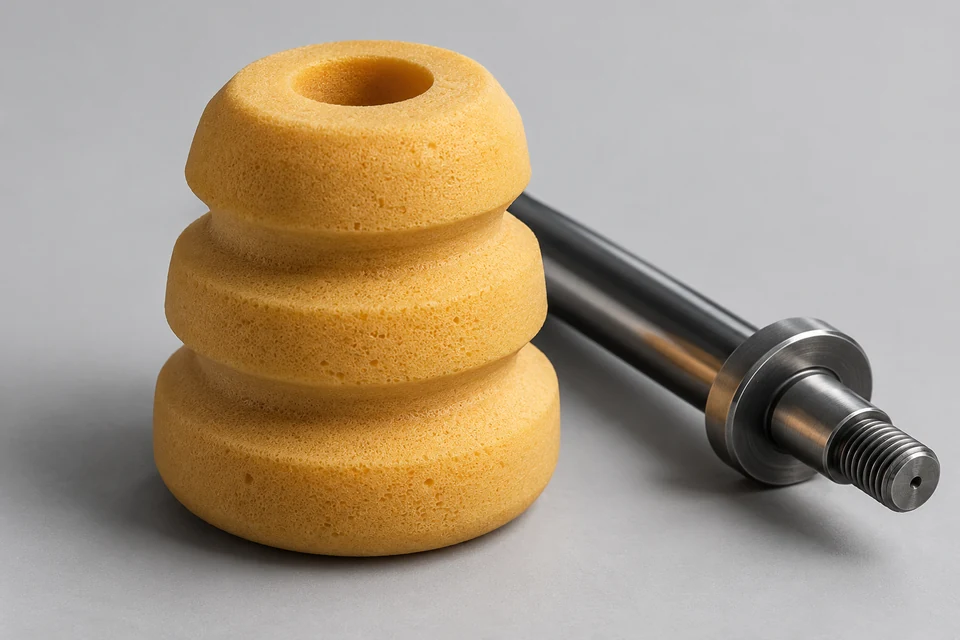
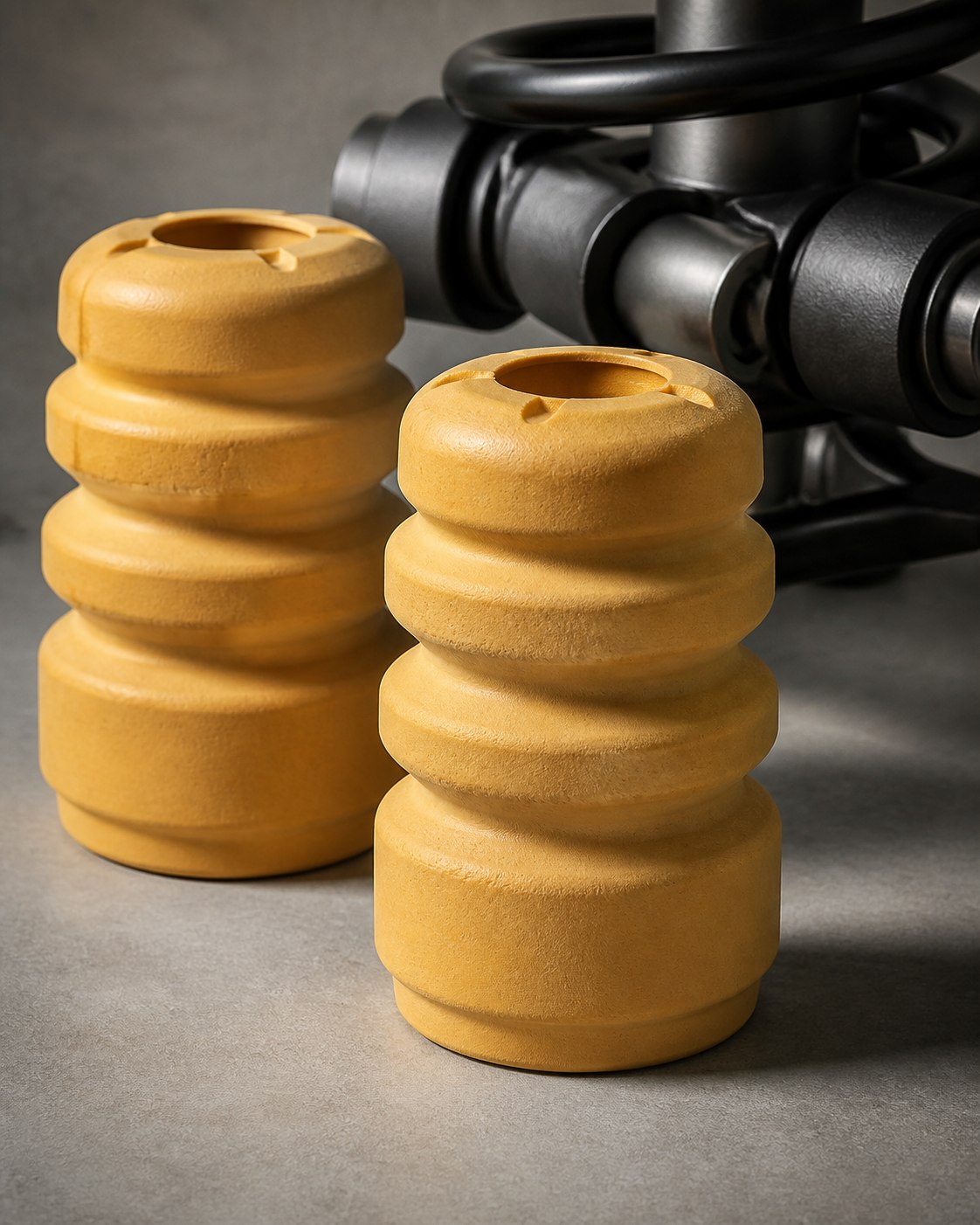
Jounce bumpers make the distinction tangible: new programmes, changing suspension requirements and replacement are three separate demand stories.

Editorial illustration of yellow suspension compression stops
Editorial illustration. Geometry is not a product specification.

Automotive jounce bumpers

What turns vehicle activity
into component demand?

Examine the product boundary, the path to fitment and the service population. ZF’s service portfolio illustrates why compression stops and protective parts also need to be understood as kit contents.

Read the component analysisExplore jounce-bumper research

Different products.
Different market questions.

Follow two further products through the decisions they create.

Integrated electric drives

Integration changes what the customer buys.

  1. Motor & inverter
  2. Integrated drive assembly
  3. Vehicle platform

An integrated drive can combine the motor, power electronics and transmission. Counting the assembly's revenue and all constituent sales as one market double-counts value. Suppliers also need to know which work remains purchased externally and which moves into the integrator's scope.

Examine the decision and evidence

The business decision

Define whether the market covers complete drives, individual components or manufacturing services. Trace the vehicle programme, configuration and sourcing boundary before converting vehicle output into component demand.

What could change the view

Revise the opportunity when integration, voltage architecture or make-versus-buy decisions change. Programme awards, bill-of-material boundaries and supplier qualification matter more than a single EV growth rate.

ZF — car driveline solutions
Manufacturer driveline architecture context; no inferred contract, share or efficiency claim.

Battery cooling plates

Battery output does not prescribe one cooling design.

  1. Cell & pack architecture
  2. Thermal circuit
  3. Qualified cold plate

The number and form of cooling interfaces depend on pack geometry, heat loads, joining and leak requirements. A change in cell layout can change the plate opportunity at constant battery energy. A supplier has to connect the customer's design to qualified surface area, units and assembly work.

Examine the decision and evidence

The business decision

Define the plate boundary, coolant interface and acceptance tests. Compare manufacturing routes through accepted units, material use, joining yield and warranty exposure rather than battery GWh alone.

What could change the view

Change the conclusion if the pack moves to a different cooling architecture or qualification changes the allowable material and joining process. Request design and test evidence before assigning usage factors.

Henkel — battery thermal interfaces (October 2022)
Battery interface context only. The cold-plate demand bridge is an APO research scenario, not a measured product specification.

Related product markets

Explore the research.

Follow a product into its scope, applications and research editions.

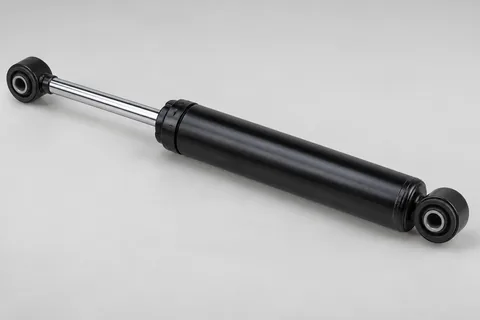
complete automotive shock absorber with rod and mounting eyes

Chassis systems

Automotive Shock Absorber

Automotive shock absorbers damp suspension movement by dissipating mechanical energy, commonly through controlled hydraulic-fluid flow within a piston-and-cylinder assembly.

Read full explanation

Product & engineering

Automotive shock absorbers damp suspension movement by dissipating mechanical energy, commonly through controlled hydraulic-fluid flow within a piston-and-cylinder assembly.

Demand & research boundary

Vehicle-platform qualification anchors original-equipment supply, while wear, service coverage and replacement cycles create a separate aftermarket demand path.

Technical references
Explore product & research scope
Explore research
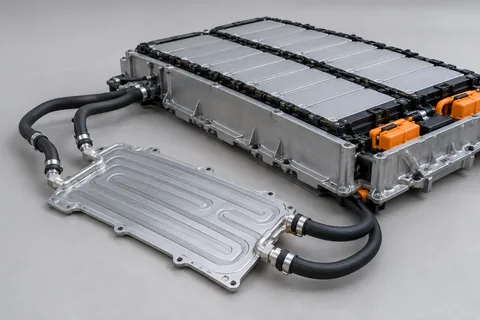
EV battery thermal management cooling plate and hose assembly beside battery module

Battery systems

Battery Thermal Management System (BTMS)

A battery thermal management system regulates battery temperature through heating, cooling and controls integrated with the cells, pack and vehicle operating requirements.

Read full explanation

Product & engineering

A battery thermal management system regulates battery temperature through heating, cooling and controls integrated with the cells, pack and vehicle operating requirements.

Demand & research boundary

Pack duty and cooling architecture determine heat paths and component requirements, tying system adoption to integration rather than battery volume alone.

Technical references
Explore product & research scope
Explore research
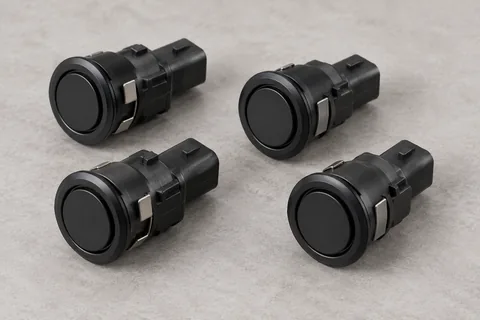
Four round automotive parking ultrasonic sensor heads, each with a smooth circular face, side clips and a rear electrical plug, on a neutral tabletop.

Sensing

Vehicle Ultrasonic Sensor

Vehicle ultrasonic sensors detect nearby objects by transmitting acoustic pulses and measuring their reflected echoes, typically as components of parking and low-speed sensing systems.

Read full explanation

Product & engineering

Vehicle ultrasonic sensors detect nearby objects by transmitting acoustic pulses and measuring their reflected echoes, typically as components of parking and low-speed sensing systems.

Demand & research boundary

Sensor count becomes useful only within the installed sensing arrangement; placement and system integration connect component shipments to vehicle demand.

Technical references
Explore product & research scope
Explore research

Representative product and service imagery. The selected report defines the research scope.

Browse all Automobile & Transportation reports
Sources & scope

Product distinctions draw on the sources below. Demand connections and scenarios are APO editorial interpretation.

Bring your question into focus.

Discuss the product, geography and decision you need the research to address.

Discuss your research needs

Industry research

Discuss your research needs

Help us understand what you need the research to cover.

Fields marked * are required.

Local preview. Your information will not be sent.

APO Research