An operating perimeter
Keep geography, owned or operated facilities and period consistent. Acquisitions do not automatically create new physical supply.
Medical Care
Sites, equipment, completed services and revenue describe different kinds of change. A network decision needs a consistent population and an operating explanation.

Dialysis service networks
New sites, acquisitions, combinations and exits change the reporting perimeter. Separate that movement from the activity of a consistent group of operating sites.
Openings and exits
can happen together.
3,675 + 6 + 27 − 107 = 3,601 clinics
Reported company counts, reconciled arithmetically. Clinics are sites, not treatments or a global market total. Annual Report 2025, printed pp.158–159.
Site growth is not the same as growth in delivered care. Openings, acquisitions and closures change the reporting perimeter; staff, service hours and completed treatments determine output within comparable operating sites.
A facility total does not describe the hours, staffing or completed services available at each site. Opening a site and adding capacity at an existing site create different operating requirements. A transfer of ownership changes the operator's network without necessarily creating a new physical facility.
Fresenius Medical Care's 2025 report gives a concrete example of this distinction. Its clinic count moved from 3,675 to 3,601 while it acquired 6, opened 27, and combined, closed or sold 107. The reported network can contract while some new sites open. The reconciliation shown here keeps those events visible.
Service growth should then be tested on a consistent perimeter, with the calendar and operating conditions retained. The company defines same-market treatment growth using adjustments that include acquisitions, closed or sold clinics and dialysis days. That measure is not interchangeable with the change in the reported total.
For an operator considering expansion, identify whether the constraint is a physical station, staff availability, operating time or another part of service delivery. For an equipment supplier, separate new-site installation, existing-site expansion and replacement. For both, payment mix and terms require a separate revenue bridge; higher revenue alone cannot establish more completed treatments.
Trace the changed condition through the specific purchasing decision below.
A newly opened facility and an acquired operating facility both add to one operator's perimeter. Only the first necessarily introduces a new site into the physical network being counted.
Additional operating hours matter only with the required staff and supporting resources. Investigate actual activity and constraints before equating an extra shift with a fixed number of services.
Payment terms and service mix can change revenue while completed activity is stable. Separate those effects from the physical-service forecast.
Keep the operator and equipment-maker decisions connected without collapsing them into one market measure.
Which sites enter or leave the comparison?
Ownership and combinations can change reported scope.
What can the staffed resources actually complete?
Activity, service mix and the calendar explain usable capacity.
What must be installed or replaced?
New sites, expansion and renewal create distinct orders.
What is paid for the completed services?
Payment terms and mix require a separate bridge.
The company example above establishes a perimeter distinction. This framework does not infer provider quality, clinical need or service capacity from those counts.
Reconcile openings, exits, ownership transfers and combinations before extending a historical growth rate. Retain service models, regional operating conditions and payment arrangements. The next capacity decision depends on what remains in operation and where it is constrained, rather than on a facility-count trend alone.
A product-history research agenda. Dated evidence is retained; no complete historical market series is claimed.
Connect the addressable customer and operating conditions to the decision.
Keep geography, owned or operated facilities and period consistent. Acquisitions do not automatically create new physical supply.
Specify the service category, calendar and usable resources. Equipment counts cannot stand in for completed care.
Distinguish activity, price, payment mix and collections. Operator and manufacturer revenue are different markets.
Follow two further products through the decisions they create.
Diagnostic imaging services
A scanner's available time and the ability to complete and report an examination are different measures. Preparation, staffing, protocol mix and reporting capacity enter the service pathway. Demand variation also matters: an average day can conceal a persistent queue.
Separate equipment utilisation from completed-service capacity by examination type. Evaluate whether an equipment purchase, a schedule change or a reporting resource addresses the actual constraint.
Revise the investment case when referral patterns, protocol mix, staffing or reporting changes. Use local service and resource records; neither a national backlog nor a generic scans-per-day figure establishes one site's business case.
NHS England — diagnostic imaging capacity and demand tool
England service-planning context. The analysis does not recommend examinations or clinical pathways.
Ambulatory surgical centres
Operating rooms, staffing, case mix and supporting resources jointly determine an operator's service capacity. Facility-level quality reporting supplies a different set of evidence from throughput or revenue. A room-count forecast cannot allocate equipment and consumable requirements without the actual service mix.
Define geography, procedure categories and the operator's accessible demand. Separate rooms, staffed time and completed services; assess equipment and supplies against the accepted configuration.
Change the expansion case when staffing, referral, service mix or payment arrangements change. CMS quality measures can inform a US facility review, but they do not by themselves establish utilisation or profitability.
CMS — Ambulatory Surgical Center Quality Reporting
US quality-reporting programme. No provider performance, procedure recommendation or universal utilisation is asserted.
Related product markets
Follow a product into its scope, applications and research editions.
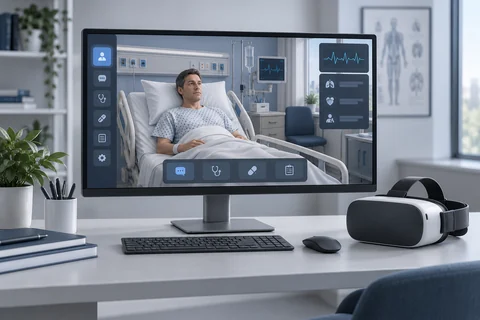
Clinical education
Virtual patient simulator platforms combine patient scenarios, interactive decisions and feedback to support education and assessment through screen-based or immersive software environments.
Virtual patient simulator platforms combine patient scenarios, interactive decisions and feedback to support education and assessment through screen-based or immersive software environments.
Scenario coverage, learner assessment and curriculum integration determine platform adoption, while teaching activity and licensed access describe different demand measures.
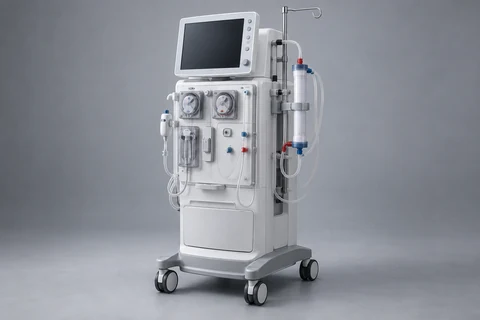
Treatment markets
In this report, Hemodialysis denotes dialysis equipment segmented by machine type and application, rather than the revenue of providing dialysis treatment.
In this report, Hemodialysis denotes dialysis equipment segmented by machine type and application, rather than the revenue of providing dialysis treatment.
This edition segments dialysis equipment by machine type and application; treatment volumes and recurring consumable purchases must remain distinct from equipment revenue.
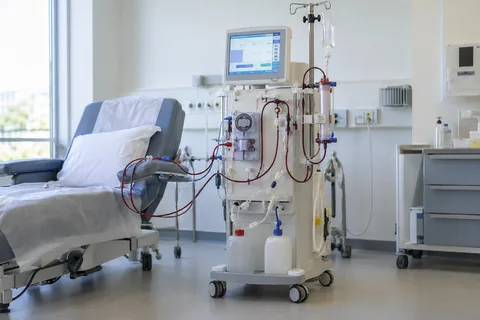
Supporting equipment
A hemodialysis machine manages blood and dialysate flow through an extracorporeal dialysis system, with monitoring and controls matched to its intended treatment configuration.
A hemodialysis machine manages blood and dialysate flow through an extracorporeal dialysis system, with monitoring and controls matched to its intended treatment configuration.
Equipment deployment depends on water infrastructure and compatible consumables, keeping installed-machine value distinct from the recurring treatment service.
Representative product and service imagery. The selected report defines the research scope.
Product distinctions draw on the sources below. Demand connections and scenarios are APO editorial interpretation.
Discuss the product, geography and decision you need the research to address.