Define the unit
Packs, material area, incorporated tonnes and purchased tonnes are distinct. Keep format and size mix visible.
Packaging
A package reaches the market through materials, processing, filling and distribution. Follow that chain to understand what customers can actually adopt.

Aseptic liquid-food cartons
A barrier material alone cannot establish storage performance. Product treatment, packaging preparation, filling, sealing and distribution conditions have to be considered together.
Protection depends on the complete chain. This diagram does not prescribe a sterilisation process or shelf life.
A package is qualified as part of the product, filling and distribution system. Purchases follow accepted packs, material per pack and actual line losses. A barrier claim or rated line speed alone cannot establish commercial output.
A carton combines structural and protective functions. Tetra Pak describes paperboard, polymer and aluminium roles within its aseptic packaging, in combination with processing. The actual structure is product-specific; the three material samples shown here are a conceptual illustration, not a technical layer schedule.
For a packaging producer, the demand bridge starts with accepted filled packs in a defined product and format. Pack size, material area and structure determine incorporated materials; startup waste, changeovers and production losses affect purchases. A nominal machine speed is not the quantity customers accept.
A change in barrier structure must be tested in the full product–process–package system. Protection, sealing, machine compatibility and the intended distribution environment can move together. Neither a material datasheet nor a recyclability design statement establishes the shelf life or realised recycling of a particular finished pack.
Trace the changed condition through the specific purchasing decision below.
A changed recipe or process can change protection, filling and storage conditions even when external pack dimensions remain similar.
A redesigned structure can change incorporated material, process losses and qualification. More finished packs need not mean more of every constituent.
Changeovers, startup loss and process interruptions can offset a nominal speed increase. Procurement depends on actual saleable output.
A new structure moves through trials, accepted recipes and repeat production before it displaces a prior material at scale. Reconstruct that sequence by product and line. Later changes in protection, recycling requirements or filling equipment can reopen the decision. A historical pack-volume series alone cannot explain which constituent gained or lost demand.
A historical research agenda, not a reconstructed market series. Dates, installed cohorts and adoption must be established for the product and customer population under study.
Make the boundary, evidence and revision conditions explicit before using a forecast to guide investment.
Packs, material area, incorporated tonnes and purchased tonnes are distinct. Keep format and size mix visible.
Separate useful material from startup waste, rejects, recovery and inventory. These change converter purchases differently.
Assess the complete structure and local collection route. Design compatibility is not a measured recycling rate.
Follow two further products through the decisions they create.
Flexible barrier films
A new structure can change adhesion, sealing and protection, as well as the conversion process. A film supplier needs to know which customer line and product are qualified before treating a proposed replacement as a commercial market.
Compare material per accepted pack and the full line economics. Separate trial material from repeat orders; reconcile scrap, recovery and the change in input mix.
Revise adoption when seal performance, line loss, product protection or end-of-life requirements change. Use customer tests and recurring production evidence.
CEFLEX — flexible-pack design choices
Design guidance informs the questions; no qualified customer outcome is claimed.
Returnable transport packaging
Returnable pallets or containers circulate. Growth in handled loads may be met through faster turnaround and better recovery before additional assets are bought. Damage, retirement and transfers affect replenishment separately.
Define ownership and geographic boundaries. Reconcile opening stock, additions and removals, and examine the peak usable pool required by actual routes.
Change the purchase view when turnaround slows, losses increase or acceptance rules retire assets earlier. Neither loads moved nor a company's pooling model supplies a universal reuse factor.
Brambles — Annual Report 2025
Pooling model context. The stock–flow framework is analytical, not a company-specific demand estimate.
Related product markets
Follow a product into its scope, applications and research editions.

Sealing & access
Beverage closures seal a container opening and provide the required opening, dispensing or reclosure function through a design matched to the bottle neck and filling process.
Beverage closures seal a container opening and provide the required opening, dispensing or reclosure function through a design matched to the bottle neck and filling process.
Replacing a beverage closure requires neck fit, seal integrity and cap application to remain compatible with the filling line and opening requirements.

Product protection
Aseptic cartons are fibre-based composite containers used in a filling system that separately treats the product and packaging before filling and sealing under controlled conditions.
Aseptic cartons are fibre-based composite containers used in a filling system that separately treats the product and packaging before filling and sealing under controlled conditions.
Aseptic carton performance belongs to the product–filling–package system, making sealing, processing compatibility and validated protection part of material adoption.
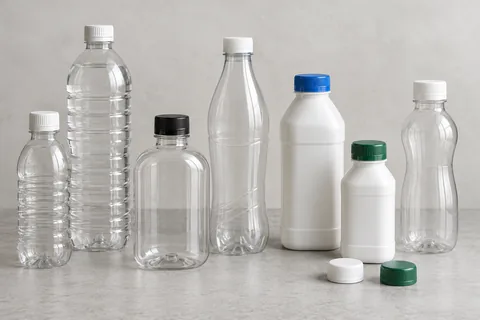
Container formats
Food plastic bottles are hollow polymer containers whose resin, wall construction and closure interface are selected for the food product and filling conditions.
Food plastic bottles are hollow polymer containers whose resin, wall construction and closure interface are selected for the food product and filling conditions.
Bottle demand translates into resin demand through container weight and material mix, while filling conditions limit which lightweight designs a customer can adopt.
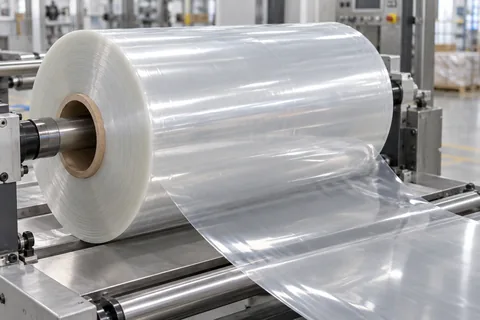
Product research
A flexible packaging film roll is continuous flexible web material supplied on a core for converting or packaging operations.
A flexible packaging film roll is continuous flexible web material supplied on a core for converting or packaging operations.
Coextrusion, lamination and coating combine structural, barrier and sealing functions. Layer compatibility and bonding determine performance of the finished web.
Gauge, winding, surface treatment and seal behaviour affect processing. Film area and thickness provide different measures from finished-package counts.
Demand follows web area and the material structure required by the packaged product. Base film, printed laminate rollstock and finished pouches are separate traded forms.
Representative product and service imagery. The selected report defines the research scope.
Product distinctions draw on the sources below. Demand connections and scenarios are APO editorial interpretation.
Discuss the product, geography and decision you need the research to address.