Count the transaction
Separate ferrules, connectors, complete assemblies and active modules. Do not sum their revenues as though they were non-overlapping markets.
Internet & Communication
Traffic, link capacity and physical connection counts are different measures. Follow the network architecture to find the product opportunity.
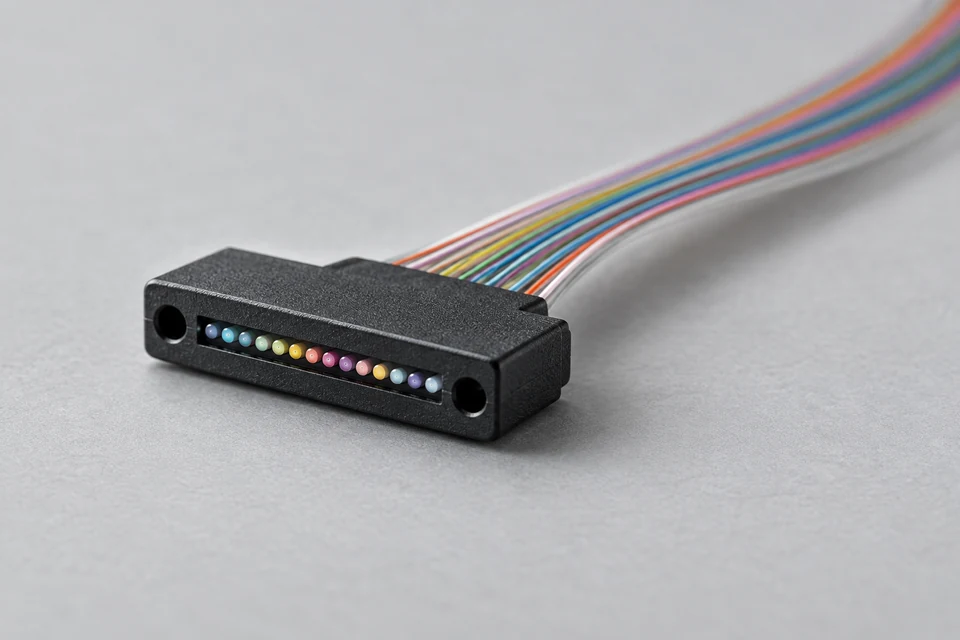
Multi-fibre optical connections
An optical link joins equipment through modules, fibre and physical interfaces. Bandwidth does not uniquely determine the number of connector assemblies purchased.
Architecture determines the relationship. These units cannot be converted using one fixed ratio.
Traffic growth does not translate directly into connector orders. Reach, lane arrangement, topology and patching determine physical assemblies. Active optics, ferrules and complete cables require separate market boundaries.
Begin with the topology and the link: reach, lane arrangement, fibre count and patching define the physical path. The active optical module, the passive ferrule or connector, and the complete cable assembly are different products even when sold into the same installation.
US Conec describes MMC as a compact multi-fibre connection using its TMT ferrule, with applications across structured cabling and optical equipment. It establishes an available product architecture; a density claim is not evidence of adoption, supplier share or industry revenue.
A connector maker needs the number of physical interfaces in the chosen architecture, qualified formats and the share bought as assemblies rather than discrete components. Added bandwidth can arrive through more links, faster links or a new topology. Those changes have different effects on unit demand.
Trace the changed condition through the specific purchasing decision below.
A faster lane arrangement or module can carry more data without proportional growth in passive connection units.
A compact connection may change packaging and qualified suppliers. Its product benefit does not establish how many sites adopt it.
More intermediate patching or a different network arrangement can change assembly counts and spare stock.
A capacity upgrade can retain physical paths, replace active equipment or rebuild the connection format. Study successive platform configurations and their installed cohorts before assigning demand to a new format. Keep prototype availability, design qualification, installation and later replacement as separate milestones; a standards release dates an architecture, not its commercial adoption.
A historical research agenda, not a reconstructed market series. Dates, installed cohorts and adoption must be established for the product and customer population under study.
Make the boundary, evidence and revision conditions explicit before using a forecast to guide investment.
Separate ferrules, connectors, complete assemblies and active modules. Do not sum their revenues as though they were non-overlapping markets.
Compatibility, insertion loss, handling and customer design acceptance determine where a product can be supplied.
A design announcement, a qualified platform and an installed network are different milestones. Spares and replacement follow the installed base.
Follow two further products through the decisions they create.
Optical modules
Two links with the same nominal bit rate can differ in reach, optical lanes, thermal conditions and equipment compatibility. A module supplier needs the qualified design and deployment mix rather than one blended bandwidth growth rate.
Segment the market by the link requirements relevant to the product. Separate active modules from passive connections, and distinguish replacements from new port installations.
Revise the mix when the architecture changes reach, lane arrangement, power budget or equipment qualification. Customer configuration is required to quantify each class.
US Conec — application context
Optical-equipment context only; the module segmentation is an APO research framework.
Private industrial networks
Coverage, connected devices and recurring network services have different units and purchase cycles. A planned private network also has to meet the customer's operational requirements and installation constraints.
Define the factory use case, deployment boundary and buying party. Separate radio and core equipment, devices, integration and ongoing services before estimating the obtainable market.
Change the view when the application, deployment model or operator relationship changes. Standards support possible architectures; they do not establish realised adoption or customer savings.
ETSI / 3GPP — 5G architecture, Release 16 (PDF)
TS 23.501 V16.6.0 (2020): non-public-network architecture, not commercial deployment or revenue data.
Related product markets
Follow a product into its scope, applications and research editions.
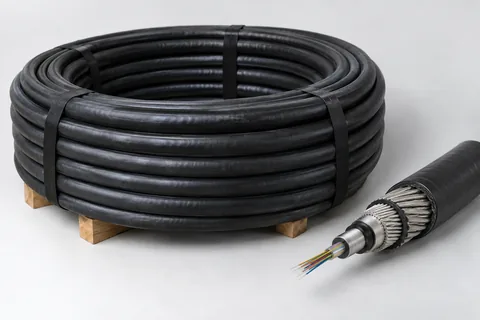
Network infrastructure
Submarine optical fibre cables combine optical fibres with protective cable construction for underwater installation; armour and system configuration depend on the route and operating environment.
Submarine optical fibre cables combine optical fibres with protective cable construction for underwater installation; armour and system configuration depend on the route and operating environment.
Route conditions and installation configuration translate network plans into cable requirements, separating cable supply from the value of a complete undersea connection.
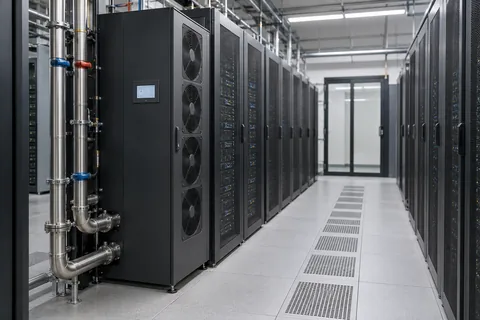
Facility equipment
Data center cooling equipment removes heat from IT systems through air, liquid or combined heat-transfer paths, linking room or rack cooling to coolant distribution and heat rejection.
Data center cooling equipment removes heat from IT systems through air, liquid or combined heat-transfer paths, linking room or rack cooling to coolant distribution and heat rejection.
IT heat load and the facility heat-transfer path determine cooling equipment requirements, making air or liquid architecture central to procurement.
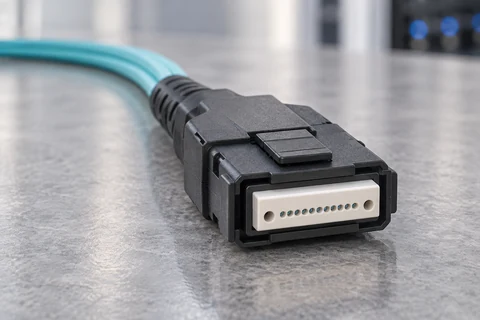
Optical interfaces
An MPO connector aligns multiple optical fibres in one precision ferrule, providing a detachable interface for high-density fibre connections.
An MPO connector aligns multiple optical fibres in one precision ferrule, providing a detachable interface for high-density fibre connections.
Higher fibre counts concentrate more connections in one interface, so alignment and repeatable optical performance shape qualification and deployment.
Representative product and service imagery. The selected report defines the research scope.
Product distinctions draw on the sources below. Demand connections and scenarios are APO editorial interpretation.
Discuss the product, geography and decision you need the research to address.