The application
Retain geometry, material, service conditions and the customer's acceptance criteria. One process does not address every metal part.
New Technology
Technology becomes a product market when a defined application can be supplied repeatedly, at an accepted specification and an understood cost.
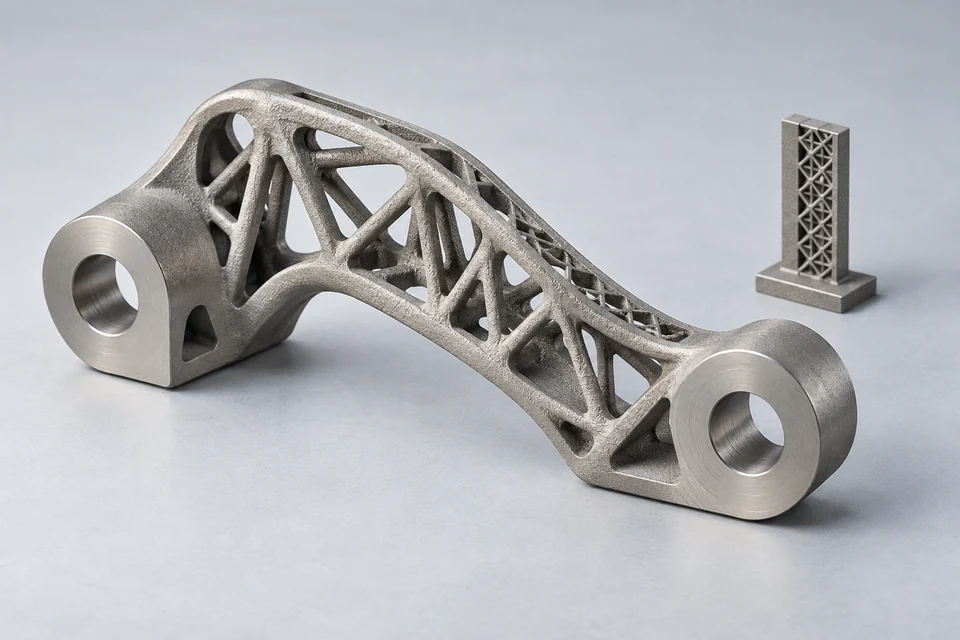
Metal additive manufacturing
A successful build does not resolve every surface, internal feature or material requirement. Follow the part through finishing and acceptance before treating machine activity as commercial output.
A conditional manufacturing route, not a prescribed process. Part requirements determine the actual stages and acceptance evidence.
Metal additive-manufacturing demand must reach qualified, accepted parts. Machine output can become downstream work in progress when finishing or inspection constrains release. Powder, equipment and manufacturing-service revenue remain distinct markets.
Consider a manufacturer choosing whether to print a metal bracket in series. Its mounting faces, internal geometry and material behaviour define the acceptance conditions. Build orientation and supports can change both what is printed and the work left to do. Comparing purchase price with a printer-hour rate leaves out part of the manufacturing decision.
NIST identifies internal defects, complex surfaces and material anisotropy as distinct qualification challenges. Its 2024 work examines monitoring and non-destructive evaluation in the context of process and part qualification. A monitoring signal is evidence to interpret against an acceptance rule; it is not an automatic replacement for all finished-part inspection.
For a fixed qualified route, relate build loading and successful builds to the number of parts that survive post-processing and acceptance. Then locate the limiting stage: printing, heat treatment, support removal, machining or inspection. Additional printers can raise work in progress while delivered output stays constrained downstream.
The commercial choice may therefore be a different build layout, a finishing capability, an inspection service or another manufacturing route. A research conclusion should identify the part families that benefit, the customer qualification required and the conditions under which that conclusion would change. Powder sales, machine sales and part-manufacturing revenue are separate markets.
Trace the changed condition through the specific purchasing decision below.
If finishing and inspection remain fully occupied, another build can enlarge the queue rather than accepted deliveries. Compare the capacity and work content of every required stage.
A changed surface, internal-defect or material requirement can alter finishing, inspection and qualification. The opportunity for one tool can rise while the addressable part set narrows.
A recurring part family can change loading, setup and purchasing patterns. Establish the accepted configuration and expected order cadence before extrapolating a prototype quote.
Match the supplier opportunity to the customer’s limiting work. One equipment-growth forecast cannot allocate all four markets.
Build time, loading and uptime
Whether build capacity limits accepted deliveries.
Qualified powder input and usable return
Batch acceptance, recirculation and process losses.
Required operations and queues
Route-specific work content and accepted finished parts.
Features and acceptance evidence
Required measurement, defects and customer release.
These are investigation boundaries. No supplier share, yield or cost advantage is assigned.
Trace which applications moved from demonstration to qualified supply, and which did not. NIST's 2013 laboratory lessons and 2024 qualification work provide dated technical context; they do not measure adoption. Reconstruct process revisions, customer acceptance and repeat deliveries by part family before interpreting equipment investment as a market transition.
A product-history research agenda. Dated evidence is retained; no complete historical market series is claimed.
Connect the addressable customer and operating conditions to the decision.
Retain geometry, material, service conditions and the customer's acceptance criteria. One process does not address every metal part.
Measure accepted output and cost across building, finishing and inspection. Keep installed capacity separate from available qualified capacity.
Separate equipment, powder, software, manufacturing and testing services. Internal transfers cannot be added as independent end-market sales.
Follow two further products through the decisions they create.
Solid electrolytes
Ionic transport, handling and a compatible cell process enter the value of a solid electrolyte. A promising sample does not establish repeat batch consistency or the amount a customer's commercial cell will consume. Material qualification and cell-production acceptance have different evidence requirements.
Identify the chemistry and cell route the customer is validating. Separate development quantities from recurring purchases, then reconcile accepted material output with the customer programme's maturity and accessible supply.
Change the expansion case if the formulation, handling requirement, cell design or customer timeline changes. Seek batch results, customer validation and actual accepted orders rather than converting a roadmap into tonnes.
Solid Power — sulfide electrolyte technology
One manufacturer's technology route; neither an industry safety comparison nor measured adoption.
PEM electrolysers
Megawatts describe an electrical rating. Hydrogen output also depends on actual operation, system energy consumption and the delivery boundary. A stack, a complete system and a commissioned project are different transactions; component supply follows the accepted configuration and service schedule.
Define stack and system boundaries, electricity conditions and the downstream specification. Distinguish an order, installation and operation, and keep component renewal separate from new-project demand.
Revise the view when the power supply, operating profile, system design or offtake changes. Establish measured operation and project status; do not turn technical targets into current output.
US Department of Energy — hydrogen production by electrolysis
Technology and energy context. No project output, efficiency or useful-life assumption is supplied.
Related product markets
Follow a product into its scope, applications and research editions.
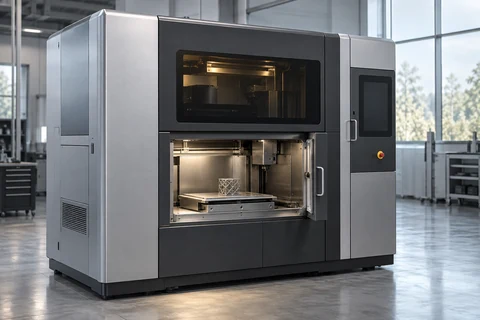
Additive manufacturing
Metal 3D printers build metal parts layer by layer from digital geometry; the selected report distinguishes laser- and electron-beam melting equipment and other listed processes.
Metal 3D printers build metal parts layer by layer from digital geometry; the selected report distinguishes laser- and electron-beam melting equipment and other listed processes.
Printed output reaches commercial use through finishing and inspection, making accepted-part delivery a stronger capacity measure than nominal printing speed.
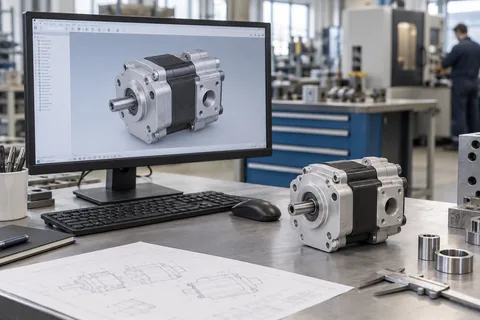
Operational modelling
A digital twin connects a digital representation of an asset or process with information about its operating state to support defined monitoring, prediction or decision tasks.
A digital twin connects a digital representation of an asset or process with information about its operating state to support defined monitoring, prediction or decision tasks.
Operating data and a defined decision turn a model into a deployed twin, separating visualization delivery from integration and continued operational use.
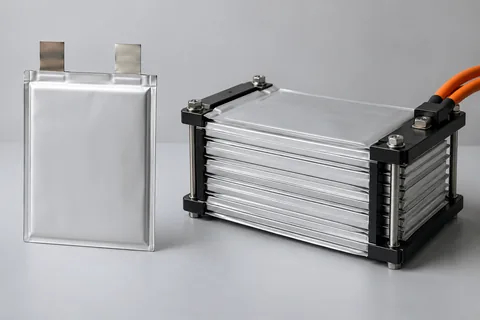
Battery technology
EV solid-state batteries use a solid ion-conducting electrolyte architecture; all-solid-state and hybrid designs require separate boundaries when comparing cell development and vehicle adoption.
EV solid-state batteries use a solid ion-conducting electrolyte architecture; all-solid-state and hybrid designs require separate boundaries when comparing cell development and vehicle adoption.
Electrolyte architecture changes the cell design, while manufacturing capability and pack integration determine how that design can enter a vehicle programme.
Representative product and service imagery. The selected report defines the research scope.
Product distinctions draw on the sources below. Demand connections and scenarios are APO editorial interpretation.
Discuss the product, geography and decision you need the research to address.