APO RESEARCH · REPORT
Automotive Coil Spring
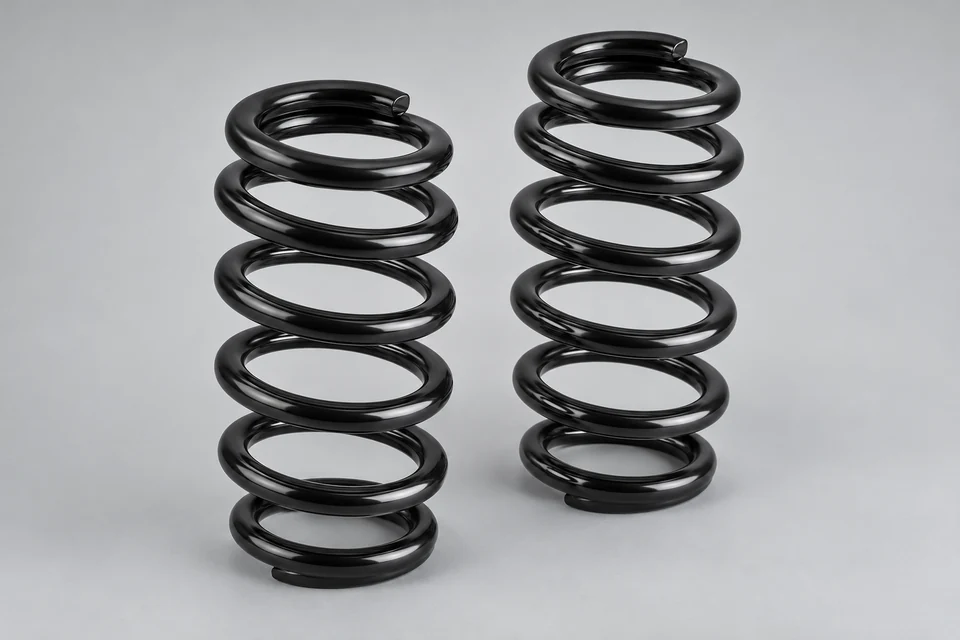
Automotive Coil Spring refers to the load carrying helical compression spring used in passenger car and light vehicle suspension systems. It operates between the sprung body structure and the wheel suspension assembly and determines a substantial portion of static ride height, wheel load response, suspension travel characteristics and body natural frequency.
Product & engineering
Understand the product.
Automotive Coil Spring refers to the load carrying helical compression spring used in passenger car and light vehicle suspension systems. It operates between the sprung body structure and the wheel suspension assembly and determines a substantial portion of static ride height, wheel load response, suspension travel characteristics and body natural frequency. Current production architectures include cylindrical linear springs, progressive springs, barrel and miniblock springs, side load springs, force center springs, variable pitch springs, variable wire section springs and curvilinear axis springs. MacPherson front suspension applications increasingly use controlled load axis geometries to offset transverse force at the strut. Barrel and miniblock geometries reduce compressed package height by allowing adjacent coils to nest. Tapered wire, variable pitch and controlled active coil engagement provide progressive spring characteristics without adding a secondary spring element.
The material base remains high strength quenched and tempered spring steel. Medium carbon high silicon grades represented by SAE 9254, SAE 9260, JIS SUP12 and JIS SUP7 established the conventional material system for automotive suspension coils. Current high stress programs increasingly use modified silicon chromium steels, chromium vanadium steels and proprietary microalloyed spring steels with higher resistance to fatigue, toughness loss and hydrogen assisted fracture at elevated strength levels. Steelmakers and spring manufacturers now control alloy chemistry, inclusion population, decarburization behavior and wire surface condition as part of the material architecture because modern lightweight coils operate at substantially higher material utilization than earlier suspension springs. Nippon Steel has developed low alloy high strength suspension spring steels specifically for increased fatigue strength and hydrogen embrittlement resistance. Mubea uses high tensile microalloyed spring wire with induction tempering and additional surface technologies. Sogefi applies high stress microalloyed steels and also maintains titanium capability for high performance applications. Titanium remains a specialized material route. High strength steel accounts for the principal volume of current automotive coil spring production.
Cold forming and hot forming remain the two industrial production routes. Cold formed suspension springs use previously hardened and tempered high strength wire, followed by coiling and stress relieving. The process provides tight geometric control and accommodates complex load axis geometry, variable pitch and sophisticated cold coiled designs. Its application range has expanded into larger wire diameters and higher load classes. Current electric vehicle and light commercial vehicle programs are extending cold forming into springs with higher loads and higher spring rates. Hot formed springs use heated spring bar or wire followed by quenching and tempering and remain relevant for large section, high load and specific metallurgical applications. High stress production increasingly combines induction tempered wire, stress optimized coil geometry, controlled setting, intensive shot peening and engineered surface compression. Mubea HPP introduces deep compressive residual stress into the spring surface layer, while HPP2 adds surface grinding and SLM introduces surface layer hardening. These technologies increase usable stress amplitude and allow material mass to be removed while retaining required fatigue capability.
The current technology frontier is shifting from conventional constant section cylindrical coils toward stress optimized spring systems. Variable section and tapered wire redistribute material toward highly stressed regions and reduce mass in lower stressed sections. Side load and L shaped springs control the resultant force axis and reduce lateral loading within MacPherson struts. Barrel and miniblock springs increase packaging efficiency and permit progressive rate behavior. High stress steel, enhanced residual compression, advanced heat treatment and corrosion resistant surface systems enable smaller wire sections and lower spring mass at equivalent vehicle load. Mubea currently commercializes its MLR coil spring system with weight reduction of up to 15 percent and has extended cold forming to high load and high rate applications for new energy vehicles. thyssenkrupp ThermoTecSpring uses ThermoTecWire technology to achieve weight reduction approaching 20 percent while retaining conventional spring steel as the base material. NHK Spring produces high stress lightweight coils and L shaped load axis control springs and combines proprietary material development, heat treatment and spring geometry engineering. Sogefi applies cold and hot forming, variable wire cross sections, curvilinear spring axes, high stress microalloyed steels and advanced surface treatment technologies across OEM suspension programs. These technologies define the present industrial direction of Automotive Coil Spring development, with increasing spring stress, reduced mass, compact package volume, controlled load axis and higher load capability becoming particularly important as vehicle mass increases in battery electric vehicles.
Electrical or electromechanical components must be evaluated under the specified voltage, current, switching, thermal and environmental duty. Component rating and the capacity of a complete installed system describe different boundaries.
What turns activity into demand
Qualified installations and replacement needs create orders through the required electrical duty and system configuration. Nameplate capacity, delivered equipment and useful operating output are distinct measures.
The commercial boundary
For Automotive Coil Spring, distinguish the supplied product from its inputs and the complete application. Report types and applications may overlap; retain the selected edition's product definition, geography, period, unit and transaction basis when comparing estimates.
Which conditions determine usable automotive coil spring performance?
Automotive Coil Spring refers to the load carrying helical compression spring used in passenger car and light vehicle suspension systems. It operates between the sprung body structure and the wheel suspension assembly and determines a substantial portion of static ride height, wheel load response, suspension travel characteristics and body natural frequency. Read continuous and transient behaviour together with protection, thermal management and the connected load. Separate the individual device from controllers, installation and complete equipment when comparing market quantity or value.
Selected research
Industry Research
Automotive Coil Spring Industry Research Report 2026
Market perspective
According to APO Research, Inc, the global Automotive Coil Spring market was valued at USD 3,444.05 million in 2025 and is expected to reach USD 3,597.16 million in 2026 and USD 4,572.60 million by 2032, representing a CAGR of 4.08% from 2026 to 2032. Annual market revenue is expected to increase by USD 975.44 million over this period. Market value growth is expected to exceed physical volume growth as higher axle loads, stricter mass reduction targets, more complex suspension packaging and greater use of high strength spring steels raise the value content of each spring. Passenger vehicles remain the principal volume base, while battery electric vehicles increase requirements for spring load capacity, fatigue resistance and packaging efficiency because battery mass raises curb weight and axle loading.
Asia Pacific is expected to contribute the largest absolute increase in Automotive Coil Spring demand through China, Japan, South Korea and India. China combines the world's largest light vehicle production base with expanding domestic suspension spring capacity from Hwaway Technology, Zhejiang Meili High Technology, Shanghai China Spring Manufacturing, Guangzhou Huade Automotive Spring and other established suppliers. Japan and South Korea retain substantial production from NHK Spring, Mitsubishi Steel, Chuo Spring and DAEWON KANG UP, including supply to vehicle assembly operations outside their home markets. India is increasing local spring capacity alongside higher passenger vehicle and utility vehicle output. North American growth is supported by sustained light vehicle assembly, pickup and SUV production, localization of suspension components and replacement demand from an aging vehicle parc. Europe remains a major value market because Mubea, thyssenkrupp, SCHERDEL, Sogefi, Eibach and other suppliers maintain advanced spring engineering and manufacturing operations serving European and global OEM programs.
Cold formed coil springs are expected to account for the larger share of incremental demand in passenger cars and light vehicles. Advances in high tensile spring wire, induction heat treatment, residual compression technologies and precision forming have expanded cold forming into higher load and higher spring rate applications. Hot formed coil springs remain important where larger wire sections, higher loads and specific metallurgical requirements favor hot coiling. Current product development is moving toward high stress spring architectures using silicon chromium steels, chromium vanadium steels and proprietary microalloyed spring steels. Variable wire section, variable pitch, barrel geometry, miniblock geometry, side load designs and controlled force axis concepts reduce spring mass, compressed height and lateral loads while maintaining required wheel load and fatigue performance. Titanium remains limited to specialized high performance applications because material and processing costs remain substantially above steel based systems.
Read the full market overview
OEM applications account for the principal production volume because each coil sprung vehicle normally requires multiple suspension springs as original equipment. Incremental OEM demand is tied directly to vehicle production, suspension architecture and the share of models using coil spring based systems. Aftermarket demand provides a recurring replacement base generated by corrosion, fatigue, permanent set, collision repair and suspension refurbishment. Replacement intensity is structurally higher in regions with older vehicle fleets, road salt exposure, poor road surfaces and high annual mileage. The aftermarket therefore adds a relatively stable demand layer even when new vehicle production cycles soften.
The competitive structure remains led by established global spring specialists including NHK Spring, Mubea, thyssenkrupp, SCHERDEL, Sogefi, Rassini, Mitsubishi Steel, Chuo Spring and DAEWON KANG UP, together with increasingly capable Chinese manufacturers. Competitive differentiation is increasingly determined by usable material stress, spring mass, load axis control, forming range, heat treatment capability, residual stress engineering, corrosion durability and the ability to supply consistent high volume programs across multiple regions. Capacity additions are increasingly directed toward advanced cold forming, high strength wire processing and localized production close to vehicle assembly operations. Utilization remains linked to regional vehicle output and OEM program allocation, while suppliers with diversified customer bases and multiple production regions are better able to absorb model changeovers and vehicle production volatility. The 2026 to 2032 market expansion therefore reflects a combination of moderate physical unit growth, increasing spring value per vehicle, heavier vehicle architectures, higher material performance and continuing replacement demand.
Report Scope
This report quantifies the global Automotive Coil Spring market in revenue (US$ million) and, where applicable, sales volume (k units), using 2025 as the base year and providing annual historical and forecast data for 2021–2032.
It standardizes definitions of types and applications, harmonizes vendor attribution, and presents comparable time series by company, type, application, and region/country, including indicative price bands (US$/k units) and concentration ratios (CR5/CR10).
The outputs are intended to support strategy development, budgeting, and performance benchmarking for manufacturers, new entrants, channel partners, and investors; the report also reviews technology shifts and notable product introductions relevant to Automotive Coil Spring.
Key Companies & Market Share Insights
This section profiles leading manufacturers, combining 2021–2025 results with a 2026–2032 outlook. It reports revenue, market share, price bands, product and application mix, regional and channel mix, and key developments (M&A, capacity additions, certifications). It also provides global revenue, average price, and—where applicable—sales volume by manufacturer, and calculates CR5/CR10 and rank changes to support comparative benchmarking.
Automotive Coil Spring Market by Company
NHK Spring
Mubea
thyssenkrupp
SCHERDEL
Sogefi
Rassini
Mitsubishi Steel
Chuo Spring
DAEWON KANG UP
Eibach
Supreme Spring
Hwaway Technology
Zhejiang Meili High Technology
Shanghai China Spring Manufacturing
Guangzhou Huade Automotive Spring
Zhejiang Jinchang Spring
Qianjiang Spring
Shandong Lianmei Automotive Spring
Hubei Xinbaoma Spring
Hangzhou Xingfa Spring
3S Applied Technologies
Lesjöfors
MW Components
H&R Spezialfedern
TEVEMA
Elgin Industries
Betts Spring Manufacturing
King Springs
CS Germany
Automotive Coil Spring Segment by Type
Cold Formed Coil Springs
Hot Formed Coil Springs
Automotive Coil Spring Segment by Application
OEM
Aftermarket
Automotive Coil Spring Segment by Region
North America
United States
Canada
Mexico
Europe
Germany
France
U.K.
Italy
Russia
Spain
Netherlands
Switzerland
Sweden
Poland
Asia-Pacific
China
Japan
South Korea
India
Australia
Taiwan
Southeast Asia
South America
Brazil
Argentina
Chile
Colombia
Middle East & Africa
Egypt
South Africa
Israel
Türkiye
GCC Countries
Key Drivers & Barriers
High-impact rendering factors and drivers have been studied in this report to aid the readers to understand the general development. Moreover, the report includes restraints and challenges that may act as stumbling blocks on the way of the players. This will assist the users to be attentive and make informed decisions related to business. Specialists have also laid their focus on the upcoming business prospects.
Reasons to Buy This Report
1. This report will help the readers to understand the competition within the industries and strategies for the competitive environment to enhance the potential profit. The report also focuses on the competitive landscape of the global Automotive Coil Spring market, and introduces in detail the market share, industry ranking, competitor ecosystem, market performance, new product development, operation situation, expansion, and acquisition. etc. of the main players, which helps the readers to identify the main competitors and deeply understand the competition pattern of the market.
2. This report will help stakeholders to understand the global industry status and trends of Automotive Coil Spring and provides them with information on key market drivers, restraints, challenges, and opportunities.
3. This report will help stakeholders to understand competitors better and gain more insights to strengthen their position in their businesses. The competitive landscape section includes the market share and rank (in volume and value), competitor ecosystem, new product development, expansion, and acquisition.
4. This report stays updated with novel technology integration, features, and the latest developments in the market
5. This report helps stakeholders to gain insights into which regions to target globally
6. This report helps stakeholders to gain insights into the end-user perception concerning the adoption of Automotive Coil Spring.
7. This report helps stakeholders to identify some of the key players in the market and understand their valuable contribution.
Chapter Outline
Chapter 1: Research objectives, research methods, data sources, data cross-validation;
Chapter 2: Introduces the report scope of the report, executive summary of different market segments (by region, product type, application, etc), including the market size of each market segment, future development potential, and so on. It offers a high-level view of the current state of the market and its likely evolution in the short to mid-term, and long term.
Chapter 3: Detailed analysis of Automotive Coil Spring manufacturers competitive landscape, price, production and value market share, latest development plan, merger, and acquisition information, etc.
Chapter 4: Provides profiles of key players, introducing the basic situation of the main companies in the market in detail, including product production/output, value, price, gross margin, product introduction, recent development, etc.
Chapter 5: Production/output, value of Automotive Coil Spring by region/country. It provides a quantitative analysis of the market size and development potential of each region in the next six years.
Chapter 6: Consumption of Automotive Coil Spring in regional level and country level. It provides a quantitative analysis of the market size and development potential of each region and its main countries and introduces the market development, future development prospects, market space, and production of each country in the world.
Chapter 7: Provides the analysis of various market segments by type, covering the market size and development potential of each market segment, to help readers find the blue ocean market in different market segments.
Chapter 8: Provides the analysis of various market segments by application, covering the market size and development potential of each market segment, to help readers find the blue ocean market in different downstream markets.
Chapter 9: Analysis of industrial chain, including the upstream and downstream of the industry.
Chapter 10: Introduces the market dynamics, latest developments of the market, the driving factors and restrictive factors of the market, the challenges and risks faced by manufacturers in the industry, and the analysis of relevant policies in the industry.
Chapter 11: The main points and conclusions of the report.
More report detail
Tables and figures
Scope & coverage.
Types
- Cold Formed Coil Springs
- Hot Formed Coil Springs
Applications
- OEM
- Aftermarket
Companies covered
- NHK Spring
- Mubea
- thyssenkrupp
- SCHERDEL
- Sogefi
- Rassini
- Mitsubishi Steel
- Chuo Spring
- DAEWON KANG UP
- Eibach
- Supreme Spring
- Hwaway Technology
- Zhejiang Meili High Technology
- Shanghai China Spring Manufacturing
- Guangzhou Huade Automotive Spring
- Zhejiang Jinchang Spring
- Qianjiang Spring
- Shandong Lianmei Automotive Spring
- Hubei Xinbaoma Spring
- Hangzhou Xingfa Spring
- 3S Applied Technologies
- Lesjöfors
- MW Components
- H&R Spezialfedern
- TEVEMA
- Elgin Industries
- Betts Spring Manufacturing
- King Springs
- CS Germany
Inside the report.
1 Preface
- 1.1 Scope of Report
- 1.2 Reasons for Doing This Study
- 1.3 Research Methodology
- 1.4 Research Process
- 1.5 Data Source
- 1.5.1 Secondary Sources
- 1.5.2 Primary Sources
2 Market Overview
- 2.1 Product Definition
- 2.2 Automotive Coil Spring by Type
- 2.2.1 Market Value Comparison by Type (2021 VS 2025 VS 2032) & (US$ Million)
- 2.2.2 Cold Formed Coil Springs
- 2.2.3 Hot Formed Coil Springs
- 2.3 Automotive Coil Spring by Application
- 2.3.1 Market Value Comparison by Application (2021 VS 2025 VS 2032) & (US$ Million)
- 2.3.2 OEM
- 2.3.3 Aftermarket
- 2.4 Global Market Growth Prospects
- 2.4.1 Global Automotive Coil Spring Production Value Estimates and Forecasts (2021-2032)
- 2.4.2 Global Automotive Coil Spring Production Capacity Estimates and Forecasts (2021-2032)
- 2.4.3 Global Automotive Coil Spring Production Estimates and Forecasts (2021-2032)
- 2.4.4 Global Automotive Coil Spring Market Average Price (2021-2032)
3 Market Competitive Landscape by Manufacturers
- 3.1 Global Automotive Coil Spring Production by Manufacturers (2021-2026)
- 3.2 Global Automotive Coil Spring Production Value by Manufacturers (2021-2026)
- 3.3 Global Automotive Coil Spring Average Price by Manufacturers (2021-2026)
- 3.4 Global Automotive Coil Spring Industry Manufacturers Ranking, 2024 VS 2025 VS 2026
- 3.5 Global Automotive Coil Spring Key Manufacturers, Manufacturing Sites & Headquarters
- 3.6 Global Automotive Coil Spring Manufacturers, Product Type & Application
- 3.7 Global Automotive Coil Spring Manufacturers Established Date
- 3.8 Global Automotive Coil Spring Market CR5 and HHI
- 3.9 Global Manufacturers Mergers & Acquisition
4 Manufacturers Profiled
- 4.1 NHK Spring
- 4.1.1 NHK Spring Automotive Coil Spring Company Information
- 4.1.2 NHK Spring Automotive Coil Spring Business Overview
- 4.1.3 NHK Spring Automotive Coil Spring Production, Value and Gross Margin (2021-2026)
- 4.1.4 NHK Spring Product Portfolio
- 4.1.5 NHK Spring Recent Developments
- 4.2 Mubea
- 4.2.1 Mubea Automotive Coil Spring Company Information
- 4.2.2 Mubea Automotive Coil Spring Business Overview
- 4.2.3 Mubea Automotive Coil Spring Production, Value and Gross Margin (2021-2026)
- 4.2.4 Mubea Product Portfolio
- 4.2.5 Mubea Recent Developments
- 4.3 thyssenkrupp
- 4.3.1 thyssenkrupp Automotive Coil Spring Company Information
- 4.3.2 thyssenkrupp Automotive Coil Spring Business Overview
- 4.3.3 thyssenkrupp Automotive Coil Spring Production, Value and Gross Margin (2021-2026)
- 4.3.4 thyssenkrupp Product Portfolio
- 4.3.5 thyssenkrupp Recent Developments
- 4.4 SCHERDEL
- 4.4.1 SCHERDEL Automotive Coil Spring Company Information
- 4.4.2 SCHERDEL Automotive Coil Spring Business Overview
- 4.4.3 SCHERDEL Automotive Coil Spring Production, Value and Gross Margin (2021-2026)
- 4.4.4 SCHERDEL Product Portfolio
- 4.4.5 SCHERDEL Recent Developments
- 4.5 Sogefi
- 4.5.1 Sogefi Automotive Coil Spring Company Information
- 4.5.2 Sogefi Automotive Coil Spring Business Overview
- 4.5.3 Sogefi Automotive Coil Spring Production, Value and Gross Margin (2021-2026)
- 4.5.4 Sogefi Product Portfolio
- 4.5.5 Sogefi Recent Developments
- 4.6 Rassini
- 4.6.1 Rassini Automotive Coil Spring Company Information
- 4.6.2 Rassini Automotive Coil Spring Business Overview
- 4.6.3 Rassini Automotive Coil Spring Production, Value and Gross Margin (2021-2026)
- 4.6.4 Rassini Product Portfolio
- 4.6.5 Rassini Recent Developments
- 4.7 Mitsubishi Steel
- 4.7.1 Mitsubishi Steel Automotive Coil Spring Company Information
- 4.7.2 Mitsubishi Steel Automotive Coil Spring Business Overview
- 4.7.3 Mitsubishi Steel Automotive Coil Spring Production, Value and Gross Margin (2021-2026)
- 4.7.4 Mitsubishi Steel Product Portfolio
- 4.7.5 Mitsubishi Steel Recent Developments
- 4.8 Chuo Spring
- 4.8.1 Chuo Spring Automotive Coil Spring Company Information
- 4.8.2 Chuo Spring Automotive Coil Spring Business Overview
- 4.8.3 Chuo Spring Automotive Coil Spring Production, Value and Gross Margin (2021-2026)
- 4.8.4 Chuo Spring Product Portfolio
- 4.8.5 Chuo Spring Recent Developments
- 4.9 DAEWON KANG UP
- 4.9.1 DAEWON KANG UP Automotive Coil Spring Company Information
- 4.9.2 DAEWON KANG UP Automotive Coil Spring Business Overview
- 4.9.3 DAEWON KANG UP Automotive Coil Spring Production, Value and Gross Margin (2021-2026)
- 4.9.4 DAEWON KANG UP Product Portfolio
- 4.9.5 DAEWON KANG UP Recent Developments
- 4.10 Eibach
- 4.10.1 Eibach Automotive Coil Spring Company Information
- 4.10.2 Eibach Automotive Coil Spring Business Overview
- 4.10.3 Eibach Automotive Coil Spring Production, Value and Gross Margin (2021-2026)
- 4.10.4 Eibach Product Portfolio
- 4.10.5 Eibach Recent Developments
- 4.11 Supreme Spring
- 4.11.1 Supreme Spring Automotive Coil Spring Company Information
- 4.11.2 Supreme Spring Automotive Coil Spring Business Overview
- 4.11.3 Supreme Spring Automotive Coil Spring Production, Value and Gross Margin (2021-2026)
- 4.11.4 Supreme Spring Product Portfolio
- 4.11.5 Supreme Spring Recent Developments
- 4.12 Hwaway Technology
- 4.12.1 Hwaway Technology Automotive Coil Spring Company Information
- 4.12.2 Hwaway Technology Automotive Coil Spring Business Overview
- 4.12.3 Hwaway Technology Automotive Coil Spring Production, Value and Gross Margin (2021-2026)
- 4.12.4 Hwaway Technology Product Portfolio
- 4.12.5 Hwaway Technology Recent Developments
- 4.13 Zhejiang Meili High Technology
- 4.13.1 Zhejiang Meili High Technology Automotive Coil Spring Company Information
- 4.13.2 Zhejiang Meili High Technology Automotive Coil Spring Business Overview
- 4.13.3 Zhejiang Meili High Technology Automotive Coil Spring Production, Value and Gross Margin (2021-2026)
- 4.13.4 Zhejiang Meili High Technology Product Portfolio
- 4.13.5 Zhejiang Meili High Technology Recent Developments
- 4.14 Shanghai China Spring Manufacturing
- 4.14.1 Shanghai China Spring Manufacturing Automotive Coil Spring Company Information
- 4.14.2 Shanghai China Spring Manufacturing Automotive Coil Spring Business Overview
- 4.14.3 Shanghai China Spring Manufacturing Automotive Coil Spring Production, Value and Gross Margin (2021-2026)
- 4.14.4 Shanghai China Spring Manufacturing Product Portfolio
- 4.14.5 Shanghai China Spring Manufacturing Recent Developments
- 4.15 Guangzhou Huade Automotive Spring
- 4.15.1 Guangzhou Huade Automotive Spring Automotive Coil Spring Company Information
- 4.15.2 Guangzhou Huade Automotive Spring Automotive Coil Spring Business Overview
- 4.15.3 Guangzhou Huade Automotive Spring Automotive Coil Spring Production, Value and Gross Margin (2021-2026)
- 4.15.4 Guangzhou Huade Automotive Spring Product Portfolio
- 4.15.5 Guangzhou Huade Automotive Spring Recent Developments
- 4.16 Zhejiang Jinchang Spring
- 4.16.1 Zhejiang Jinchang Spring Automotive Coil Spring Company Information
- 4.16.2 Zhejiang Jinchang Spring Automotive Coil Spring Business Overview
- 4.16.3 Zhejiang Jinchang Spring Automotive Coil Spring Production, Value and Gross Margin (2021-2026)
- 4.16.4 Zhejiang Jinchang Spring Product Portfolio
- 4.16.5 Zhejiang Jinchang Spring Recent Developments
- 4.17 Qianjiang Spring
- 4.17.1 Qianjiang Spring Automotive Coil Spring Company Information
- 4.17.2 Qianjiang Spring Automotive Coil Spring Business Overview
- 4.17.3 Qianjiang Spring Automotive Coil Spring Production, Value and Gross Margin (2021-2026)
- 4.17.4 Qianjiang Spring Product Portfolio
- 4.17.5 Qianjiang Spring Recent Developments
- 4.18 Shandong Lianmei Automotive Spring
- 4.18.1 Shandong Lianmei Automotive Spring Automotive Coil Spring Company Information
- 4.18.2 Shandong Lianmei Automotive Spring Automotive Coil Spring Business Overview
- 4.18.3 Shandong Lianmei Automotive Spring Automotive Coil Spring Production, Value and Gross Margin (2021-2026)
- 4.18.4 Shandong Lianmei Automotive Spring Product Portfolio
- 4.18.5 Shandong Lianmei Automotive Spring Recent Developments
- 4.19 Hubei Xinbaoma Spring
- 4.19.1 Hubei Xinbaoma Spring Automotive Coil Spring Company Information
- 4.19.2 Hubei Xinbaoma Spring Automotive Coil Spring Business Overview
- 4.19.3 Hubei Xinbaoma Spring Automotive Coil Spring Production, Value and Gross Margin (2021-2026)
- 4.19.4 Hubei Xinbaoma Spring Product Portfolio
- 4.19.5 Hubei Xinbaoma Spring Recent Developments
- 4.20 Hangzhou Xingfa Spring
- 4.20.1 Hangzhou Xingfa Spring Automotive Coil Spring Company Information
- 4.20.2 Hangzhou Xingfa Spring Automotive Coil Spring Business Overview
- 4.20.3 Hangzhou Xingfa Spring Automotive Coil Spring Production, Value and Gross Margin (2021-2026)
- 4.20.4 Hangzhou Xingfa Spring Product Portfolio
- 4.20.5 Hangzhou Xingfa Spring Recent Developments
- 4.21 3S Applied Technologies
- 4.21.1 3S Applied Technologies Automotive Coil Spring Company Information
- 4.21.2 3S Applied Technologies Automotive Coil Spring Business Overview
- 4.21.3 3S Applied Technologies Automotive Coil Spring Production, Value and Gross Margin (2021-2026)
- 4.21.4 3S Applied Technologies Product Portfolio
- 4.21.5 3S Applied Technologies Recent Developments
- 4.22 Lesjöfors
- 4.22.1 Lesjöfors Automotive Coil Spring Company Information
- 4.22.2 Lesjöfors Automotive Coil Spring Business Overview
- 4.22.3 Lesjöfors Automotive Coil Spring Production, Value and Gross Margin (2021-2026)
- 4.22.4 Lesjöfors Product Portfolio
- 4.22.5 Lesjöfors Recent Developments
- 4.23 MW Components
- 4.23.1 MW Components Automotive Coil Spring Company Information
- 4.23.2 MW Components Automotive Coil Spring Business Overview
- 4.23.3 MW Components Automotive Coil Spring Production, Value and Gross Margin (2021-2026)
- 4.23.4 MW Components Product Portfolio
- 4.23.5 MW Components Recent Developments
- 4.24 H&R Spezialfedern
- 4.24.1 H&R Spezialfedern Automotive Coil Spring Company Information
- 4.24.2 H&R Spezialfedern Automotive Coil Spring Business Overview
- 4.24.3 H&R Spezialfedern Automotive Coil Spring Production, Value and Gross Margin (2021-2026)
- 4.24.4 H&R Spezialfedern Product Portfolio
- 4.24.5 H&R Spezialfedern Recent Developments
- 4.25 TEVEMA
- 4.25.1 TEVEMA Automotive Coil Spring Company Information
- 4.25.2 TEVEMA Automotive Coil Spring Business Overview
- 4.25.3 TEVEMA Automotive Coil Spring Production, Value and Gross Margin (2021-2026)
- 4.25.4 TEVEMA Product Portfolio
- 4.25.5 TEVEMA Recent Developments
- 4.26 Elgin Industries
- 4.26.1 Elgin Industries Automotive Coil Spring Company Information
- 4.26.2 Elgin Industries Automotive Coil Spring Business Overview
- 4.26.3 Elgin Industries Automotive Coil Spring Production, Value and Gross Margin (2021-2026)
- 4.26.4 Elgin Industries Product Portfolio
- 4.26.5 Elgin Industries Recent Developments
- 4.27 Betts Spring Manufacturing
- 4.27.1 Betts Spring Manufacturing Automotive Coil Spring Company Information
- 4.27.2 Betts Spring Manufacturing Automotive Coil Spring Business Overview
- 4.27.3 Betts Spring Manufacturing Automotive Coil Spring Production, Value and Gross Margin (2021-2026)
- 4.27.4 Betts Spring Manufacturing Product Portfolio
- 4.27.5 Betts Spring Manufacturing Recent Developments
- 4.28 King Springs
- 4.28.1 King Springs Automotive Coil Spring Company Information
- 4.28.2 King Springs Automotive Coil Spring Business Overview
- 4.28.3 King Springs Automotive Coil Spring Production, Value and Gross Margin (2021-2026)
- 4.28.4 King Springs Product Portfolio
- 4.28.5 King Springs Recent Developments
- 4.29 CS Germany
- 4.29.1 CS Germany Automotive Coil Spring Company Information
- 4.29.2 CS Germany Automotive Coil Spring Business Overview
- 4.29.3 CS Germany Automotive Coil Spring Production, Value and Gross Margin (2021-2026)
- 4.29.4 CS Germany Product Portfolio
- 4.29.5 CS Germany Recent Developments
5 Global Automotive Coil Spring Production by Region
- 5.1 Global Automotive Coil Spring Production Estimates and Forecasts by Region: 2021 VS 2025 VS 2032
- 5.2 Global Automotive Coil Spring Production by Region: 2021-2032
- 5.2.1 Global Automotive Coil Spring Production by Region: 2021-2026
- 5.2.2 Global Automotive Coil Spring Production Forecast by Region (2027-2032)
- 5.3 Global Automotive Coil Spring Production Value Estimates and Forecasts by Region: 2021 VS 2025 VS 2032
- 5.4 Global Automotive Coil Spring Production Value by Region: 2021-2032
- 5.4.1 Global Automotive Coil Spring Production Value by Region: 2021-2026
- 5.4.2 Global Automotive Coil Spring Production Value Forecast by Region (2027-2032)
- 5.5 Global Automotive Coil Spring Market Price Analysis by Region (2021-2026)
- 5.6 Global Automotive Coil Spring Production and Value, YOY Growth
- 5.6.1 North America Automotive Coil Spring Production Value Estimates and Forecasts (2021-2032)
- 5.6.2 Europe Automotive Coil Spring Production Value Estimates and Forecasts (2021-2032)
- 5.6.3 China Automotive Coil Spring Production Value Estimates and Forecasts (2021-2032)
- 5.6.4 Japan Automotive Coil Spring Production Value Estimates and Forecasts (2021-2032)
- 5.6.5 South Korea Automotive Coil Spring Production Value Estimates and Forecasts (2021-2032)
- 5.6.6 India Automotive Coil Spring Production Value Estimates and Forecasts (2021-2032)
6 Global Automotive Coil Spring Consumption by Region
- 6.1 Global Automotive Coil Spring Consumption Estimates and Forecasts by Region: 2021 VS 2025 VS 2032
- 6.2 Global Automotive Coil Spring Consumption by Region (2021-2032)
- 6.2.1 Global Automotive Coil Spring Consumption by Region: 2021-2026
- 6.2.2 Global Automotive Coil Spring Forecasted Consumption by Region (2027-2032)
- 6.3 North America
- 6.3.1 North America Automotive Coil Spring Consumption Growth Rate by Country: 2021 VS 2025 VS 2032
- 6.3.2 North America Automotive Coil Spring Consumption by Country (2021-2032)
- 6.3.3 United States
- 6.3.4 Canada
- 6.3.5 Mexico
- 6.4 Europe
- 6.4.1 Europe Automotive Coil Spring Consumption Growth Rate by Country: 2021 VS 2025 VS 2032
- 6.4.2 Europe Automotive Coil Spring Consumption by Country (2021-2032)
- 6.4.3 Germany
- 6.4.4 France
- 6.4.5 U.K.
- 6.4.6 Italy
- 6.4.7 Russia
- 6.4.8 Spain
- 6.4.9 Netherlands
- 6.4.10 Switzerland
- 6.4.11 Sweden
- 6.4.12 Poland
- 6.5 Asia Pacific
- 6.5.1 Asia Pacific Automotive Coil Spring Consumption Growth Rate by Country: 2021 VS 2025 VS 2032
- 6.5.2 Asia Pacific Automotive Coil Spring Consumption by Country (2021-2032)
- 6.5.3 China
- 6.5.4 Japan
- 6.5.5 South Korea
- 6.5.6 India
- 6.5.7 Australia
- 6.5.8 Taiwan
- 6.5.9 Southeast Asia
- 6.6 South America, Middle East & Africa
- 6.6.1 South America, Middle East & Africa Automotive Coil Spring Consumption Growth Rate by Country: 2021 VS 2025 VS 2032
- 6.6.2 South America, Middle East & Africa Automotive Coil Spring Consumption by Country (2021-2032)
- 6.6.3 Brazil
- 6.6.4 Argentina
- 6.6.5 Chile
- 6.6.6 Turkey
- 6.6.7 GCC Countries
7 Segment by Type
- 7.1 Global Automotive Coil Spring Production by Type (2021-2032)
- 7.1.1 Global Automotive Coil Spring Production by Type (2021-2032) & (k units)
- 7.1.2 Global Automotive Coil Spring Production Market Share by Type (2021-2032)
- 7.2 Global Automotive Coil Spring Production Value by Type (2021-2032)
- 7.2.1 Global Automotive Coil Spring Production Value by Type (2021-2032) & (US$ Million)
- 7.2.2 Global Automotive Coil Spring Production Value Market Share by Type (2021-2032)
- 7.3 Global Automotive Coil Spring Price by Type (2021-2032)
8 Segment by Application
- 8.1 Global Automotive Coil Spring Production by Application (2021-2032)
- 8.1.1 Global Automotive Coil Spring Production by Application (2021-2032) & (k units)
- 8.1.2 Global Automotive Coil Spring Production Market Share by Application (2021-2032)
- 8.2 Global Automotive Coil Spring Production Value by Application (2021-2032)
- 8.2.1 Global Automotive Coil Spring Production Value by Application (2021-2032) & (US$ Million)
- 8.2.2 Global Automotive Coil Spring Production Value Market Share by Application (2021-2032)
- 8.3 Global Automotive Coil Spring Price by Application (2021-2032)
9 Value Chain and Sales Channels Analysis of the Market
- 9.1 Automotive Coil Spring Value Chain Analysis
- 9.1.1 Automotive Coil Spring Key Raw Materials
- 9.1.2 Raw Materials Key Suppliers
- 9.1.3 Automotive Coil Spring Production Mode & Process
- 9.2 Automotive Coil Spring Sales Channels Analysis
- 9.2.1 Direct Comparison with Distribution Share
- 9.2.2 Automotive Coil Spring Distributors
- 9.2.3 Automotive Coil Spring Customers
10 Global Automotive Coil Spring Analyzing Market Dynamics
- 10.1 Automotive Coil Spring Industry Trends
- 10.2 Automotive Coil Spring Industry Drivers
- 10.3 Automotive Coil Spring Industry Opportunities and Challenges
- 10.4 Automotive Coil Spring Industry Restraints
11 Report Conclusion
12 Disclaimer
GET THE RESEARCH
Choose your license.
Choose who needs access.
All options are for this report and research series.
PDF by email within 3–5 working days after payment confirmation.
Talk to an analyst