APO RESEARCH · REPORT
Isoprene Rubber (IR)
Isoprene Rubber (IR) refers to synthetic polyisoprene elastomers with grade-specific molecular microstructure. Polymer chemistry, molecular structure and compounding establish cure and service behaviour; finished-part performance requires the full formulation.
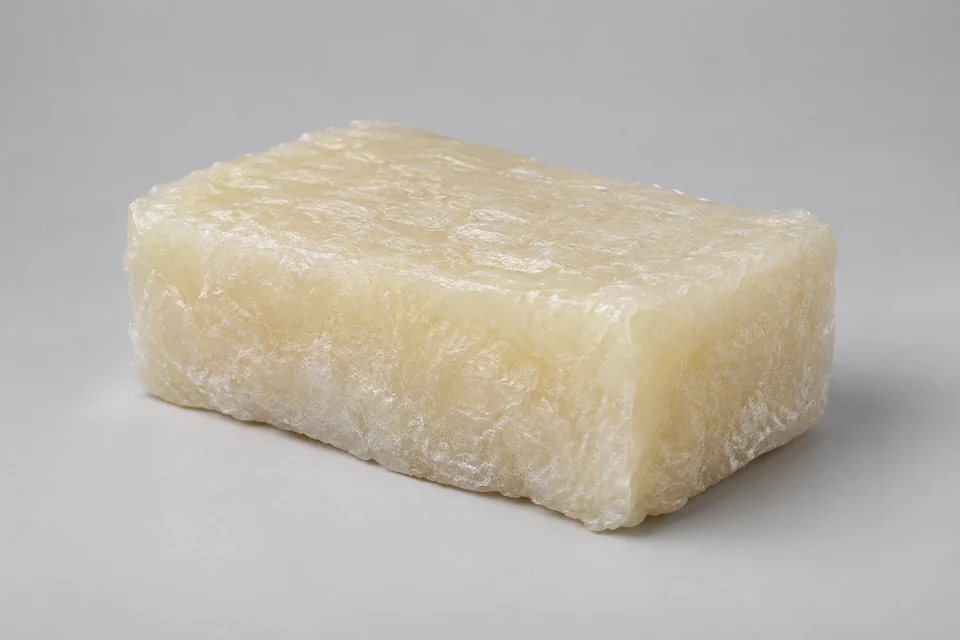
Product & engineering
Understand the product.
Isoprene rubber (IR) is a polymer of synthetic isoprene. It combines the key qualities of natural rubber such as good mechanical properties and hysteresis with superior features such as high purity, excellent clarity, good flow, low gel content, no nitrosamines, and no natural rubber proteins. The IR products are widely used in tire, medical products, conveyor belts and others.
In addition, polyisoprene elastomer is equivalent to isoprene rubber (IR).
For this subject, the supplied object is synthetic polyisoprene elastomers with grade-specific molecular microstructure. Compare monomer composition, molecular weight and cure system before finished hardness. Fillers, plasticisers and crosslink density alter compression set, swelling and low-temperature behaviour. A liquid reactive rubber is a formulation ingredient rather than a finished solid elastomer; assess the complete cured compound under the actual media and load conditions.
What turns activity into demand
Qualified formulations connect polymer content and process yield to accepted elastomer parts. Raw polymer, compound and converted-part demand must be tracked at their respective supply stages.
The commercial boundary
Polymer chemistry, cure and application are intersecting dimensions. Count raw elastomer or compounded material explicitly; finished seals or tyres cannot be added to polymer shipments without a material balance.
Why is the polymer name insufficient for a compound decision?
For this subject, the supplied object is synthetic polyisoprene elastomers with grade-specific molecular microstructure. Compare monomer composition, molecular weight and cure system before finished hardness. Fillers, plasticisers and crosslink density alter compression set, swelling and low-temperature behaviour. A liquid reactive rubber is a formulation ingredient rather than a finished solid elastomer; assess the complete cured compound under the actual media and load conditions.
Selected research
Industry Growth & Trends
Global Isoprene Rubber (IR) Industry Growth and Trends Forecast to 2032
Market perspective
Isoprene rubber (IR) is a polymer of synthetic isoprene. It combines the key qualities of natural rubber such as good mechanical properties and hysteresis with superior features such as high purity, excellent clarity, good flow, low gel content, no nitrosamines, and no natural rubber proteins. The IR products are widely used in tire, medical products, conveyor belts and others.
In addition, polyisoprene elastomer is equivalent to isoprene rubber (IR).
Global Isoprene Rubber (IR) key players include PJSC Nizhnekamskneftekhim, Kauchuk Sterlitamak, Goodyear Chemical, Zeon, Sibur, etc. Global top five manufacturers hold a share over 75%.
Read the full market overview
USA is the largest market, with a share over 20%, followed by EU and Japan, both have a share over 35%.
In terms of product, Industrial Grade is the largest segment, with a share over 95%. And in terms of application, the largest application is Tires and Tire Products, followed by Mechanical Rubber Products, etc.
Report Scope
This report provides a structured, data-driven view of the global Isoprene Rubber (IR) market, combining harmonized quantitative metrics with targeted qualitative insight to support business and growth strategy, market positioning, and capital allocation.
The Isoprene Rubber (IR) market size, estimates, and forecasts are presented in terms of sales volume (K MT) and revenue (US$ million), with 2025 as the base year and historical and forecast data for 2021-2032. The report segments the global Isoprene Rubber (IR) market by Type, Application, region/country, and company, provides regional market sizes at the segment level, profiles the competitive landscape and key players and their market ranks, and reviews technology trends and new product developments relevant to Isoprene Rubber (IR).
Key Companies & Market Share Insights
This section analyzes the strategies and performance of leading manufacturers in the global Isoprene Rubber (IR) market, including portfolio focus, innovation and product development, mergers and acquisitions, collaborations, and geographic expansion used to sustain or enhance competitive positions. It also summarizes recent corporate developments and key financial indicators and provides global revenue, price, and sales volume data by manufacturer for 2020-2025, enabling benchmarking of scale, pricing, and market share and supporting assessment of market concentration through indicators such as CR5 and CR10.
Isoprene Rubber (IR) Market by Company
PJSC Nizhnekamskneftekhim
KauchukSterlitamak
Sibur
Goodyear Chemical
Kraton
Zeon
JSR
Kuraray
Karbochem
Yikesi
Luhua
Tpi New Material
Isoprene Rubber (IR) Segment by Type
Medical Grade
Industrial Grade
Isoprene Rubber (IR) Segment by Application
Tires and Tire Products
Mechanical Rubber Products
Adhesives and Sealants
Others
Isoprene Rubber (IR) Segment by Region
North America
United States
Canada
Mexico
Europe
Germany
France
U.K.
Italy
Russia
Spain
Netherlands
Switzerland
Sweden
Poland
Asia-Pacific
China
Japan
South Korea
India
Australia
Taiwan
Southeast Asia
South America
Brazil
Argentina
Chile
Middle East & Africa
Egypt
South Africa
Israel
Türkiye
GCC Countries
Key Drivers & Barriers
High-impact rendering factors and drivers have been studied in this report to aid the readers to understand the general development. Moreover, the report includes restraints and challenges that may act as stumbling blocks on the way of the players. This will assist the users to be attentive and make informed decisions related to business. Specialists have also laid their focus on the upcoming business prospects.
Reasons to Buy This Report
1. This report will help the readers to understand the competition within the industries and strategies for the competitive environment to enhance the potential profit. The report also focuses on the competitive landscape of the global Isoprene Rubber (IR) market, and introduces in detail the market share, industry ranking, competitor ecosystem, market performance, new product development, operation situation, expansion, and acquisition. etc. of the main players, which helps the readers to identify the main competitors and deeply understand the competition pattern of the market.
2. This report will help stakeholders to understand the global industry status and trends of Isoprene Rubber (IR) and provides them with information on key market drivers, restraints, challenges, and opportunities.
3. This report will help stakeholders to understand competitors better and gain more insights to strengthen their position in their businesses. The competitive landscape section includes the market share and rank (in volume and value), competitor ecosystem, new product development, expansion, and acquisition.
4. This report stays updated with novel technology integration, features, and the latest developments in the market.
5. This report helps stakeholders to gain insights into which regions to target globally.
6. This report helps stakeholders to gain insights into the end-user perception concerning the adoption of Isoprene Rubber (IR).
7. This report helps stakeholders to identify some of the key players in the market and understand their valuable contribution.
Chapter Outline
Chapter 1: Introduces the study scope of this report, executive summary of market segments by type, market size segments for North America, Europe, Asia Pacific, South America, Middle East & Africa.
Chapter 2: Introduces the market dynamics, latest developments of the market, the driving factors and restrictive factors of the market, the challenges and risks faced by manufacturers in the industry, and the analysis of relevant policies in the industry.
Chapter 3: Detailed analysis of Isoprene Rubber (IR) manufacturers competitive landscape, price, sales, revenue, market share and ranking, latest development plan, merger, and acquisition information, etc.
Chapter 4: Sales, revenue of Isoprene Rubber (IR) in regional level. It provides a quantitative analysis of the market size and development potential of each region and introduces the future development prospects, and market space in the world.
Chapter 5: Introduces market segments by application, market size segment for North America, Europe, Asia Pacific, South America, Middle East & Africa.
Chapter 6: Provides profiles of key players, introducing the basic situation of the main companies in the market in detail, including product sales, revenue, price, gross margin, product introduction, recent development, etc.
Chapter 7, 8, 9, 10 and 11: North America, Europe, Asia Pacific, South America, Middle East & Africa, sales and revenue by country.
Chapter 12: Analysis of industrial chain, key raw materials, manufacturing cost, and market dynamics.
Chapter 13: Concluding Insights of the report.
More report detail
Tables and figures
Scope & coverage.
Types
- Medical Grade
- Industrial Grade
Applications
- Tires and Tire Products
- Mechanical Rubber Products
- Adhesives and Sealants
- Others
Companies covered
- PJSC Nizhnekamskneftekhim
- KauchukSterlitamak
- Sibur
- Goodyear Chemical
- Kraton
- Zeon
- JSR
- Kuraray
- Karbochem
- Yikesi
- Luhua
- Tpi New Material
Inside the report.
1 Market Overview
- 1.1 Product Definition
- 1.2 Global Market Growth Prospects
- 1.2.1 Global Isoprene Rubber (IR) Market Size Estimates and Forecasts (2021-2032)
- 1.2.2 Global Isoprene Rubber (IR) Sales Estimates and Forecasts (2021-2032)
- 1.3 Isoprene Rubber (IR) Market by Type
- 1.3.1 Medical Grade
- 1.3.2 Industrial Grade
- 1.4 Global Isoprene Rubber (IR) Market Size by Type
- 1.4.1 Global Isoprene Rubber (IR) Market Size Overview by Type (2021-2032)
- 1.4.2 Global Isoprene Rubber (IR) Historic Market Size Review by Type (2021-2026)
- 1.4.3 Global Isoprene Rubber (IR) Forecasted Market Size by Type (2027-2032)
- 1.5 Key Regions Market Size by Type
- 1.5.1 North America Isoprene Rubber (IR) Sales Breakdown by Type (2021-2026)
- 1.5.2 Europe Isoprene Rubber (IR) Sales Breakdown by Type (2021-2026)
- 1.5.3 Asia-Pacific Isoprene Rubber (IR) Sales Breakdown by Type (2021-2026)
- 1.5.4 South America Isoprene Rubber (IR) Sales Breakdown by Type (2021-2026)
- 1.5.5 Middle East and Africa Isoprene Rubber (IR) Sales Breakdown by Type (2021-2026)
2 Global Market Dynamics
- 2.1 Isoprene Rubber (IR) Industry Trends
- 2.2 Isoprene Rubber (IR) Industry Drivers
- 2.3 Isoprene Rubber (IR) Industry Opportunities and Challenges
- 2.4 Isoprene Rubber (IR) Industry Restraints
3 Market Competitive Landscape by Company
- 3.1 Global Top Players by Isoprene Rubber (IR) Revenue (2021-2026)
- 3.2 Global Top Players by Isoprene Rubber (IR) Sales (2021-2026)
- 3.3 Global Top Players by Isoprene Rubber (IR) Price (2021-2026)
- 3.4 Global Isoprene Rubber (IR) Industry Company Ranking, 2024 VS 2025 VS 2026
- 3.5 Global Isoprene Rubber (IR) Major Company Production Sites & Headquarters
- 3.6 Global Isoprene Rubber (IR) Company, Product Type & Application
- 3.7 Global Isoprene Rubber (IR) Company Establishment Date
- 3.8 Market Competitive Analysis
- 3.8.1 Global Isoprene Rubber (IR) Market CR5 and HHI
- 3.8.2 Global Top 5 and 10 Isoprene Rubber (IR) Players Market Share by Revenue in 2025
- 3.8.3 2025 Isoprene Rubber (IR) Tier 1, Tier 2, and Tier 3
4 Isoprene Rubber (IR) Regional Status and Outlook
- 4.1 Global Isoprene Rubber (IR) Market Size and CAGR by Region: 2021 VS 2025 VS 2032
- 4.2 Global Isoprene Rubber (IR) Historic Market Size by Region
- 4.2.1 Global Isoprene Rubber (IR) Sales in Volume by Region (2021-2026)
- 4.2.2 Global Isoprene Rubber (IR) Sales in Value by Region (2021-2026)
- 4.2.3 Global Isoprene Rubber (IR) Sales (Volume & Value), Price and Gross Margin (2021-2026)
- 4.3 Global Isoprene Rubber (IR) Forecasted Market Size by Region
- 4.3.1 Global Isoprene Rubber (IR) Sales in Volume by Region (2027-2032)
- 4.3.2 Global Isoprene Rubber (IR) Sales in Value by Region (2027-2032)
- 4.3.3 Global Isoprene Rubber (IR) Sales (Volume & Value), Price and Gross Margin (2027-2032)
5 Isoprene Rubber (IR) by Application
- 5.1 Isoprene Rubber (IR) Market by Application
- 5.1.1 Tires and Tire Products
- 5.1.2 Mechanical Rubber Products
- 5.1.3 Adhesives and Sealants
- 5.1.4 Others
- 5.2 Global Isoprene Rubber (IR) Market Size by Application
- 5.2.1 Global Isoprene Rubber (IR) Market Size Overview by Application (2021-2032)
- 5.2.2 Global Isoprene Rubber (IR) Historic Market Size Review by Application (2021-2026)
- 5.2.3 Global Isoprene Rubber (IR) Forecasted Market Size by Application (2027-2032)
- 5.3 Key Regions Market Size by Application
- 5.3.1 North America Isoprene Rubber (IR) Sales Breakdown by Application (2021-2026)
- 5.3.2 Europe Isoprene Rubber (IR) Sales Breakdown by Application (2021-2026)
- 5.3.3 Asia-Pacific Isoprene Rubber (IR) Sales Breakdown by Application (2021-2026)
- 5.3.4 South America Isoprene Rubber (IR) Sales Breakdown by Application (2021-2026)
- 5.3.5 Middle East and Africa Isoprene Rubber (IR) Sales Breakdown by Application (2021-2026)
6 Company Profiles
- 6.1 PJSC Nizhnekamskneftekhim
- 6.1.1 PJSC Nizhnekamskneftekhim Company Information
- 6.1.2 PJSC Nizhnekamskneftekhim Business Overview
- 6.1.3 PJSC Nizhnekamskneftekhim Isoprene Rubber (IR) Sales, Revenue and Gross Margin (2021-2026)
- 6.1.4 PJSC Nizhnekamskneftekhim Isoprene Rubber (IR) Product Portfolio
- 6.1.5 PJSC Nizhnekamskneftekhim Recent Developments
- 6.2 KauchukSterlitamak
- 6.2.1 KauchukSterlitamak Company Information
- 6.2.2 KauchukSterlitamak Business Overview
- 6.2.3 KauchukSterlitamak Isoprene Rubber (IR) Sales, Revenue and Gross Margin (2021-2026)
- 6.2.4 KauchukSterlitamak Isoprene Rubber (IR) Product Portfolio
- 6.2.5 KauchukSterlitamak Recent Developments
- 6.3 Sibur
- 6.3.1 Sibur Company Information
- 6.3.2 Sibur Business Overview
- 6.3.3 Sibur Isoprene Rubber (IR) Sales, Revenue and Gross Margin (2021-2026)
- 6.3.4 Sibur Isoprene Rubber (IR) Product Portfolio
- 6.3.5 Sibur Recent Developments
- 6.4 Goodyear Chemical
- 6.4.1 Goodyear Chemical Company Information
- 6.4.2 Goodyear Chemical Business Overview
- 6.4.3 Goodyear Chemical Isoprene Rubber (IR) Sales, Revenue and Gross Margin (2021-2026)
- 6.4.4 Goodyear Chemical Isoprene Rubber (IR) Product Portfolio
- 6.4.5 Goodyear Chemical Recent Developments
- 6.5 Kraton
- 6.5.1 Kraton Company Information
- 6.5.2 Kraton Business Overview
- 6.5.3 Kraton Isoprene Rubber (IR) Sales, Revenue and Gross Margin (2021-2026)
- 6.5.4 Kraton Isoprene Rubber (IR) Product Portfolio
- 6.5.5 Kraton Recent Developments
- 6.6 Zeon
- 6.6.1 Zeon Company Information
- 6.6.2 Zeon Business Overview
- 6.6.3 Zeon Isoprene Rubber (IR) Sales, Revenue and Gross Margin (2021-2026)
- 6.6.4 Zeon Isoprene Rubber (IR) Product Portfolio
- 6.6.5 Zeon Recent Developments
- 6.7 JSR
- 6.7.1 JSR Company Information
- 6.7.2 JSR Business Overview
- 6.7.3 JSR Isoprene Rubber (IR) Sales, Revenue and Gross Margin (2021-2026)
- 6.7.4 JSR Isoprene Rubber (IR) Product Portfolio
- 6.7.5 JSR Recent Developments
- 6.8 Kuraray
- 6.8.1 Kuraray Company Information
- 6.8.2 Kuraray Business Overview
- 6.8.3 Kuraray Isoprene Rubber (IR) Sales, Revenue and Gross Margin (2021-2026)
- 6.8.4 Kuraray Isoprene Rubber (IR) Product Portfolio
- 6.8.5 Kuraray Recent Developments
- 6.9 Karbochem
- 6.9.1 Karbochem Company Information
- 6.9.2 Karbochem Business Overview
- 6.9.3 Karbochem Isoprene Rubber (IR) Sales, Revenue and Gross Margin (2021-2026)
- 6.9.4 Karbochem Isoprene Rubber (IR) Product Portfolio
- 6.9.5 Karbochem Recent Developments
- 6.10 Yikesi
- 6.10.1 Yikesi Company Information
- 6.10.2 Yikesi Business Overview
- 6.10.3 Yikesi Isoprene Rubber (IR) Sales, Revenue and Gross Margin (2021-2026)
- 6.10.4 Yikesi Isoprene Rubber (IR) Product Portfolio
- 6.10.5 Yikesi Recent Developments
- 6.11 Luhua
- 6.11.1 Luhua Company Information
- 6.11.2 Luhua Business Overview
- 6.11.3 Luhua Isoprene Rubber (IR) Sales, Revenue and Gross Margin (2021-2026)
- 6.11.4 Luhua Isoprene Rubber (IR) Product Portfolio
- 6.11.5 Luhua Recent Developments
- 6.12 Tpi New Material
- 6.12.1 Tpi New Material Company Information
- 6.12.2 Tpi New Material Business Overview
- 6.12.3 Tpi New Material Isoprene Rubber (IR) Sales, Revenue and Gross Margin (2021-2026)
- 6.12.4 Tpi New Material Isoprene Rubber (IR) Product Portfolio
- 6.12.5 Tpi New Material Recent Developments
7 North America by Country
- 7.1 North America Isoprene Rubber (IR) Sales by Country
- 7.1.1 North America Isoprene Rubber (IR) Sales Growth Rate (CAGR) by Country: 2021 VS 2025 VS 2032
- 7.1.2 North America Isoprene Rubber (IR) Sales by Country (2021-2026)
- 7.1.3 North America Isoprene Rubber (IR) Sales Forecast by Country (2027-2032)
- 7.2 North America Isoprene Rubber (IR) Market Size by Country
- 7.2.1 North America Isoprene Rubber (IR) Market Size Growth Rate (CAGR) by Country: 2021 VS 2025 VS 2032
- 7.2.2 North America Isoprene Rubber (IR) Market Size by Country (2021-2026)
- 7.2.3 North America Isoprene Rubber (IR) Market Size Forecast by Country (2027-2032)
8 Europe by Country
- 8.1 Europe Isoprene Rubber (IR) Sales by Country
- 8.1.1 Europe Isoprene Rubber (IR) Sales Growth Rate (CAGR) by Country: 2021 VS 2025 VS 2032
- 8.1.2 Europe Isoprene Rubber (IR) Sales by Country (2021-2026)
- 8.1.3 Europe Isoprene Rubber (IR) Sales Forecast by Country (2027-2032)
- 8.2 Europe Isoprene Rubber (IR) Market Size by Country
- 8.2.1 Europe Isoprene Rubber (IR) Market Size Growth Rate (CAGR) by Country: 2021 VS 2025 VS 2032
- 8.2.2 Europe Isoprene Rubber (IR) Market Size by Country (2021-2026)
- 8.2.3 Europe Isoprene Rubber (IR) Market Size Forecast by Country (2027-2032)
9 Asia-Pacific by Country
- 9.1 Asia-Pacific Isoprene Rubber (IR) Sales by Country
- 9.1.1 Asia-Pacific Isoprene Rubber (IR) Sales Growth Rate (CAGR) by Country: 2021 VS 2025 VS 2032
- 9.1.2 Asia-Pacific Isoprene Rubber (IR) Sales by Country (2021-2026)
- 9.1.3 Asia-Pacific Isoprene Rubber (IR) Sales Forecast by Country (2027-2032)
- 9.2 Asia-Pacific Isoprene Rubber (IR) Market Size by Country
- 9.2.1 Asia-Pacific Isoprene Rubber (IR) Market Size Growth Rate (CAGR) by Country: 2021 VS 2025 VS 2032
- 9.2.2 Asia-Pacific Isoprene Rubber (IR) Market Size by Country (2021-2026)
- 9.2.3 Asia-Pacific Isoprene Rubber (IR) Market Size Forecast by Country (2027-2032)
10 South America by Country
- 10.1 South America Isoprene Rubber (IR) Sales by Country
- 10.1.1 South America Isoprene Rubber (IR) Sales Growth Rate (CAGR) by Country: 2021 VS 2025 VS 2032
- 10.1.2 South America Isoprene Rubber (IR) Sales by Country (2021-2026)
- 10.1.3 South America Isoprene Rubber (IR) Sales Forecast by Country (2027-2032)
- 10.2 South America Isoprene Rubber (IR) Market Size by Country
- 10.2.1 South America Isoprene Rubber (IR) Market Size Growth Rate (CAGR) by Country: 2021 VS 2025 VS 2032
- 10.2.2 South America Isoprene Rubber (IR) Market Size by Country (2021-2026)
- 10.2.3 South America Isoprene Rubber (IR) Market Size Forecast by Country (2027-2032)
11 Middle East and Africa by Country
- 11.1 Middle East and Africa Isoprene Rubber (IR) Sales by Country
- 11.1.1 Middle East and Africa Isoprene Rubber (IR) Sales Growth Rate (CAGR) by Country: 2021 VS 2025 VS 2032
- 11.1.2 Middle East and Africa Isoprene Rubber (IR) Sales by Country (2021-2026)
- 11.1.3 Middle East and Africa Isoprene Rubber (IR) Sales Forecast by Country (2027-2032)
- 11.2 Middle East and Africa Isoprene Rubber (IR) Market Size by Country
- 11.2.1 Middle East and Africa Isoprene Rubber (IR) Market Size Growth Rate (CAGR) by Country: 2021 VS 2025 VS 2032
- 11.2.2 Middle East and Africa Isoprene Rubber (IR) Market Size by Country (2021-2026)
- 11.2.3 Middle East and Africa Isoprene Rubber (IR) Market Size Forecast by Country (2027-2032)
12 Value Chain and Sales Channels Analysis
- 12.1 Isoprene Rubber (IR) Value Chain Analysis
- 12.1.1 Isoprene Rubber (IR) Key Raw Materials
- 12.1.2 Key Raw Materials Price
- 12.1.3 Raw Materials Key Suppliers
- 12.1.4 Manufacturing Cost Structure
- 12.1.5 Isoprene Rubber (IR) Production Mode & Process
- 12.2 Isoprene Rubber (IR) Sales Channels Analysis
- 12.2.1 Direct Comparison with Distribution Share
- 12.2.2 Isoprene Rubber (IR) Distributors
- 12.2.3 Isoprene Rubber (IR) Customers
13 Concluding Insights
14 Appendix
- 14.1 Reasons for Doing This Study
- 14.2 Research Methodology
- 14.3 Research Process
- 14.4 Authors List of This Report
- 14.5 Data Source
- 14.5.1 Secondary Sources
- 14.5.2 Primary Sources
- 14.6 Disclaimer
GET THE RESEARCH
Choose your license.
Choose who needs access.
All options are for this report and research series.
PDF by email within 3–5 working days after payment confirmation.
Talk to an analyst