APO RESEARCH · REPORT
Textile Care Labels
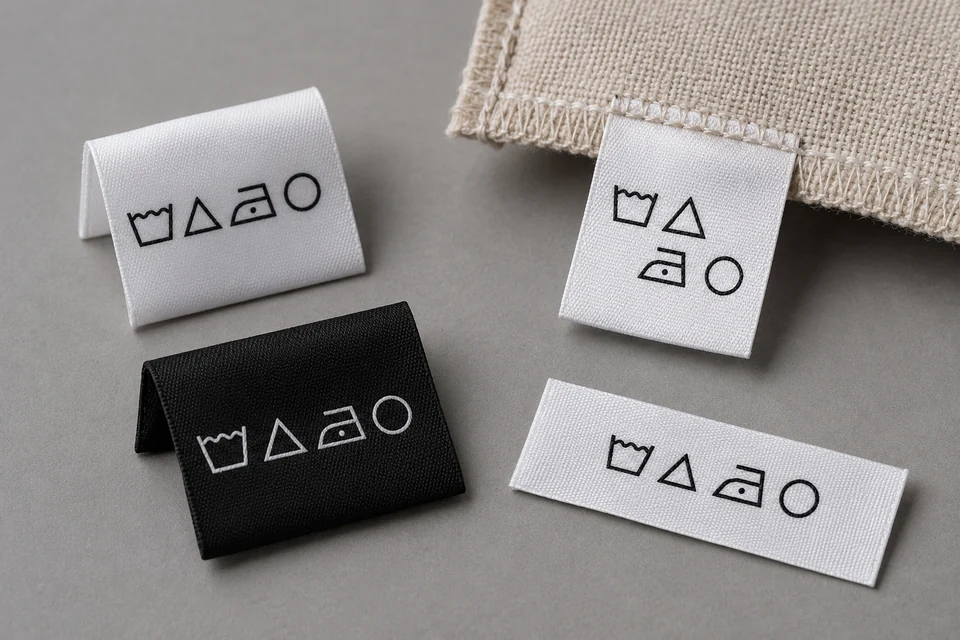
Textile care labels are permanently attached information labels used on garments, home textiles, and selected textile piece goods to convey the care conditions required to preserve product appearance, dimensional stability, handle, color retention, and service life during washing, bleaching, drying, ironing, and professional cleaning.
Product & engineering
Understand the product.
Textile care labels are permanently attached information labels used on garments, home textiles, and selected textile piece goods to convey the care conditions required to preserve product appearance, dimensional stability, handle, color retention, and service life during washing, bleaching, drying, ironing, and professional cleaning. In practical product architecture, they function as in-garment technical information carriers rather than decorative trims, and normally combine care instructions with other essential product data such as fiber composition, country of origin, size coding, supplier identification, production traceability, or brand-specific information depending on the end market and manufacturing model.
The product is manufactured in several mainstream constructions, principally printed fabric labels, woven information labels, and heat-transfer labels. Printed fabric labels are the dominant format where variable content, multilingual text, dense regulatory information, and flexible SKU management are required. Woven constructions are used where long-term legibility, edge stability, and tactile quality are prioritized, especially in premium apparel or applications where text clarity must be retained after repeated laundering. Heat-transfer constructions are used in tagless formats where low skin irritation, reduced bulk, and a cleaner in-garment profile are required. Material selection is driven by softness, print receptivity, wash resistance, seam compatibility, and conversion efficiency, with common substrates including polyester satin, nylon taffeta, acetate, polyester-based narrow fabrics, and other printable or convertible textile tapes.
From a manufacturing perspective, textile care labels belong to the narrow-web textile converting and apparel labeling chain rather than the conventional paper-label industry. Production generally begins with woven, coated, or finished textile tapes, followed by textile printing or information conversion through thermal-transfer, flexographic, letterpress, digital, or related narrow-web processes. The converted material is then slit, cut, folded, stacked, coded, and packed according to garment assembly requirements. In high-mix apparel programs, variable-data printing is often integrated close to the garment manufacturing stage so that care content, style identifiers, size data, destination-language text, barcodes, QR codes, or RFID-linked information can be produced in line with factory output and order changes.
The core technical requirement of a textile care label is durable readability under real garment-use conditions. Its value lies not only in displaying information at the point of sale, but in retaining legibility and physical integrity after repeated laundering, drying, abrasion, and handling throughout the useful life of the textile article. This makes print fastness, ink or resin adhesion, substrate dimensional stability, fray control, edge cleanliness, fold consistency, and sewing performance central technical parameters. In industrial workwear, rental textiles, uniform systems, and traceability-intensive apparel programs, the care label increasingly serves as both a human-readable instruction layer and a machine-readable data carrier, linking garment identification, sorting, inventory control, and lifecycle management within the broader textile supply chain.
The finished product is defined by the task it performs, its construction and the user interface. Accessories, complete products and repair or subscription services can share a use case while remaining different transaction objects.
What turns activity into demand
Active users, fitted products and replacement cycles connect use to purchases. Accessories, the main product and paid services may be related but should retain distinct transaction boundaries.
The commercial boundary
For Textile Care Labels, distinguish the supplied product from its inputs and the complete application. Report types and applications may overlap; retain the selected edition's product definition, geography, period, unit and transaction basis when comparing estimates.
What defines the supplied textile care labels offering?
Textile care labels are permanently attached information labels used on garments, home textiles, and selected textile piece goods to convey the care conditions required to preserve product appearance, dimensional stability, handle, color retention, and service life during washing, bleaching, drying, ironing, and professional cleaning. Check the actual load, fit, material, service life and interface requirements. Product count, installed stock and replacement activity should be reconciled; a visual resemblance or marketing class does not make products technically equivalent.
Selected research
Market Analysis & Forecast
Global Textile Care Labels Market Analysis and Forecast 2026-2032
Market perspective
Textile care labels are permanently attached information labels used on garments, home textiles, and selected textile piece goods to convey the care conditions required to preserve product appearance, dimensional stability, handle, color retention, and service life during washing, bleaching, drying, ironing, and professional cleaning. In practical product architecture, they function as in-garment technical information carriers rather than decorative trims, and normally combine care instructions with other essential product data such as fiber composition, country of origin, size coding, supplier identification, production traceability, or brand-specific information depending on the end market and manufacturing model.
The product is manufactured in several mainstream constructions, principally printed fabric labels, woven information labels, and heat-transfer labels. Printed fabric labels are the dominant format where variable content, multilingual text, dense regulatory information, and flexible SKU management are required. Woven constructions are used where long-term legibility, edge stability, and tactile quality are prioritized, especially in premium apparel or applications where text clarity must be retained after repeated laundering. Heat-transfer constructions are used in tagless formats where low skin irritation, reduced bulk, and a cleaner in-garment profile are required. Material selection is driven by softness, print receptivity, wash resistance, seam compatibility, and conversion efficiency, with common substrates including polyester satin, nylon taffeta, acetate, polyester-based narrow fabrics, and other printable or convertible textile tapes.
From a manufacturing perspective, textile care labels belong to the narrow-web textile converting and apparel labeling chain rather than the conventional paper-label industry. Production generally begins with woven, coated, or finished textile tapes, followed by textile printing or information conversion through thermal-transfer, flexographic, letterpress, digital, or related narrow-web processes. The converted material is then slit, cut, folded, stacked, coded, and packed according to garment assembly requirements. In high-mix apparel programs, variable-data printing is often integrated close to the garment manufacturing stage so that care content, style identifiers, size data, destination-language text, barcodes, QR codes, or RFID-linked information can be produced in line with factory output and order changes.
Read the full market overview
The core technical requirement of a textile care label is durable readability under real garment-use conditions. Its value lies not only in displaying information at the point of sale, but in retaining legibility and physical integrity after repeated laundering, drying, abrasion, and handling throughout the useful life of the textile article. This makes print fastness, ink or resin adhesion, substrate dimensional stability, fray control, edge cleanliness, fold consistency, and sewing performance central technical parameters. In industrial workwear, rental textiles, uniform systems, and traceability-intensive apparel programs, the care label increasingly serves as both a human-readable instruction layer and a machine-readable data carrier, linking garment identification, sorting, inventory control, and lifecycle management within the broader textile supply chain.
The global Textile Care Labels market is projected to grow from US$ million in 2026 to US$ million by 2032, at a Compound Annual Growth Rate (CAGR) of % during the forecast period.
The US & Canada market for Textile Care Labels is estimated to increase from $ million in 2026 to reach $ million by 2032, at a CAGR of % during the forecast period of 2026 through 2032.
Europe market for Textile Care Labels is estimated to increase from $ million in 2026 to reach $ million by 2032, at a CAGR of % during the forecast period of 2026 through 2032.
Asia-Pacific market for Textile Care Labels is estimated to increase from $ million in 2026 to reach $ million by 2032, at a CAGR of % during the forecast period of 2026 through 2032.
The China market for Textile Care Labels is estimated to increase from $ million in 2026 to reach $ million by 2032, at a CAGR of % during the forecast period of 2026 through 2032.
The major global manufacturers of Textile Care Labels include Avery Dennison, Trimco International, NATco Corporate, Nilörn AB, Jointak Group, Rudholm Group, ITL Group, SML Group and Cadica, etc. In 2025, the world's top three vendors accounted for approximately % of the revenue.
This report presents an overview of global market for Textile Care Labels, sales, revenue and price. Analyses of the global market trends, with historic market revenue or sales data for 2021 - 2025, estimates for 2026, and projections of CAGR through 2032.
This report researches the key producers of Textile Care Labels, also provides the sales of main regions and countries. Of the upcoming market potential for Textile Care Labels, and key regions or countries of focus to forecast this market into various segments and sub-segments. Country specific data and market value analysis for the U.S., Canada, Mexico, Brazil, China, Japan, South Korea, Southeast Asia, India, Germany, the U.K., Italy, Middle East, Africa, and Other Countries.
This report focuses on the Textile Care Labels sales, revenue, market share and industry ranking of main manufacturers, data from 2021 to 2026. Identification of the major stakeholders in the global Textile Care Labels market, and analysis of their competitive landscape and market positioning based on recent developments and segmental revenues. This report will help stakeholders to understand the competitive landscape and gain more insights and position their businesses and market strategies in a better way.
This report analyzes the segments data by Type and by Application, sales, revenue, and price, from 2021 to 2032. Evaluation and forecast the market size for Textile Care Labels sales, projected growth trends, production technology, application and end-user industry.
Textile Care Labels Segment by Company
Avery Dennison
Trimco International
NATco Corporate
Nilörn AB
Jointak Group
Rudholm Group
ITL Group
SML Group
Cadica
Wash Care Labels
ETITECH SRL
Auto-ID Technology
Shantou Lijie
Sankei
HID Global
Coats Group
Weavabel
Label Weavers
Hallmark Labels
Checkpoint (CCL)
Textile Care Labels Segment by Type
Printed Fabric Care Labels
Woven Care Labels
Heat-Transfer Care Labels
Textile Care Labels Segment by Application
Apparel
Home Textiles
Accessories
Others
Textile Care Labels Segment by Region
North America
United States
Canada
Mexico
Europe
Germany
France
U.K.
Italy
Russia
Spain
Netherlands
Switzerland
Sweden
Poland
Asia-Pacific
China
Japan
South Korea
India
Australia
Taiwan
Southeast Asia
South America
Brazil
Argentina
Chile
Colombia
Middle East & Africa
Egypt
South Africa
Israel
Türkiye
GCC Countries
Study Objectives
1. To analyze and research the global status and future forecast, involving growth rate (CAGR), market share, historical and forecast.
2. To present the key manufacturers, sales, revenue, market share, and Recent Developments.
3. To split the breakdown data by regions, type, manufacturers, and Application.
4. To analyze the global and key regions market potential and advantage, opportunity and challenge, restraints, and risks.
5. To identify significant trends, drivers, influence factors in global and regions.
6. To analyze competitive developments such as expansions, agreements, new product launches, and acquisitions in the market.
Reasons to Buy This Report
1. This report will help the readers to understand the competition within the industries and strategies for the competitive environment to enhance the potential profit. The report also focuses on the competitive landscape of the global Textile Care Labels market, and introduces in detail the market share, industry ranking, competitor ecosystem, market performance, new product development, operation situation, expansion, and acquisition. etc. of the main players, which helps the readers to identify the main competitors and deeply understand the competition pattern of the market.
2. This report will help stakeholders to understand the global industry status and trends of Textile Care Labels and provides them with information on key market drivers, restraints, challenges, and opportunities.
3. This report will help stakeholders to understand competitors better and gain more insights to strengthen their position in their businesses. The competitive landscape section includes the market share and rank (in sales and value), competitor ecosystem, new product development, expansion, and acquisition.
4. This report stays updated with novel technology integration, features, and the latest developments in the market.
5. This report helps stakeholders to gain insights into which regions to target globally.
6. This report helps stakeholders to gain insights into the end-user perception concerning the adoption of Textile Care Labels.
7. This report helps stakeholders to identify some of the key players in the market and understand their valuable contribution.
Chapter Outline
Chapter 1: Introduces the report scope of the report, executive summary of different market segments (by type and by application, etc), including the market size of each market segment, future development potential, and so on. It offers a high-level view of the current state of the market and its likely evolution in the short to mid-term, and long term.
Chapter 2: Introduces the market dynamics, latest developments of the market, the driving factors and restrictive factors of the market, the challenges and risks faced by manufacturers in the industry, and the analysis of relevant policies in the industry.
Chapter 3: Sales (consumption), revenue of Textile Care Labels in global, regional level and country level. It provides a quantitative analysis of the market size and development potential of each region and its main countries and introduces the market development, future development prospects, market space of each country in the world.
Chapter 4: Detailed analysis of Textile Care Labels manufacturers competitive landscape, price, sales, revenue, market share and industry ranking, latest development plan, merger, and acquisition information, etc.
Chapter 5: Provides the analysis of various market segments by type, covering the sales, revenue, average price, and development potential of each market segment, to help readers find the blue ocean market in different market segments.
Chapter 6: Provides the analysis of various market segments by application, covering the sales, revenue, average price, and development potential of each market segment, to help readers find the blue ocean market in different downstream markets.
Chapter 7: Provides profiles of key manufacturers, introducing the basic situation of the main companies in the market in detail, including product descriptions and specifications, Textile Care Labels sales, revenue, price, gross margin, and recent development, etc.
Chapter 8: North America by type, by application and by country, sales, and revenue for each segment.
Chapter 9: Europe by type, by application and by country, sales, and revenue for each segment.
Chapter 10: China type, by application, sales, and revenue for each segment.
Chapter 11: Asia (excluding China) type, by application and by region, sales, and revenue for each segment.
Chapter 12: South America, Middle East and Africa by type, by application and by country, sales, and revenue for each segment.
Chapter 13: Analysis of industrial chain, sales channel, key raw materials, distributors and customers.
Chapter 14: The main concluding insights of the report.
More report detail
Tables and figures
Scope & coverage.
Types
- Printed Fabric Care Labels
- Woven Care Labels
- Heat-Transfer Care Labels
Applications
- Apparel
- Home Textiles
- Accessories
- Others
Companies covered
- Avery Dennison
- Trimco International
- NATco Corporate
- Nilörn AB
- Jointak Group
- Rudholm Group
- ITL Group
- SML Group
- Cadica
- Wash Care Labels
- ETITECH SRL
- Auto-ID Technology
- Shantou Lijie
- Sankei
- HID Global
- Coats Group
- Weavabel
- Label Weavers
- Hallmark Labels
- Checkpoint (CCL)
Inside the report.
1 Market Overview
- 1.1 Product Definition
- 1.2 Textile Care Labels Market by Type
- 1.2.1 Global Textile Care Labels Market Size by Type, 2021 VS 2025 VS 2032
- 1.2.2 Printed Fabric Care Labels
- 1.2.3 Woven Care Labels
- 1.2.4 Heat-Transfer Care Labels
- 1.3 Textile Care Labels Market by Application
- 1.3.1 Global Textile Care Labels Market Size by Application, 2021 VS 2025 VS 2032
- 1.3.2 Apparel
- 1.3.3 Home Textiles
- 1.3.4 Accessories
- 1.3.5 Others
- 1.4 Assumptions and Limitations
- 1.5 Study Goals and Objectives
2 Textile Care Labels Market Dynamics
- 2.1 Textile Care Labels Industry Trends
- 2.2 Textile Care Labels Industry Drivers
- 2.3 Textile Care Labels Industry Opportunities and Challenges
- 2.4 Textile Care Labels Industry Restraints
3 Global Market Growth Prospects
- 3.1 Global Textile Care Labels Revenue Estimates and Forecasts (2021-2032)
- 3.2 Global Textile Care Labels Revenue by Region
- 3.2.1 Global Textile Care Labels Revenue by Region: 2021 VS 2025 VS 2032
- 3.2.2 Global Textile Care Labels Revenue by Region (2021-2026)
- 3.2.3 Global Textile Care Labels Revenue by Region (2027-2032)
- 3.2.4 Global Textile Care Labels Revenue Market Share by Region (2021-2032)
- 3.3 Global Textile Care Labels Sales Estimates and Forecasts 2021-2032
- 3.4 Global Textile Care Labels Sales by Region
- 3.4.1 Global Textile Care Labels Sales by Region: 2021 VS 2025 VS 2032
- 3.4.2 Global Textile Care Labels Sales by Region (2021-2026)
- 3.4.3 Global Textile Care Labels Sales by Region (2027-2032)
- 3.4.4 Global Textile Care Labels Sales Market Share by Region (2021-2032)
- 3.5 US & Canada & Mexico
- 3.6 Europe
- 3.7 China
- 3.8 Asia (Excluding China)
- 3.9 South America, Middle East and Africa
4 Market Competitive Landscape by Manufacturers
- 4.1 Global Textile Care Labels Revenue by Manufacturers
- 4.1.1 Global Textile Care Labels Revenue by Manufacturers (2021-2026)
- 4.1.2 Global Textile Care Labels Revenue Market Share by Manufacturers (2021-2026)
- 4.1.3 Global Textile Care Labels Manufacturers Revenue Share Top 10 and Top 5 in 2025
- 4.2 Global Textile Care Labels Sales by Manufacturers
- 4.2.1 Global Textile Care Labels Sales by Manufacturers (2021-2026)
- 4.2.2 Global Textile Care Labels Sales Market Share by Manufacturers (2021-2026)
- 4.2.3 Global Textile Care Labels Manufacturers Sales Share Top 10 and Top 5 in 2025
- 4.3 Global Textile Care Labels Sales Price by Manufacturers (2021-2026)
- 4.4 Global Textile Care Labels Key Manufacturers Ranking, 2024 VS 2025 VS 2026
- 4.5 Global Textile Care Labels Key Manufacturers Manufacturing Sites & Headquarters
- 4.6 Global Textile Care Labels Manufacturers, Product Type & Application
- 4.7 Global Textile Care Labels Manufacturers' Establishment Date
- 4.8 Market Competitive Analysis
- 4.8.1 Global Textile Care Labels Market CR5 and HHI
- 4.8.2 2025 Textile Care Labels Tier 1, Tier 2, and Tier 3
5 Textile Care Labels Market by Type
- 5.1 Global Textile Care Labels Revenue by Type
- 5.1.1 Global Textile Care Labels Revenue by Type (2021 VS 2025 VS 2032)
- 5.1.2 Global Textile Care Labels Revenue by Type (2021-2032) & (US$ Million)
- 5.1.3 Global Textile Care Labels Revenue Market Share by Type (2021-2032)
- 5.2 Global Textile Care Labels Sales by Type
- 5.2.1 Global Textile Care Labels Sales by Type (2021 VS 2025 VS 2032)
- 5.2.2 Global Textile Care Labels Sales by Type (2021-2032) & (M pcs)
- 5.2.3 Global Textile Care Labels Sales Market Share by Type (2021-2032)
- 5.3 Global Textile Care Labels Price by Type
6 Textile Care Labels Market by Application
- 6.1 Global Textile Care Labels Revenue by Application
- 6.1.1 Global Textile Care Labels Revenue by Application (2021 VS 2025 VS 2032)
- 6.1.2 Global Textile Care Labels Revenue by Application (2021-2032) & (US$ Million)
- 6.1.3 Global Textile Care Labels Revenue Market Share by Application (2021-2032)
- 6.2 Global Textile Care Labels Sales by Application
- 6.2.1 Global Textile Care Labels Sales by Application (2021 VS 2025 VS 2032)
- 6.2.2 Global Textile Care Labels Sales by Application (2021-2032) & (M pcs)
- 6.2.3 Global Textile Care Labels Sales Market Share by Application (2021-2032)
- 6.3 Global Textile Care Labels Price by Application
7 Company Profiles
- 7.1 Avery Dennison
- 7.1.1 Avery Dennison Company Information
- 7.1.2 Avery Dennison Business Overview
- 7.1.3 Avery Dennison Textile Care Labels Sales, Revenue, Price and Gross Margin (2021-2026)
- 7.1.4 Avery Dennison Textile Care Labels Product Portfolio
- 7.1.5 Avery Dennison Recent Developments
- 7.2 Trimco International
- 7.2.1 Trimco International Company Information
- 7.2.2 Trimco International Business Overview
- 7.2.3 Trimco International Textile Care Labels Sales, Revenue, Price and Gross Margin (2021-2026)
- 7.2.4 Trimco International Textile Care Labels Product Portfolio
- 7.2.5 Trimco International Recent Developments
- 7.3 NATco Corporate
- 7.3.1 NATco Corporate Company Information
- 7.3.2 NATco Corporate Business Overview
- 7.3.3 NATco Corporate Textile Care Labels Sales, Revenue, Price and Gross Margin (2021-2026)
- 7.3.4 NATco Corporate Textile Care Labels Product Portfolio
- 7.3.5 NATco Corporate Recent Developments
- 7.4 Nilörn AB
- 7.4.1 Nilörn AB Company Information
- 7.4.2 Nilörn AB Business Overview
- 7.4.3 Nilörn AB Textile Care Labels Sales, Revenue, Price and Gross Margin (2021-2026)
- 7.4.4 Nilörn AB Textile Care Labels Product Portfolio
- 7.4.5 Nilörn AB Recent Developments
- 7.5 Jointak Group
- 7.5.1 Jointak Group Company Information
- 7.5.2 Jointak Group Business Overview
- 7.5.3 Jointak Group Textile Care Labels Sales, Revenue, Price and Gross Margin (2021-2026)
- 7.5.4 Jointak Group Textile Care Labels Product Portfolio
- 7.5.5 Jointak Group Recent Developments
- 7.6 Rudholm Group
- 7.6.1 Rudholm Group Company Information
- 7.6.2 Rudholm Group Business Overview
- 7.6.3 Rudholm Group Textile Care Labels Sales, Revenue, Price and Gross Margin (2021-2026)
- 7.6.4 Rudholm Group Textile Care Labels Product Portfolio
- 7.6.5 Rudholm Group Recent Developments
- 7.7 ITL Group
- 7.7.1 ITL Group Company Information
- 7.7.2 ITL Group Business Overview
- 7.7.3 ITL Group Textile Care Labels Sales, Revenue, Price and Gross Margin (2021-2026)
- 7.7.4 ITL Group Textile Care Labels Product Portfolio
- 7.7.5 ITL Group Recent Developments
- 7.8 SML Group
- 7.8.1 SML Group Company Information
- 7.8.2 SML Group Business Overview
- 7.8.3 SML Group Textile Care Labels Sales, Revenue, Price and Gross Margin (2021-2026)
- 7.8.4 SML Group Textile Care Labels Product Portfolio
- 7.8.5 SML Group Recent Developments
- 7.9 Cadica
- 7.9.1 Cadica Company Information
- 7.9.2 Cadica Business Overview
- 7.9.3 Cadica Textile Care Labels Sales, Revenue, Price and Gross Margin (2021-2026)
- 7.9.4 Cadica Textile Care Labels Product Portfolio
- 7.9.5 Cadica Recent Developments
- 7.10 Wash Care Labels
- 7.10.1 Wash Care Labels Company Information
- 7.10.2 Wash Care Labels Business Overview
- 7.10.3 Wash Care Labels Textile Care Labels Sales, Revenue, Price and Gross Margin (2021-2026)
- 7.10.4 Wash Care Labels Textile Care Labels Product Portfolio
- 7.10.5 Wash Care Labels Recent Developments
- 7.11 ETITECH SRL
- 7.11.1 ETITECH SRL Company Information
- 7.11.2 ETITECH SRL Business Overview
- 7.11.3 ETITECH SRL Textile Care Labels Sales, Revenue, Price and Gross Margin (2021-2026)
- 7.11.4 ETITECH SRL Textile Care Labels Product Portfolio
- 7.11.5 ETITECH SRL Recent Developments
- 7.12 Auto-ID Technology
- 7.12.1 Auto-ID Technology Company Information
- 7.12.2 Auto-ID Technology Business Overview
- 7.12.3 Auto-ID Technology Textile Care Labels Sales, Revenue, Price and Gross Margin (2021-2026)
- 7.12.4 Auto-ID Technology Textile Care Labels Product Portfolio
- 7.12.5 Auto-ID Technology Recent Developments
- 7.13 Shantou Lijie
- 7.13.1 Shantou Lijie Company Information
- 7.13.2 Shantou Lijie Business Overview
- 7.13.3 Shantou Lijie Textile Care Labels Sales, Revenue, Price and Gross Margin (2021-2026)
- 7.13.4 Shantou Lijie Textile Care Labels Product Portfolio
- 7.13.5 Shantou Lijie Recent Developments
- 7.14 Sankei
- 7.14.1 Sankei Company Information
- 7.14.2 Sankei Business Overview
- 7.14.3 Sankei Textile Care Labels Sales, Revenue, Price and Gross Margin (2021-2026)
- 7.14.4 Sankei Textile Care Labels Product Portfolio
- 7.14.5 Sankei Recent Developments
- 7.15 HID Global
- 7.15.1 HID Global Company Information
- 7.15.2 HID Global Business Overview
- 7.15.3 HID Global Textile Care Labels Sales, Revenue, Price and Gross Margin (2021-2026)
- 7.15.4 HID Global Textile Care Labels Product Portfolio
- 7.15.5 HID Global Recent Developments
- 7.16 Coats Group
- 7.16.1 Coats Group Company Information
- 7.16.2 Coats Group Business Overview
- 7.16.3 Coats Group Textile Care Labels Sales, Revenue, Price and Gross Margin (2021-2026)
- 7.16.4 Coats Group Textile Care Labels Product Portfolio
- 7.16.5 Coats Group Recent Developments
- 7.17 Weavabel
- 7.17.1 Weavabel Company Information
- 7.17.2 Weavabel Business Overview
- 7.17.3 Weavabel Textile Care Labels Sales, Revenue, Price and Gross Margin (2021-2026)
- 7.17.4 Weavabel Textile Care Labels Product Portfolio
- 7.17.5 Weavabel Recent Developments
- 7.18 Label Weavers
- 7.18.1 Label Weavers Company Information
- 7.18.2 Label Weavers Business Overview
- 7.18.3 Label Weavers Textile Care Labels Sales, Revenue, Price and Gross Margin (2021-2026)
- 7.18.4 Label Weavers Textile Care Labels Product Portfolio
- 7.18.5 Label Weavers Recent Developments
- 7.19 Hallmark Labels
- 7.19.1 Hallmark Labels Company Information
- 7.19.2 Hallmark Labels Business Overview
- 7.19.3 Hallmark Labels Textile Care Labels Sales, Revenue, Price and Gross Margin (2021-2026)
- 7.19.4 Hallmark Labels Textile Care Labels Product Portfolio
- 7.19.5 Hallmark Labels Recent Developments
- 7.20 Checkpoint (CCL)
- 7.20.1 Checkpoint (CCL) Company Information
- 7.20.2 Checkpoint (CCL) Business Overview
- 7.20.3 Checkpoint (CCL) Textile Care Labels Sales, Revenue, Price and Gross Margin (2021-2026)
- 7.20.4 Checkpoint (CCL) Textile Care Labels Product Portfolio
- 7.20.5 Checkpoint (CCL) Recent Developments
8 North America
- 8.1 North America Textile Care Labels Market Size by Type
- 8.1.1 North America Textile Care Labels Revenue by Type (2021-2032)
- 8.1.2 North America Textile Care Labels Sales by Type (2021-2032)
- 8.1.3 North America Textile Care Labels Price by Type (2021-2032)
- 8.2 North America Textile Care Labels Market Size by Application
- 8.2.1 North America Textile Care Labels Revenue by Application (2021-2032)
- 8.2.2 North America Textile Care Labels Sales by Application (2021-2032)
- 8.2.3 North America Textile Care Labels Price by Application (2021-2032)
- 8.3 North America Textile Care Labels Market Size by Country
- 8.3.1 North America Textile Care Labels Revenue Grow Rate by Country (2021 VS 2025 VS 2032)
- 8.3.2 North America Textile Care Labels Sales by Country (2021 VS 2025 VS 2032)
- 8.3.3 North America Textile Care Labels Price by Country (2021-2032)
- 8.3.4 United States
- 8.3.5 Canada
- 8.3.6 Mexico
9 Europe
- 9.1 Europe Textile Care Labels Market Size by Type
- 9.1.1 Europe Textile Care Labels Revenue by Type (2021-2032)
- 9.1.2 Europe Textile Care Labels Sales by Type (2021-2032)
- 9.1.3 Europe Textile Care Labels Price by Type (2021-2032)
- 9.2 Europe Textile Care Labels Market Size by Application
- 9.2.1 Europe Textile Care Labels Revenue by Application (2021-2032)
- 9.2.2 Europe Textile Care Labels Sales by Application (2021-2032)
- 9.2.3 Europe Textile Care Labels Price by Application (2021-2032)
- 9.3 Europe Textile Care Labels Market Size by Country
- 9.3.1 Europe Textile Care Labels Revenue Grow Rate by Country (2021 VS 2025 VS 2032)
- 9.3.2 Europe Textile Care Labels Sales by Country (2021 VS 2025 VS 2032)
- 9.3.3 Europe Textile Care Labels Price by Country (2021-2032)
- 9.3.4 Germany
- 9.3.5 France
- 9.3.6 U.K.
- 9.3.7 Italy
- 9.3.8 Russia
- 9.3.9 Spain
- 9.3.10 Netherlands
10 China
- 10.1 China Textile Care Labels Market Size by Type
- 10.1.1 China Textile Care Labels Revenue by Type (2021-2032)
- 10.1.2 China Textile Care Labels Sales by Type (2021-2032)
- 10.1.3 China Textile Care Labels Price by Type (2021-2032)
- 10.2 China Textile Care Labels Market Size by Application
- 10.2.1 China Textile Care Labels Revenue by Application (2021-2032)
- 10.2.2 China Textile Care Labels Sales by Application (2021-2032)
- 10.2.3 China Textile Care Labels Price by Application (2021-2032)
11 Asia (Excluding China)
- 11.1 Asia Textile Care Labels Market Size by Type
- 11.1.1 Asia Textile Care Labels Revenue by Type (2021-2032)
- 11.1.2 Asia Textile Care Labels Sales by Type (2021-2032)
- 11.1.3 Asia Textile Care Labels Price by Type (2021-2032)
- 11.2 Asia Textile Care Labels Market Size by Application
- 11.2.1 Asia Textile Care Labels Revenue by Application (2021-2032)
- 11.2.2 Asia Textile Care Labels Sales by Application (2021-2032)
- 11.2.3 Asia Textile Care Labels Price by Application (2021-2032)
- 11.3 Asia Textile Care Labels Market Size by Country
- 11.3.1 Asia Textile Care Labels Revenue Grow Rate by Country (2021 VS 2025 VS 2032)
- 11.3.2 Asia Textile Care Labels Sales by Country (2021 VS 2025 VS 2032)
- 11.3.3 Asia Textile Care Labels Price by Country (2021-2032)
- 11.3.4 Japan
- 11.3.5 South Korea
- 11.3.6 India
- 11.3.7 Australia
- 11.3.8 Taiwan
- 11.3.9 Southeast Asia
12 South America, Middle East and Africa
- 12.1 SAMEA Textile Care Labels Market Size by Type
- 12.1.1 SAMEA Textile Care Labels Revenue by Type (2021-2032)
- 12.1.2 SAMEA Textile Care Labels Sales by Type (2021-2032)
- 12.1.3 SAMEA Textile Care Labels Price by Type (2021-2032)
- 12.2 SAMEA Textile Care Labels Market Size by Application
- 12.2.1 SAMEA Textile Care Labels Revenue by Application (2021-2032)
- 12.2.2 SAMEA Textile Care Labels Sales by Application (2021-2032)
- 12.2.3 SAMEA Textile Care Labels Price by Application (2021-2032)
- 12.3 SAMEA Textile Care Labels Market Size by Country
- 12.3.1 SAMEA Textile Care Labels Revenue Grow Rate by Country (2021 VS 2025 VS 2032)
- 12.3.2 SAMEA Textile Care Labels Sales by Country (2021 VS 2025 VS 2032)
- 12.3.3 SAMEA Textile Care Labels Price by Country (2021-2032)
- 12.3.4 Brazil
- 12.3.5 Argentina
- 12.3.6 Chile
- 12.3.7 Colombia
- 12.3.8 Peru
- 12.3.9 Saudi Arabia
- 12.3.10 Israel
- 12.3.11 UAE
- 12.3.12 Turkey
- 12.3.13 Iran
- 12.3.14 Egypt
13 Value Chain and Sales Channels Analysis
- 13.1 Textile Care Labels Value Chain Analysis
- 13.1.1 Textile Care Labels Key Raw Materials
- 13.1.2 Raw Materials Key Suppliers
- 13.1.3 Manufacturing Cost Structure
- 13.1.4 Textile Care Labels Production Mode & Process
- 13.2 Textile Care Labels Sales Channels Analysis
- 13.2.1 Direct Comparison with Distribution Share
- 13.2.2 Textile Care Labels Distributors
- 13.2.3 Textile Care Labels Customers
14 Concluding Insights
15 Appendix
- 15.1 Reasons for Doing This Study
- 15.2 Research Methodology
- 15.3 Research Process
- 15.4 Authors List of This Report
- 15.5 Data Source
- 15.5.1 Secondary Sources
- 15.5.2 Primary Sources
- 15.6 Disclaimer
GET THE RESEARCH
Choose your license.
Choose who needs access.
All options are for this report and research series.
PDF by email within 3–5 working days after payment confirmation.
Talk to an analyst