
APO RESEARCH · REPORT
AI Toys
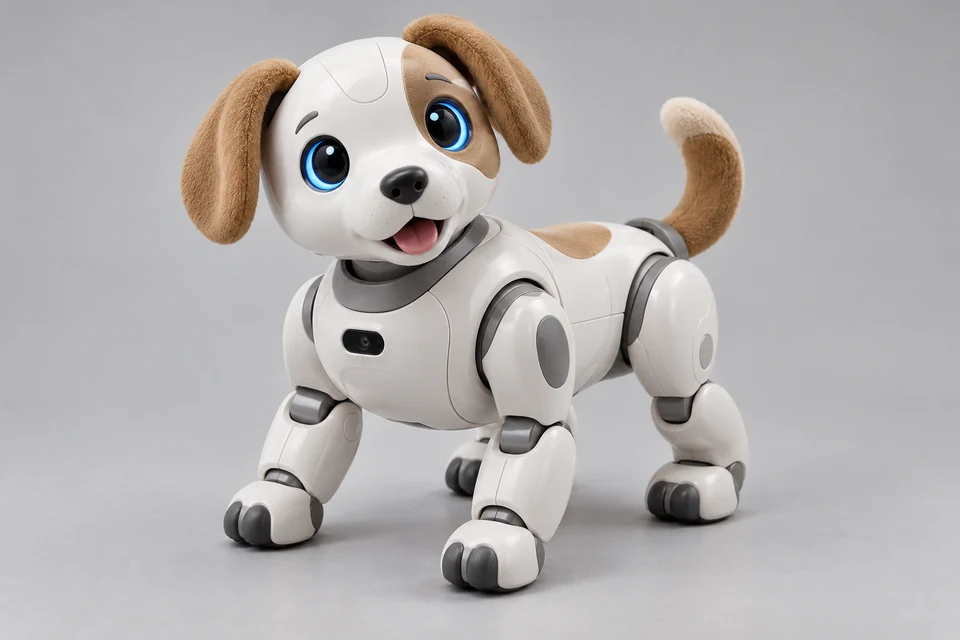
AI toys incorporate computation to respond to input through a defined play interaction.
Product & engineering
Understand the product.
AI Toys are physical play objects in which artificial intelligence interprets user input, environmental signals or interaction history and generates context responsive behavior. Their functional architecture links sensors, computational models, memory and controlled outputs, enabling speech, movement, expression, game decisions or learning activities to vary according to observed conditions. The distinguishing technical property is computational inference that selects, adapts or generates responses beyond a fixed sequence of prerecorded actions.
AI functions may include speech and image recognition, natural language processing, machine learning, computer vision, planning, generative models and adaptive behavioral control. Inputs are commonly acquired through microphones, cameras, touch sensors, motion sensors or connected devices, while responses are expressed through speech, displays, lighting, mechanical movement or digital content. Computation may reside within the toy, operate through connected cloud infrastructure or be distributed between them. AI Toys encompass companion, educational and gaming forms, with intelligence expressed respectively through social interaction, adaptive learning activity or responsive play and competition.
The finished product is defined by the task it performs, its construction and the user interface. Accessories, complete products and repair or subscription services can share a use case while remaining different transaction objects.
What turns activity into demand
Active users, fitted products and replacement cycles connect use to purchases. Accessories, the main product and paid services may be related but should retain distinct transaction boundaries.
The commercial boundary
For AI Toys, distinguish the supplied product from its inputs and the complete application. Report types and applications may overlap; retain the selected edition's product definition, geography, period, unit and transaction basis when comparing estimates.
What defines the supplied ai toys offering?
AI toys incorporate computation to respond to input through a defined play interaction. Check the actual load, fit, material, service life and interface requirements. Product count, installed stock and replacement activity should be reconciled; a visual resemblance or marketing class does not make products technically equivalent.
Selected research
Market Structure
Global AI Toys Market by Size, by Type, by Application, by Region, History and Forecast 2021-2032
Market perspective
According to APO Research, Inc, global AI Toys revenue is estimated at 8,119.95 MUSD in 2025 and projected to reach 9,743.94 MUSD in 2026 and 25,020.45 MUSD by 2032, representing a CAGR of 17.02% from 2026 to 2032. Demand encompasses conversational play, adaptive educational activities, physical board games and robotic interaction. These applications have different purchasing economics. Conversational toys depend on character appeal and sustained engagement, educational products require suitable learning content, and robotic products must deliver sufficient interaction quality to justify additional mechanical cost. Revenue growth consequently depends on both unit expansion and the changing mix of products across these applications.
Manufacturer activity illustrates the different routes to commercialization. Haivivi combines conversational electronics with plush toys and licensed characters, while Robopoet works with Tuya on connected emotional companions. SenseRobot integrates game algorithms, visual recognition and robotic manipulation into physical board games. Makeblock incorporates speech and visual recognition into coding activities. Mattel’s collaboration with OpenAI adds established toy brands and content development capabilities to this competitive environment. Across these approaches, access to AI models is one component of product development. Character consistency, interaction reliability, content quality and distribution remain separate commercial requirements.
Hardware architecture determines manufacturing cost and the obligations that follow a sale. Conversational plush products require audio electronics, connectivity, power management and durable integration with the textile enclosure. Motorized robots add actuators, transmissions, sensors and assembly requirements. Connected products also incur continuing expenditure on inference, voice services, software maintenance and content management. Bundling extended access into the purchase price increases the importance of forecasting usage and service costs over the product’s operating life. High engagement can improve customer retention while increasing the cost of fulfilling the original sale.
Read the full market overview
China’s electronics and toy manufacturing supply chains facilitate the integration of modules, molded components, textiles and final assembly. Overseas expansion adds language adaptation, regional content, distribution and aftersales requirements. Household purchases and institutional procurement also create different sales patterns: household demand depends on individual product appeal, while educational procurement requires teaching suitability and ongoing technical assistance. Sustaining the projected growth requires commercially successful products beyond initial launches, reliable replenishment orders and service arrangements that remain viable as the installed base expands.
This report provides an overview of the global AI Toys market in terms of sales, revenue, and price, analyzing global market trends using historical revenue and sales data for 2021-2025, estimates for 2026, and projected CAGRs through 2032.
The study covers key producers of AI Toys and sales in major regions and countries, assesses future market potential, and highlights priority regions and countries for segmenting the market into sub-sectors, with country-specific market value data for the U.S., Canada, Mexico, Brazil, China, Japan, South Korea, Southeast Asia, India, Germany, the U.K., Italy, the Middle East, Africa, and other countries.
The report also presents AI Toys sales, revenue, market share, and industry ranking for the main manufacturers for 2021-2026, identifies the major stakeholders in the global market, and analyzes their competitive landscape and market positioning based on recent developments and segmental revenues.
In addition, the report analyzes segment data by Type and Application—covering sales, revenue, and price—for 2021-2032, and evaluates and forecasts the AI Toys market size, projected growth trends, production technologies, key applications, and end-use industries.
AI Toys Segment by Company
Sony
Panasonic
Sharp
Casio
MIXI
Alpha Group
UBTECH Robotics
Zhejiang Jinke Tom Culture Industry
Shifeng Cultural Development
Makeblock
Robosen Robotics
SenseRobot
Matatalab
Miko
GROOVE X
KEYi Tech
Elephant Robotics
Haivivi
Robopoet
Yukai Engineering
Ropet
LivingAI
Energize Lab
Shanghai SiliconPear Technology
Curio Interactive
Robotical
AI Toys Segment by Type
AI Companion Toys
AI Educational Toys
AI Gaming Toys
AI Toys Segment by Application
Households
Educational Institutions
Care Facilities
Other Settings
AI Toys Segment by Region
North America
United States
Canada
Mexico
Europe
Germany
France
U.K.
Italy
Russia
Spain
Netherlands
Switzerland
Sweden
Poland
Asia-Pacific
China
Japan
South Korea
India
Australia
Taiwan
Southeast Asia
South America
Brazil
Argentina
Chile
Colombia
Middle East & Africa
Egypt
South Africa
Israel
Türkiye
GCC Countries
Study Objectives
1. To analyze and research the global status and future forecast, involving, production, value, consumption, growth rate (CAGR), market share, historical and forecast.
2. To present the key manufacturers, capacity, production, revenue, market share, and Recent Developments.
3. To split the breakdown data by regions, type, manufacturers, and Application.
4. To analyze the global and key regions market potential and advantage, opportunity and challenge, restraints, and risks.
5. To identify significant trends, drivers, influence factors in global and regions.
6. To analyze competitive developments such as expansions, agreements, new product launches, and acquisitions in the market.
Reasons to Buy This Report
1. This report will help the readers to understand the competition within the industries and strategies for the competitive environment to enhance the potential profit. The report also focuses on the competitive landscape of the global AI Toys market, and introduces in detail the market share, industry ranking, competitor ecosystem, market performance, new product development, operation situation, expansion, and acquisition. etc. of the main players, which helps the readers to identify the main competitors and deeply understand the competition pattern of the market.
2. This report will help stakeholders to understand the global industry status and trends of AI Toys and provides them with information on key market drivers, restraints, challenges, and opportunities.
3. This report will help stakeholders to understand competitors better and gain more insights to strengthen their position in their businesses. The competitive landscape section includes the market share and rank (in volume and value), competitor ecosystem, new product development, expansion, and acquisition.
4. This report stays updated with novel technology integration, features, and the latest developments in the market.
5. This report helps stakeholders to gain insights into which regions to target globally.
6. This report helps stakeholders to gain insights into the end-user perception concerning the adoption of AI Toys.
7. This report helps stakeholders to identify some of the key players in the market and understand their valuable contribution.
Chapter Outline
Chapter 1: Provides an overview of the AI Toys market, including product definition, global market growth prospects, market size, sales, and average price forecasts (2021-2032).
Chapter 2: Provides the market dynamics, latest developments of the market, the driving factors and restrictive factors of the market, the challenges and risks faced by manufacturers in the industry, and the analysis of relevant policies in the industry.
Chapter 3: Detailed analysis of AI Toys manufacturers competitive landscape, price, sales and revenue market share, latest development plan, merger, etc.
Chapter 4: Provides the analysis of various market segments by type, covering the market size and development potential of each market segment, to help readers find the blue ocean market in different market segments.
Chapter 5: Provides the analysis of various market segments by application, covering the market size and development potential of each market segment, to help readers find the blue ocean market in different downstream markets.
Chapter 6: Sales of AI Toys in regional level. It provides a quantitative analysis of the market size and development potential of each region and introduces the market development, future development prospects, market space of each country in the world.
Chapter 7: Revenue of AI Toys in regional level. It provides a quantitative analysis of the market size and development potential of each region and introduces the market development, future development prospects, market space of each country in the world.
Chapter 8: Provides profiles of key players, introducing the basic situation of the main companies in the market in detail, including product sales, revenue, price, gross margin, product introduction, recent development, etc.
Chapter 9: Analysis of industrial chain, including the upstream and downstream of the industry.
Chapter 10: Concluding Insights of the report
More report detail
Tables and figures
Scope & coverage.
Types
- AI Companion Toys
- AI Educational Toys
- AI Gaming Toys
Applications
- Households
- Educational Institutions
- Care Facilities
- Other Settings
Companies covered
- Sony
- Panasonic
- Sharp
- Casio
- MIXI
- Alpha Group
- UBTECH Robotics
- Zhejiang Jinke Tom Culture Industry
- Shifeng Cultural Development
- Makeblock
- Robosen Robotics
- SenseRobot
- Matatalab
- Miko
- GROOVE X
- KEYi Tech
- Elephant Robotics
- Haivivi
- Robopoet
- Yukai Engineering
- Ropet
- LivingAI
- Energize Lab
- Shanghai SiliconPear Technology
- Curio Interactive
- Robotical
Inside the report.
1 Market Overview
- 1.1 Product Definition
- 1.2 Global AI Toys Market Size, 2021 VS 2025 VS 2032
- 1.3 Global AI Toys Market Size Estimates and Forecasts (2021-2032)
- 1.4 Global AI Toys Sales Estimates and Forecasts (2021-2032)
- 1.5 Global AI Toys Market Average Price (2021-2032)
- 1.6 Assumptions and Limitations
- 1.7 Study Goals and Objectives
2 Global AI Toys Market Dynamics
- 2.1 AI Toys Industry Trends
- 2.2 AI Toys Industry Drivers
- 2.3 AI Toys Industry Opportunities and Challenges
- 2.4 AI Toys Industry Restraints
3 AI Toys Market by Manufacturers
- 3.1 Global AI Toys Revenue by Manufacturers (2021-2026)
- 3.2 Global AI Toys Sales by Manufacturers (2021-2026)
- 3.3 Global AI Toys Average Sales Price by Manufacturers (2021-2026)
- 3.4 Global AI Toys Industry Manufacturers Ranking, 2024 VS 2025 VS 2026
- 3.5 Global AI Toys Key Manufacturers Manufacturing Sites & Headquarters
- 3.6 Global AI Toys Manufacturers, Product Type & Application
- 3.7 Global AI Toys Manufacturers Establishment Date
- 3.8 Market Competitive Analysis
- 3.8.1 Global AI Toys Market CR5 and HHI
- 3.8.2 Global Top 5 and 10 AI Toys Players Market Share by Revenue in 2025
- 3.8.3 2025 AI Toys Tier 1, Tier 2, and Tier 3
4 AI Toys Market by Type
- 4.1 AI Toys Type Introduction
- 4.1.1 AI Companion Toys
- 4.1.2 AI Educational Toys
- 4.1.3 AI Gaming Toys
- 4.2 Global AI Toys Sales by Type
- 4.2.1 Global AI Toys Sales by Type (2021 VS 2025 VS 2032)
- 4.2.2 Global AI Toys Sales by Type (2021-2032)
- 4.2.3 Global AI Toys Sales Market Share by Type (2021-2032)
- 4.3 Global AI Toys Revenue by Type
- 4.3.1 Global AI Toys Revenue by Type (2021 VS 2025 VS 2032)
- 4.3.2 Global AI Toys Revenue by Type (2021-2032)
- 4.3.3 Global AI Toys Revenue Market Share by Type (2021-2032)
5 AI Toys Market by Application
- 5.1 AI Toys Application Introduction
- 5.1.1 Households
- 5.1.2 Educational Institutions
- 5.1.3 Care Facilities
- 5.1.4 Other Settings
- 5.2 Global AI Toys Sales by Application
- 5.2.1 Global AI Toys Sales by Application (2021 VS 2025 VS 2032)
- 5.2.2 Global AI Toys Sales by Application (2021-2032)
- 5.2.3 Global AI Toys Sales Market Share by Application (2021-2032)
- 5.3 Global AI Toys Revenue by Application
- 5.3.1 Global AI Toys Revenue by Application (2021 VS 2025 VS 2032)
- 5.3.2 Global AI Toys Revenue by Application (2021-2032)
- 5.3.3 Global AI Toys Revenue Market Share by Application (2021-2032)
6 Global AI Toys Sales by Region
- 6.1 Global AI Toys Sales by Region: 2021 VS 2025 VS 2032
- 6.2 Global AI Toys Sales by Region (2021-2032)
- 6.2.1 Global AI Toys Sales by Region (2021-2026)
- 6.2.2 Global AI Toys Sales Forecasted by Region (2027-2032)
- 6.3 North America
- 6.3.1 North America AI Toys Sales Growth Rate by Country: 2021 VS 2025 VS 2032
- 6.3.2 North America AI Toys Sales by Country (2021-2032)
- 6.3.3 U.S.
- 6.3.4 Canada
- 6.3.5 Mexico
- 6.4 Europe
- 6.4.1 Europe AI Toys Sales Growth Rate by Country: 2021 VS 2025 VS 2032
- 6.4.2 Europe AI Toys Sales by Country (2021-2032)
- 6.4.3 Germany
- 6.4.4 France
- 6.4.5 U.K.
- 6.4.6 Italy
- 6.4.7 Netherlands
- 6.5 Asia Pacific
- 6.5.1 Asia Pacific AI Toys Sales Growth Rate by Country: 2021 VS 2025 VS 2032
- 6.5.2 Asia Pacific AI Toys Sales by Country (2021-2032)
- 6.5.3 China
- 6.5.4 Japan
- 6.5.5 South Korea
- 6.5.6 Southeast Asia
- 6.5.7 India
- 6.5.8 Australia
- 6.6 South America, Middle East and Africa
- 6.6.1 South America, Middle East and Africa AI Toys Sales Growth Rate by Country: 2021 VS 2025 VS 2032
- 6.6.2 South America, Middle East and Africa AI Toys Sales by Country (2021-2032)
- 6.6.3 Brazil
- 6.6.4 South Africa
- 6.6.5 Saudi Arabia
- 6.6.6 Turkey
- 6.6.6 Argentina
- 6.6.6 UAE
- 6.6.6 Egypt
- 6.6.6 Chile
7 Global AI Toys Revenue by Region
- 7.1 Global AI Toys Revenue by Region
- 7.1.1 Global AI Toys Revenue by Region: 2021 VS 2025 VS 2032
- 7.1.2 Global AI Toys Revenue by Region (2021-2026)
- 7.1.3 Global AI Toys Revenue by Region (2027-2032)
- 7.1.4 Global AI Toys Revenue Market Share by Region (2021-2032)
- 7.2 North America
- 7.2.1 North America AI Toys Revenue (2021-2032)
- 7.2.2 North America AI Toys Revenue Share by Country: 2021 VS 2025 VS 2032
- 7.3 Europe
- 7.3.1 Europe AI Toys Revenue (2021-2032)
- 7.3.2 Europe AI Toys Revenue Share by Country: 2021 VS 2025 VS 2032
- 7.4 Asia-Pacific
- 7.4.1 Asia-Pacific AI Toys Revenue (2021-2032)
- 7.4.2 Asia-Pacific AI Toys Revenue Share by Country: 2021 VS 2025 VS 2032
- 7.5 South America, Middle East and Africa
- 7.5.1 South America, Middle East and Africa AI Toys Revenue (2021-2032)
- 7.5.2 South America, Middle East and Africa AI Toys Revenue Share by Country: 2021 VS 2025 VS 2032
8 Company Profiles
- 8.1 Sony
- 8.1.1 Sony Company Information
- 8.1.2 Sony Business Overview
- 8.1.3 Sony AI Toys Sales, Price, Revenue and Gross Margin (2021-2026)
- 8.1.4 Sony AI Toys Product Portfolio
- 8.1.5 Sony Recent Developments
- 8.2 Panasonic
- 8.2.1 Panasonic Company Information
- 8.2.2 Panasonic Business Overview
- 8.2.3 Panasonic AI Toys Sales, Price, Revenue and Gross Margin (2021-2026)
- 8.2.4 Panasonic AI Toys Product Portfolio
- 8.2.5 Panasonic Recent Developments
- 8.3 Sharp
- 8.3.1 Sharp Company Information
- 8.3.2 Sharp Business Overview
- 8.3.3 Sharp AI Toys Sales, Price, Revenue and Gross Margin (2021-2026)
- 8.3.4 Sharp AI Toys Product Portfolio
- 8.3.5 Sharp Recent Developments
- 8.4 Casio
- 8.4.1 Casio Company Information
- 8.4.2 Casio Business Overview
- 8.4.3 Casio AI Toys Sales, Price, Revenue and Gross Margin (2021-2026)
- 8.4.4 Casio AI Toys Product Portfolio
- 8.4.5 Casio Recent Developments
- 8.5 MIXI
- 8.5.1 MIXI Company Information
- 8.5.2 MIXI Business Overview
- 8.5.3 MIXI AI Toys Sales, Price, Revenue and Gross Margin (2021-2026)
- 8.5.4 MIXI AI Toys Product Portfolio
- 8.5.5 MIXI Recent Developments
- 8.6 Alpha Group
- 8.6.1 Alpha Group Company Information
- 8.6.2 Alpha Group Business Overview
- 8.6.3 Alpha Group AI Toys Sales, Price, Revenue and Gross Margin (2021-2026)
- 8.6.4 Alpha Group AI Toys Product Portfolio
- 8.6.5 Alpha Group Recent Developments
- 8.7 UBTECH Robotics
- 8.7.1 UBTECH Robotics Company Information
- 8.7.2 UBTECH Robotics Business Overview
- 8.7.3 UBTECH Robotics AI Toys Sales, Price, Revenue and Gross Margin (2021-2026)
- 8.7.4 UBTECH Robotics AI Toys Product Portfolio
- 8.7.5 UBTECH Robotics Recent Developments
- 8.8 Zhejiang Jinke Tom Culture Industry
- 8.8.1 Zhejiang Jinke Tom Culture Industry Company Information
- 8.8.2 Zhejiang Jinke Tom Culture Industry Business Overview
- 8.8.3 Zhejiang Jinke Tom Culture Industry AI Toys Sales, Price, Revenue and Gross Margin (2021-2026)
- 8.8.4 Zhejiang Jinke Tom Culture Industry AI Toys Product Portfolio
- 8.8.5 Zhejiang Jinke Tom Culture Industry Recent Developments
- 8.9 Shifeng Cultural Development
- 8.9.1 Shifeng Cultural Development Company Information
- 8.9.2 Shifeng Cultural Development Business Overview
- 8.9.3 Shifeng Cultural Development AI Toys Sales, Price, Revenue and Gross Margin (2021-2026)
- 8.9.4 Shifeng Cultural Development AI Toys Product Portfolio
- 8.9.5 Shifeng Cultural Development Recent Developments
- 8.10 Makeblock
- 8.10.1 Makeblock Company Information
- 8.10.2 Makeblock Business Overview
- 8.10.3 Makeblock AI Toys Sales, Price, Revenue and Gross Margin (2021-2026)
- 8.10.4 Makeblock AI Toys Product Portfolio
- 8.10.5 Makeblock Recent Developments
- 8.11 Robosen Robotics
- 8.11.1 Robosen Robotics Company Information
- 8.11.2 Robosen Robotics Business Overview
- 8.11.3 Robosen Robotics AI Toys Sales, Price, Revenue and Gross Margin (2021-2026)
- 8.11.4 Robosen Robotics AI Toys Product Portfolio
- 8.11.5 Robosen Robotics Recent Developments
- 8.12 SenseRobot
- 8.12.1 SenseRobot Company Information
- 8.12.2 SenseRobot Business Overview
- 8.12.3 SenseRobot AI Toys Sales, Price, Revenue and Gross Margin (2021-2026)
- 8.12.4 SenseRobot AI Toys Product Portfolio
- 8.12.5 SenseRobot Recent Developments
- 8.13 Matatalab
- 8.13.1 Matatalab Company Information
- 8.13.2 Matatalab Business Overview
- 8.13.3 Matatalab AI Toys Sales, Price, Revenue and Gross Margin (2021-2026)
- 8.13.4 Matatalab AI Toys Product Portfolio
- 8.13.5 Matatalab Recent Developments
- 8.14 Miko
- 8.14.1 Miko Company Information
- 8.14.2 Miko Business Overview
- 8.14.3 Miko AI Toys Sales, Price, Revenue and Gross Margin (2021-2026)
- 8.14.4 Miko AI Toys Product Portfolio
- 8.14.5 Miko Recent Developments
- 8.15 GROOVE X
- 8.15.1 GROOVE X Company Information
- 8.15.2 GROOVE X Business Overview
- 8.15.3 GROOVE X AI Toys Sales, Price, Revenue and Gross Margin (2021-2026)
- 8.15.4 GROOVE X AI Toys Product Portfolio
- 8.15.5 GROOVE X Recent Developments
- 8.16 KEYi Tech
- 8.16.1 KEYi Tech Company Information
- 8.16.2 KEYi Tech Business Overview
- 8.16.3 KEYi Tech AI Toys Sales, Price, Revenue and Gross Margin (2021-2026)
- 8.16.4 KEYi Tech AI Toys Product Portfolio
- 8.16.5 KEYi Tech Recent Developments
- 8.17 Elephant Robotics
- 8.17.1 Elephant Robotics Company Information
- 8.17.2 Elephant Robotics Business Overview
- 8.17.3 Elephant Robotics AI Toys Sales, Price, Revenue and Gross Margin (2021-2026)
- 8.17.4 Elephant Robotics AI Toys Product Portfolio
- 8.17.5 Elephant Robotics Recent Developments
- 8.18 Haivivi
- 8.18.1 Haivivi Company Information
- 8.18.2 Haivivi Business Overview
- 8.18.3 Haivivi AI Toys Sales, Price, Revenue and Gross Margin (2021-2026)
- 8.18.4 Haivivi AI Toys Product Portfolio
- 8.18.5 Haivivi Recent Developments
- 8.19 Robopoet
- 8.19.1 Robopoet Company Information
- 8.19.2 Robopoet Business Overview
- 8.19.3 Robopoet AI Toys Sales, Price, Revenue and Gross Margin (2021-2026)
- 8.19.4 Robopoet AI Toys Product Portfolio
- 8.19.5 Robopoet Recent Developments
- 8.20 Yukai Engineering
- 8.20.1 Yukai Engineering Company Information
- 8.20.2 Yukai Engineering Business Overview
- 8.20.3 Yukai Engineering AI Toys Sales, Price, Revenue and Gross Margin (2021-2026)
- 8.20.4 Yukai Engineering AI Toys Product Portfolio
- 8.20.5 Yukai Engineering Recent Developments
- 8.21 Ropet
- 8.21.1 Ropet Company Information
- 8.21.2 Ropet Business Overview
- 8.21.3 Ropet AI Toys Sales, Price, Revenue and Gross Margin (2021-2026)
- 8.21.4 Ropet AI Toys Product Portfolio
- 8.21.5 Ropet Recent Developments
- 8.22 LivingAI
- 8.22.1 LivingAI Company Information
- 8.22.2 LivingAI Business Overview
- 8.22.3 LivingAI AI Toys Sales, Price, Revenue and Gross Margin (2021-2026)
- 8.22.4 LivingAI AI Toys Product Portfolio
- 8.22.5 LivingAI Recent Developments
- 8.23 Energize Lab
- 8.23.1 Energize Lab Company Information
- 8.23.2 Energize Lab Business Overview
- 8.23.3 Energize Lab AI Toys Sales, Price, Revenue and Gross Margin (2021-2026)
- 8.23.4 Energize Lab AI Toys Product Portfolio
- 8.23.5 Energize Lab Recent Developments
- 8.24 Shanghai SiliconPear Technology
- 8.24.1 Shanghai SiliconPear Technology Company Information
- 8.24.2 Shanghai SiliconPear Technology Business Overview
- 8.24.3 Shanghai SiliconPear Technology AI Toys Sales, Price, Revenue and Gross Margin (2021-2026)
- 8.24.4 Shanghai SiliconPear Technology AI Toys Product Portfolio
- 8.24.5 Shanghai SiliconPear Technology Recent Developments
- 8.25 Curio Interactive
- 8.25.1 Curio Interactive Company Information
- 8.25.2 Curio Interactive Business Overview
- 8.25.3 Curio Interactive AI Toys Sales, Price, Revenue and Gross Margin (2021-2026)
- 8.25.4 Curio Interactive AI Toys Product Portfolio
- 8.25.5 Curio Interactive Recent Developments
- 8.26 Robotical
- 8.26.1 Robotical Company Information
- 8.26.2 Robotical Business Overview
- 8.26.3 Robotical AI Toys Sales, Price, Revenue and Gross Margin (2021-2026)
- 8.26.4 Robotical AI Toys Product Portfolio
- 8.26.5 Robotical Recent Developments
9 Value Chain and Sales Channels Analysis
- 9.1 AI Toys Value Chain Analysis
- 9.1.1 AI Toys Key Raw Materials
- 9.1.2 Raw Materials Key Suppliers
- 9.1.3 Manufacturing Cost Structure
- 9.1.4 AI Toys Production Mode & Process
- 9.2 AI Toys Sales Channels Analysis
- 9.2.1 Direct Comparison with Distribution Share
- 9.2.2 AI Toys Distributors
- 9.2.3 AI Toys Customers
10 Concluding Insights
11 Appendix
- 11.1 Reasons for Doing This Study
- 11.2 Research Methodology
- 11.3 Research Process
- 11.4 Authors List of This Report
- 11.5 Data Source
- 11.5.1 Secondary Sources
- 11.5.2 Primary Sources
- 11.6 Disclaimer
GET THE RESEARCH
Choose your license.
Choose who needs access.
All options are for this report and research series.
PDF by email within 3–5 working days after payment confirmation.
Talk to an analyst