APO RESEARCH · REPORT
Polyurethane
Polyurethanes are formed through reactions involving isocyanates and polyol components. Formulation and processing create different structures, including flexible or rigid foams, coatings, cast elastomers and thermoplastic polyurethane.
Product & engineering
Understand the product.
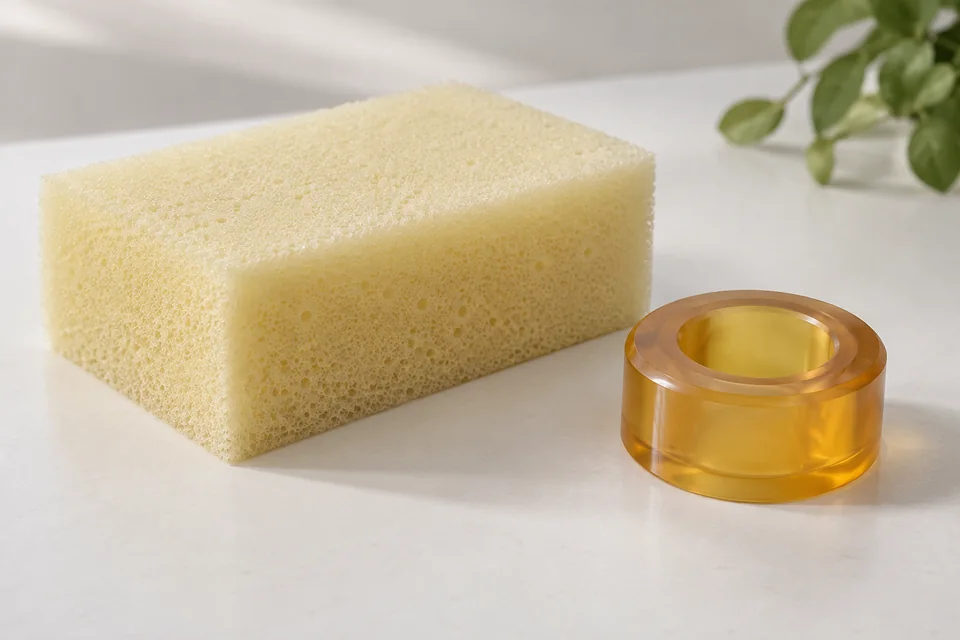
Polyurethane is a plastic material, which exists in various forms. It can be tailored to be either rigid or flexible, and is the material of choice for a broad range of end-user applications.
Component ratio, mixing and reaction conditions affect the delivered structure. A foam’s cellular geometry and a solid elastomer’s mechanical duty are different. Polyurethane is not one interchangeable finished material.
What turns activity into demand
Demand needs to be allocated by application and delivery stage. Foam volume, polymer mass and precursor sales describe different quantities. Separate precursors, formulated systems and converted products. Do not add upstream components and the finished reaction product as independent final demand.
The commercial boundary
Separate precursors, formulated systems and converted products. Do not add upstream components and the finished reaction product as independent final demand.
Technical reading
Selected research
Industry Research
Polyurethane Industry Research Report 2026
Market perspective
Polyurethane is a plastic material, which exists in various forms. It can be tailored to be either rigid or flexible, and is the material of choice for a broad range of end-user applications.
The Asia-Pacific region was the largest polyurethane market in 2018, accounting for about 50% of the global market, compared with about 20% in Europe and 16% in North America.
Report Scope
Read the full market overview
This report quantifies the global Polyurethane market in revenue (US$ million) and, where applicable, sales volume (K MT), using 2025 as the base year and providing annual historical and forecast data for 2021–2032.
It standardizes definitions of types and applications, harmonizes vendor attribution, and presents comparable time series by company, type, application, and region/country, including indicative price bands (US$/K MT) and concentration ratios (CR5/CR10).
The outputs are intended to support strategy development, budgeting, and performance benchmarking for manufacturers, new entrants, channel partners, and investors; the report also reviews technology shifts and notable product introductions relevant to Polyurethane.
Key Companies & Market Share Insights
This section profiles leading manufacturers, combining 2021–2025 results with a 2026–2032 outlook. It reports revenue, market share, price bands, product and application mix, regional and channel mix, and key developments (M&A, capacity additions, certifications). It also provides global revenue, average price, and—where applicable—sales volume by manufacturer, and calculates CR5/CR10 and rank changes to support comparative benchmarking.
Polyurethane Market by Company
Dow
BASF
Huntsman
AkzoNobel
Covestro
Lubrizol
Recticel
LANXESS
INOAC
Tosoh
Mitsui Chem
Woodbridge Foam
Wanhua
Shanghai Dongda
Oriental Yuhong
Polyurethane Segment by Type
Flexible Foam
Rigid Foam
Coatings
Adhesives & Sealants
Elastomers
Others
Polyurethane Segment by Application
Furniture and Interiors
Construction
Electronics and Appliances
Automotive
Footwear
Others
Polyurethane Segment by Region
North America
United States
Canada
Mexico
Europe
Germany
France
U.K.
Italy
Russia
Spain
Netherlands
Switzerland
Sweden
Poland
Asia-Pacific
China
Japan
South Korea
India
Australia
Taiwan
Southeast Asia
South America
Brazil
Argentina
Chile
Middle East & Africa
Egypt
South Africa
Israel
Türkiye
GCC Countries
Key Drivers & Barriers
High-impact rendering factors and drivers have been studied in this report to aid the readers to understand the general development. Moreover, the report includes restraints and challenges that may act as stumbling blocks on the way of the players. This will assist the users to be attentive and make informed decisions related to business. Specialists have also laid their focus on the upcoming business prospects.
Reasons to Buy This Report
1. This report will help the readers to understand the competition within the industries and strategies for the competitive environment to enhance the potential profit. The report also focuses on the competitive landscape of the global Polyurethane market, and introduces in detail the market share, industry ranking, competitor ecosystem, market performance, new product development, operation situation, expansion, and acquisition. etc. of the main players, which helps the readers to identify the main competitors and deeply understand the competition pattern of the market.
2. This report will help stakeholders to understand the global industry status and trends of Polyurethane and provides them with information on key market drivers, restraints, challenges, and opportunities.
3. This report will help stakeholders to understand competitors better and gain more insights to strengthen their position in their businesses. The competitive landscape section includes the market share and rank (in volume and value), competitor ecosystem, new product development, expansion, and acquisition.
4. This report stays updated with novel technology integration, features, and the latest developments in the market
5. This report helps stakeholders to gain insights into which regions to target globally
6. This report helps stakeholders to gain insights into the end-user perception concerning the adoption of Polyurethane.
7. This report helps stakeholders to identify some of the key players in the market and understand their valuable contribution.
Chapter Outline
Chapter 1: Research objectives, research methods, data sources, data cross-validation;
Chapter 2: Introduces the report scope of the report, executive summary of different market segments (by region, product type, application, etc), including the market size of each market segment, future development potential, and so on. It offers a high-level view of the current state of the market and its likely evolution in the short to mid-term, and long term.
Chapter 3: Detailed analysis of Polyurethane manufacturers competitive landscape, price, production and value market share, latest development plan, merger, and acquisition information, etc.
Chapter 4: Provides profiles of key players, introducing the basic situation of the main companies in the market in detail, including product production/output, value, price, gross margin, product introduction, recent development, etc.
Chapter 5: Production/output, value of Polyurethane by region/country. It provides a quantitative analysis of the market size and development potential of each region in the next six years.
Chapter 6: Consumption of Polyurethane in regional level and country level. It provides a quantitative analysis of the market size and development potential of each region and its main countries and introduces the market development, future development prospects, market space, and production of each country in the world.
Chapter 7: Provides the analysis of various market segments by type, covering the market size and development potential of each market segment, to help readers find the blue ocean market in different market segments.
Chapter 8: Provides the analysis of various market segments by application, covering the market size and development potential of each market segment, to help readers find the blue ocean market in different downstream markets.
Chapter 9: Analysis of industrial chain, including the upstream and downstream of the industry.
Chapter 10: Introduces the market dynamics, latest developments of the market, the driving factors and restrictive factors of the market, the challenges and risks faced by manufacturers in the industry, and the analysis of relevant policies in the industry.
Chapter 11: The main points and conclusions of the report.
More report detail
Tables and figures
Scope & coverage.
Types
- Flexible Foam
- Rigid Foam
- Coatings
- Adhesives & Sealants
- Elastomers
- Others
Applications
- Furniture and Interiors
- Construction
- Electronics and Appliances
- Automotive
- Footwear
- Others
Companies covered
- Dow
- BASF
- Huntsman
- AkzoNobel
- Covestro
- Lubrizol
- Recticel
- LANXESS
- INOAC
- Tosoh
- Mitsui Chem
- Woodbridge Foam
- Wanhua
- Shanghai Dongda
- Oriental Yuhong
Inside the report.
1 Preface
- 1.1 Scope of Report
- 1.2 Reasons for Doing This Study
- 1.3 Research Methodology
- 1.4 Research Process
- 1.5 Data Source
- 1.5.1 Secondary Sources
- 1.5.2 Primary Sources
2 Market Overview
- 2.1 Product Definition
- 2.2 Polyurethane by Type
- 2.2.1 Market Value Comparison by Type (2021 VS 2025 VS 2032) & (US$ Million)
- 2.2.2 Flexible Foam
- 2.2.3 Rigid Foam
- 2.2.4 Coatings
- 2.2.5 Adhesives & Sealants
- 2.2.6 Elastomers
- 2.2.7 Others
- 2.3 Polyurethane by Application
- 2.3.1 Market Value Comparison by Application (2021 VS 2025 VS 2032) & (US$ Million)
- 2.3.2 Furniture and Interiors
- 2.3.3 Construction
- 2.3.4 Electronics and Appliances
- 2.3.5 Automotive
- 2.3.6 Footwear
- 2.3.7 Others
- 2.4 Global Market Growth Prospects
- 2.4.1 Global Polyurethane Production Value Estimates and Forecasts (2021-2032)
- 2.4.2 Global Polyurethane Production Capacity Estimates and Forecasts (2021-2032)
- 2.4.3 Global Polyurethane Production Estimates and Forecasts (2021-2032)
- 2.4.4 Global Polyurethane Market Average Price (2021-2032)
3 Market Competitive Landscape by Manufacturers
- 3.1 Global Polyurethane Production by Manufacturers (2021-2026)
- 3.2 Global Polyurethane Production Value by Manufacturers (2021-2026)
- 3.3 Global Polyurethane Average Price by Manufacturers (2021-2026)
- 3.4 Global Polyurethane Industry Manufacturers Ranking, 2024 VS 2025 VS 2026
- 3.5 Global Polyurethane Key Manufacturers, Manufacturing Sites & Headquarters
- 3.6 Global Polyurethane Manufacturers, Product Type & Application
- 3.7 Global Polyurethane Manufacturers Established Date
- 3.8 Global Polyurethane Market CR5 and HHI
- 3.9 Global Manufacturers Mergers & Acquisition
4 Manufacturers Profiled
- 4.1 Dow
- 4.1.1 Dow Polyurethane Company Information
- 4.1.2 Dow Polyurethane Business Overview
- 4.1.3 Dow Polyurethane Production Capacity, Value and Gross Margin (2021-2026)
- 4.1.4 Dow Product Portfolio
- 4.1.5 Dow Recent Developments
- 4.2 BASF
- 4.2.1 BASF Polyurethane Company Information
- 4.2.2 BASF Polyurethane Business Overview
- 4.2.3 BASF Polyurethane Production Capacity, Value and Gross Margin (2021-2026)
- 4.2.4 BASF Product Portfolio
- 4.2.5 BASF Recent Developments
- 4.3 Huntsman
- 4.3.1 Huntsman Polyurethane Company Information
- 4.3.2 Huntsman Polyurethane Business Overview
- 4.3.3 Huntsman Polyurethane Production Capacity, Value and Gross Margin (2021-2026)
- 4.3.4 Huntsman Product Portfolio
- 4.3.5 Huntsman Recent Developments
- 4.4 AkzoNobel
- 4.4.1 AkzoNobel Polyurethane Company Information
- 4.4.2 AkzoNobel Polyurethane Business Overview
- 4.4.3 AkzoNobel Polyurethane Production Capacity, Value and Gross Margin (2021-2026)
- 4.4.4 AkzoNobel Product Portfolio
- 4.4.5 AkzoNobel Recent Developments
- 4.5 Covestro
- 4.5.1 Covestro Polyurethane Company Information
- 4.5.2 Covestro Polyurethane Business Overview
- 4.5.3 Covestro Polyurethane Production Capacity, Value and Gross Margin (2021-2026)
- 4.5.4 Covestro Product Portfolio
- 4.5.5 Covestro Recent Developments
- 4.6 Lubrizol
- 4.6.1 Lubrizol Polyurethane Company Information
- 4.6.2 Lubrizol Polyurethane Business Overview
- 4.6.3 Lubrizol Polyurethane Production Capacity, Value and Gross Margin (2021-2026)
- 4.6.4 Lubrizol Product Portfolio
- 4.6.5 Lubrizol Recent Developments
- 4.7 Recticel
- 4.7.1 Recticel Polyurethane Company Information
- 4.7.2 Recticel Polyurethane Business Overview
- 4.7.3 Recticel Polyurethane Production Capacity, Value and Gross Margin (2021-2026)
- 4.7.4 Recticel Product Portfolio
- 4.7.5 Recticel Recent Developments
- 4.8 LANXESS
- 4.8.1 LANXESS Polyurethane Company Information
- 4.8.2 LANXESS Polyurethane Business Overview
- 4.8.3 LANXESS Polyurethane Production Capacity, Value and Gross Margin (2021-2026)
- 4.8.4 LANXESS Product Portfolio
- 4.8.5 LANXESS Recent Developments
- 4.9 INOAC
- 4.9.1 INOAC Polyurethane Company Information
- 4.9.2 INOAC Polyurethane Business Overview
- 4.9.3 INOAC Polyurethane Production Capacity, Value and Gross Margin (2021-2026)
- 4.9.4 INOAC Product Portfolio
- 4.9.5 INOAC Recent Developments
- 4.10 Tosoh
- 4.10.1 Tosoh Polyurethane Company Information
- 4.10.2 Tosoh Polyurethane Business Overview
- 4.10.3 Tosoh Polyurethane Production Capacity, Value and Gross Margin (2021-2026)
- 4.10.4 Tosoh Product Portfolio
- 4.10.5 Tosoh Recent Developments
- 4.11 Mitsui Chem
- 4.11.1 Mitsui Chem Polyurethane Company Information
- 4.11.2 Mitsui Chem Polyurethane Business Overview
- 4.11.3 Mitsui Chem Polyurethane Production Capacity, Value and Gross Margin (2021-2026)
- 4.11.4 Mitsui Chem Product Portfolio
- 4.11.5 Mitsui Chem Recent Developments
- 4.12 Woodbridge Foam
- 4.12.1 Woodbridge Foam Polyurethane Company Information
- 4.12.2 Woodbridge Foam Polyurethane Business Overview
- 4.12.3 Woodbridge Foam Polyurethane Production Capacity, Value and Gross Margin (2021-2026)
- 4.12.4 Woodbridge Foam Product Portfolio
- 4.12.5 Woodbridge Foam Recent Developments
- 4.13 Wanhua
- 4.13.1 Wanhua Polyurethane Company Information
- 4.13.2 Wanhua Polyurethane Business Overview
- 4.13.3 Wanhua Polyurethane Production Capacity, Value and Gross Margin (2021-2026)
- 4.13.4 Wanhua Product Portfolio
- 4.13.5 Wanhua Recent Developments
- 4.14 Shanghai Dongda
- 4.14.1 Shanghai Dongda Polyurethane Company Information
- 4.14.2 Shanghai Dongda Polyurethane Business Overview
- 4.14.3 Shanghai Dongda Polyurethane Production Capacity, Value and Gross Margin (2021-2026)
- 4.14.4 Shanghai Dongda Product Portfolio
- 4.14.5 Shanghai Dongda Recent Developments
- 4.15 Oriental Yuhong
- 4.15.1 Oriental Yuhong Polyurethane Company Information
- 4.15.2 Oriental Yuhong Polyurethane Business Overview
- 4.15.3 Oriental Yuhong Polyurethane Production Capacity, Value and Gross Margin (2021-2026)
- 4.15.4 Oriental Yuhong Product Portfolio
- 4.15.5 Oriental Yuhong Recent Developments
5 Global Polyurethane Production by Region
- 5.1 Global Polyurethane Production Estimates and Forecasts by Region: 2021 VS 2025 VS 2032
- 5.2 Global Polyurethane Production by Region: 2021-2032
- 5.2.1 Global Polyurethane Production by Region: 2021-2026
- 5.2.2 Global Polyurethane Production Forecast by Region (2027-2032)
- 5.3 Global Polyurethane Production Value Estimates and Forecasts by Region: 2021 VS 2025 VS 2032
- 5.4 Global Polyurethane Production Value by Region: 2021-2032
- 5.4.1 Global Polyurethane Production Value by Region: 2021-2026
- 5.4.2 Global Polyurethane Production Value Forecast by Region (2027-2032)
- 5.5 Global Polyurethane Market Price Analysis by Region (2021-2026)
- 5.6 Global Polyurethane Production and Value, YOY Growth
- 5.6.1 North America Polyurethane Production Value Estimates and Forecasts (2021-2032)
- 5.6.2 Europe Polyurethane Production Value Estimates and Forecasts (2021-2032)
- 5.6.3 China Polyurethane Production Value Estimates and Forecasts (2021-2032)
- 5.6.4 Japan Polyurethane Production Value Estimates and Forecasts (2021-2032)
6 Global Polyurethane Consumption by Region
- 6.1 Global Polyurethane Consumption Estimates and Forecasts by Region: 2021 VS 2025 VS 2032
- 6.2 Global Polyurethane Consumption by Region (2021-2032)
- 6.2.1 Global Polyurethane Consumption by Region: 2021-2026
- 6.2.2 Global Polyurethane Forecasted Consumption by Region (2027-2032)
- 6.3 North America
- 6.3.1 North America Polyurethane Consumption Growth Rate by Country: 2021 VS 2025 VS 2032
- 6.3.2 North America Polyurethane Consumption by Country (2021-2032)
- 6.3.3 United States
- 6.3.4 Canada
- 6.3.5 Mexico
- 6.4 Europe
- 6.4.1 Europe Polyurethane Consumption Growth Rate by Country: 2021 VS 2025 VS 2032
- 6.4.2 Europe Polyurethane Consumption by Country (2021-2032)
- 6.4.3 Germany
- 6.4.4 France
- 6.4.5 U.K.
- 6.4.6 Italy
- 6.4.7 Russia
- 6.4.8 Spain
- 6.4.9 Netherlands
- 6.4.10 Switzerland
- 6.4.11 Sweden
- 6.4.12 Poland
- 6.5 Asia Pacific
- 6.5.1 Asia Pacific Polyurethane Consumption Growth Rate by Country: 2021 VS 2025 VS 2032
- 6.5.2 Asia Pacific Polyurethane Consumption by Country (2021-2032)
- 6.5.3 China
- 6.5.4 Japan
- 6.5.5 South Korea
- 6.5.6 India
- 6.5.7 Australia
- 6.5.8 Taiwan
- 6.5.9 Southeast Asia
- 6.6 South America, Middle East & Africa
- 6.6.1 South America, Middle East & Africa Polyurethane Consumption Growth Rate by Country: 2021 VS 2025 VS 2032
- 6.6.2 South America, Middle East & Africa Polyurethane Consumption by Country (2021-2032)
- 6.6.3 Brazil
- 6.6.4 Argentina
- 6.6.5 Chile
- 6.6.6 Turkey
- 6.6.7 GCC Countries
7 Segment by Type
- 7.1 Global Polyurethane Production by Type (2021-2032)
- 7.1.1 Global Polyurethane Production by Type (2021-2032) & (K MT)
- 7.1.2 Global Polyurethane Production Market Share by Type (2021-2032)
- 7.2 Global Polyurethane Production Value by Type (2021-2032)
- 7.2.1 Global Polyurethane Production Value by Type (2021-2032) & (US$ Million)
- 7.2.2 Global Polyurethane Production Value Market Share by Type (2021-2032)
- 7.3 Global Polyurethane Price by Type (2021-2032)
8 Segment by Application
- 8.1 Global Polyurethane Production by Application (2021-2032)
- 8.1.1 Global Polyurethane Production by Application (2021-2032) & (K MT)
- 8.1.2 Global Polyurethane Production Market Share by Application (2021-2032)
- 8.2 Global Polyurethane Production Value by Application (2021-2032)
- 8.2.1 Global Polyurethane Production Value by Application (2021-2032) & (US$ Million)
- 8.2.2 Global Polyurethane Production Value Market Share by Application (2021-2032)
- 8.3 Global Polyurethane Price by Application (2021-2032)
9 Value Chain and Sales Channels Analysis of the Market
- 9.1 Polyurethane Value Chain Analysis
- 9.1.1 Polyurethane Key Raw Materials
- 9.1.2 Raw Materials Key Suppliers
- 9.1.3 Polyurethane Production Mode & Process
- 9.2 Polyurethane Sales Channels Analysis
- 9.2.1 Direct Comparison with Distribution Share
- 9.2.2 Polyurethane Distributors
- 9.2.3 Polyurethane Customers
10 Global Polyurethane Analyzing Market Dynamics
- 10.1 Polyurethane Industry Trends
- 10.2 Polyurethane Industry Drivers
- 10.3 Polyurethane Industry Opportunities and Challenges
- 10.4 Polyurethane Industry Restraints
11 Report Conclusion
12 Disclaimer
GET THE RESEARCH
Choose your license.
Choose who needs access.
All options are for this report and research series.
PDF by email within 3–5 working days after payment confirmation.
Talk to an analyst