APO RESEARCH · REPORT
Enterprise HR SaaS Software
Enterprise HR SaaS Software refers to cloud based human resource management software delivered under a software as a service model for medium and large organizations with complex workforce, organizational, regulatory, payroll, and talent management requirements.
Product & engineering
Understand the product.
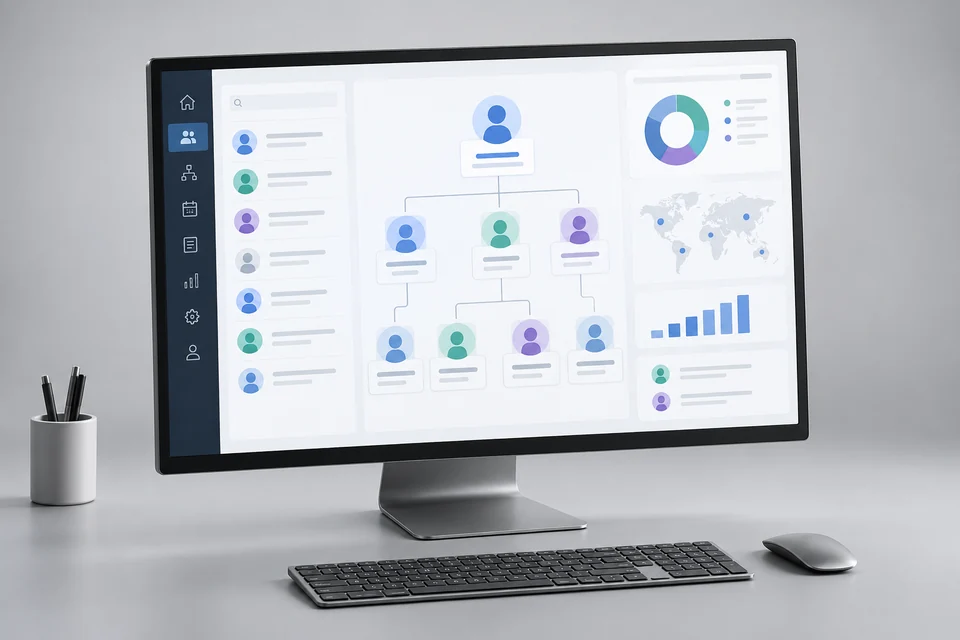
Enterprise HR SaaS Software refers to cloud based human resource management software delivered under a software as a service model for medium and large organizations with complex workforce, organizational, regulatory, payroll, and talent management requirements. The software maintains a centralized employee and organizational data layer covering worker records, positions, reporting relationships, legal entities, business units, locations, job architecture, compensation structures, employment status, time records, benefits, skills, qualifications, and lifecycle events. Core functional domains commonly include Core HR, payroll, workforce management, recruiting, onboarding, performance management, compensation, benefits administration, learning, succession planning, employee experience, workforce analytics, and HR service management.
Enterprise deployments typically operate across multiple legal entities, business units, locations, currencies, languages, payroll jurisdictions, and regulatory environments. The software manages effective dated employee records, organizational hierarchies, position control, approval workflows, role based permissions, segregation of duties, employee and manager self service, policy rules, payroll calculations, time and attendance, leave, workforce scheduling, compensation cycles, talent processes, and statutory reporting. Enterprise systems also maintain audit trails, configurable business rules, workflow orchestration, identity and access controls, application programming interfaces, master data synchronization, and integrations with finance, enterprise resource planning, identity management, benefits, tax, banking, learning, recruiting, and workforce systems.
The technical architecture generally uses multitenant or cloud hosted application infrastructure with centralized configuration, continuous software updates, subscription based access, web and mobile interfaces, data security controls, disaster recovery, availability management, encryption, authentication, authorization, and regional data governance capabilities. Large deployments may contain hundreds of thousands of worker records and require high transaction throughput during payroll processing, time capture, open enrollment, performance cycles, compensation reviews, recruitment campaigns, and organizational restructuring. Configuration must preserve common enterprise data standards while accommodating differences among subsidiaries, countries, worker categories, collective arrangements, payroll rules, tax regimes, benefits structures, and local employment requirements.
At the enterprise level, HR SaaS increasingly functions as the system of record for workforce data and as an operational control layer for workforce administration. Modern suites incorporate workforce planning, skills intelligence, organizational analytics, predictive models, generative artificial intelligence, conversational interfaces, automated case management, workflow automation, and decision assistance. Their operating value depends on data integrity, payroll accuracy, workflow reliability, regulatory localization, integration depth, permission architecture, scalability, and the ability to maintain consistent workforce processes across large and geographically distributed organizations.
The delivered object is a defined software capability or professional workflow with explicit users, interfaces and operating obligations. Software access, implementation work, managed operations and transaction flows must remain distinct commercial measures.
What turns activity into demand
Contracted users, deployed systems or completed service scope create paid demand through the stated licence or delivery basis. Hardware, implementation, recurring fees and managed services may share a contract and require separate accounting.
The commercial boundary
For Enterprise HR SaaS Software, distinguish the supplied service or configured system from its inputs and the complete application. Report types and applications may overlap; retain the selected edition's product definition, geography, period, unit and transaction basis when comparing estimates.
What defines the supplied enterprise hr saas software offering?
Enterprise HR SaaS Software refers to cloud based human resource management software delivered under a software as a service model for medium and large organizations with complex workforce, organizational, regulatory, payroll, and talent management requirements. Identify the functional boundary, data ownership, integration work, service commitment and charging unit. Compare recurring access revenue separately from one-off implementation and pass-through transactions; deployment count is not automatically active paid usage.
Selected research
Market Analysis & Forecast
Global Enterprise HR SaaS Software Market Analysis and Forecast 2026-2032
Market perspective
According to APO Research, Inc, the global Enterprise HR SaaS Software market was valued at USD 47,950.05 million in 2025 and is expected to reach USD 52,427.12 million in 2026 and USD 84,357.45 million by 2032, representing a CAGR of 8.25% from 2026 to 2032. Annual market revenue is expected to increase by USD 31,930.33 million during this period. Revenue expansion reflects simultaneous growth in paid employee equivalents and weighted annual net subscription value. Employee coverage expands as large organizations migrate additional countries, business units and workforce populations to cloud HR systems, while unit value rises as customers add payroll, workforce management, recruiting, learning, talent management, analytics, employee experience and AI functionality to core HR subscriptions.
North America, Europe and Asia Pacific are expected to account for most incremental enterprise spending. North American demand is closely associated with replacement of legacy HRIS environments, payroll modernization, application consolidation and expansion of existing SaaS deployments across large employee populations. European demand is shaped by multinational payroll requirements, country specific labor rules, data governance, local language requirements and migration from fragmented national systems toward common enterprise architectures. Asia Pacific contributes additional paid employee volume as large employers digitize HR administration, payroll, recruiting and workforce management across China, Japan, India, Australia, Southeast Asia and other major employment markets. Expansion increasingly occurs within existing customer accounts through additional employees, countries and functional modules, alongside new customer deployments.
By type, Integrated HCM Suite represents the broadest enterprise spending pool because core HR, payroll, workforce management, talent, recruiting, learning and analytics can be contracted within a common vendor environment. Best of Breed HR SaaS remains material in specialist functions where functionality depth, local payroll capability, workforce scheduling, recruiting performance or talent specialization influences procurement. By application, large enterprises generate substantial contract values through employee scale, multinational deployment, integration complexity and broader module adoption. SMEs contribute additional customer and employee volume through standardized cloud deployment and lower implementation requirements.
Read the full market overview
Major vendors include Workday, SAP, Oracle, ADP, UKG and Dayforce, together with Paychex, Paycom, Paylocity, Rippling, Infor, Cornerstone OnDemand, isolved, TriNet, BambooHR, Gusto, Deel, Remote, Sage, Personio and other regional suppliers. Competitive intensity increasingly centers on the breadth of the HCM suite, payroll coverage, country localization, implementation ecosystem, data integration, AI functionality, employee level pricing and the ability to expand revenue inside the installed customer base. Multi year subscription contracts and high migration costs moderate replacement frequency, while legacy system retirement, corporate restructuring, international expansion and application consolidation continue to create recurring replacement and migration demand.
Report Includes
This report presents an overview of global market for Enterprise HR SaaS Software, market size. Analyses of the global market trends, with historic market revenue data for 2021 - 2025, estimates for 2026, and projections of CAGR through 2032.
This report researches the key producers of Enterprise HR SaaS Software, also provides the revenue of main regions and countries. Of the upcoming market potential for Enterprise HR SaaS Software, and key regions or countries of focus to forecast this market into various segments and sub-segments. Country specific data and market value analysis for the U.S., Canada, Mexico, Brazil, China, Japan, South Korea, Southeast Asia, India, Germany, the U.K., Italy, Middle East, Africa, and Other Countries.
This report focuses on the Enterprise HR SaaS Software revenue, market share and industry ranking of main manufacturers, data from 2021 to 2026. Identification of the major stakeholders in the global Enterprise HR SaaS Software market, and analysis of their competitive landscape and market positioning based on recent developments and segmental revenues. This report will help stakeholders to understand the competitive landscape and gain more insights and position their businesses and market strategies in a better way.
This report analyzes the segments data by Type and by Application, revenue, and growth rate, from 2021 to 2032. Evaluation and forecast the market size for Enterprise HR SaaS Software revenue, projected growth trends, production technology, application and end-user industry.
Enterprise HR SaaS Software Segment by Company
Workday
SAP
Oracle
ADP
UKG
Dayforce
Paychex
Paycom
Paylocity
Rippling
Infor
Cornerstone OnDemand
isolved
TriNet
BambooHR
Gusto
Deel
Remote
Sage
Personio
HiBob
Factorial
Cegid
SD Worx
Zellis
MHR
The Access Group
Darwinbox
PeopleStrong
Ramco Systems
Zoho
Employment Hero
SmartHR
Works Human Intelligence
Beisen
Yonyou Network
Kingdee International Software Group
Moka
GaiaWorks
KNX Human Resources Technology
Suzhou Huitong Software Technology
Enterprise HR SaaS Software Segment by Type
Best of Breed HR SaaS
Integrated HCM Suite
Others
Enterprise HR SaaS Software Segment by Application
Large Enterprises
SMEs
Enterprise HR SaaS Software Segment by Region
North America
United States
Canada
Mexico
Europe
Germany
France
U.K.
Italy
Russia
Spain
Netherlands
Switzerland
Sweden
Poland
Asia-Pacific
China
Japan
South Korea
India
Australia
Taiwan
Southeast Asia
South America
Brazil
Argentina
Chile
Colombia
Middle East & Africa
Egypt
South Africa
Israel
Türkiye
GCC Countries
Study Objectives
1. To analyze and research the global status and future forecast, involving growth rate (CAGR), market share, historical and forecast.
2. To present the key players, revenue, market share, and Recent Developments.
3. To split the breakdown data by regions, type, manufacturers, and Application.
4. To analyze the global and key regions market potential and advantage, opportunity and challenge, restraints, and risks.
5. To identify significant trends, drivers, influence factors in global and regions.
6. To analyze competitive developments such as expansions, agreements, new product launches, and acquisitions in the market.
Reasons to Buy This Report
1. This report will help the readers to understand the competition within the industries and strategies for the competitive environment to enhance the potential profit. The report also focuses on the competitive landscape of the global Enterprise HR SaaS Software market, and introduces in detail the market share, industry ranking, competitor ecosystem, market performance, new product development, operation situation, expansion, and acquisition. etc. of the main players, which helps the readers to identify the main competitors and deeply understand the competition pattern of the market.
2. This report will help stakeholders to understand the global industry status and trends of Enterprise HR SaaS Software and provides them with information on key market drivers, restraints, challenges, and opportunities.
3. This report will help stakeholders to understand competitors better and gain more insights to strengthen their position in their businesses. The competitive landscape section includes the market share and rank (in market size), competitor ecosystem, new product development, expansion, and acquisition.
4. This report stays updated with novel technology integration, features, and the latest developments in the market.
5. This report helps stakeholders to gain insights into which regions to target globally.
6. This report helps stakeholders to gain insights into the end-user perception concerning the adoption of Enterprise HR SaaS Software.
7. This report helps stakeholders to identify some of the key players in the market and understand their valuable contribution.
Chapter Outline
Chapter 1: Introduces the report scope of the report, executive summary of different market segments (product type, application, etc), including the market size of each market segment, future development potential, and so on. It offers a high-level view of the current state of the market and its likely evolution in the short to mid-term, and long term.
Chapter 2: Introduces the market dynamics, latest developments of the market, the driving factors and restrictive factors of the market, the challenges and risks faced by manufacturers in the industry, and the analysis of relevant policies in the industry.
Chapter 3: Revenue of Enterprise HR SaaS Software in global and regional level. It provides a quantitative analysis of the market size and development potential of each region and its main countries and introduces the market development, future development prospects, market space, and capacity of each country in the world.
Chapter 4: Detailed analysis of Enterprise HR SaaS Software company competitive landscape, revenue, market share and industry ranking, latest development plan, merger, and acquisition information, etc.
Chapter 5: Provides the analysis of various market segments by type, covering the revenue, and development potential of each market segment, to help readers find the blue ocean market in different market segments.
Chapter 6: Provides the analysis of various market segments by application, covering the revenue, and development potential of each market segment, to help readers find the blue ocean market in different downstream markets.
Chapter 7: Provides profiles of key companies, introducing the basic situation of the main companies in the market in detail, including product descriptions and specifications, Enterprise HR SaaS Software revenue, gross margin, and recent development, etc.
Chapter 8: North America by type, by application and by country, revenue for each segment.
Chapter 9: Europe by type, by application and by country, revenue for each segment.
Chapter 10: China type, by application, revenue for each segment.
Chapter 11: Asia (excluding China) type, by application and by region, revenue for each segment.
Chapter 12: South America, Middle East and Africa by type, by application and by country, revenue for each segment.
Chapter 13: The main concluding insights of the report.
More report detail
Tables and figures
Scope & coverage.
Types
- Best of Breed HR SaaS
- Integrated HCM Suite
- Others
Applications
- Large Enterprises
- SMEs
Companies covered
- Workday
- SAP
- Oracle
- ADP
- UKG
- Dayforce
- Paychex
- Paycom
- Paylocity
- Rippling
- Infor
- Cornerstone OnDemand
- isolved
- TriNet
- BambooHR
- Gusto
- Deel
- Remote
- Sage
- Personio
- HiBob
- Factorial
- Cegid
- SD Worx
- Zellis
- MHR
- The Access Group
- Darwinbox
- PeopleStrong
- Ramco Systems
- Zoho
- Employment Hero
- SmartHR
- Works Human Intelligence
- Beisen
- Yonyou Network
- Kingdee International Software Group
- Moka
- GaiaWorks
- KNX Human Resources Technology
- Suzhou Huitong Software Technology
Inside the report.
1 Market Overview
- 1.1 Product Definition
- 1.2 Enterprise HR SaaS Software Market by Type
- 1.2.1 Global Enterprise HR SaaS Software Market Size by Type, 2021 VS 2025 VS 2032
- 1.2.2 Best of Breed HR SaaS
- 1.2.3 Integrated HCM Suite
- 1.2.4 Others
- 1.3 Enterprise HR SaaS Software Market by Application
- 1.3.1 Global Enterprise HR SaaS Software Market Size by Application, 2021 VS 2025 VS 2032
- 1.3.2 Large Enterprises
- 1.3.3 SMEs
- 1.4 Assumptions and Limitations
- 1.5 Study Goals and Objectives
2 Enterprise HR SaaS Software Market Dynamics
- 2.1 Enterprise HR SaaS Software Industry Trends
- 2.2 Enterprise HR SaaS Software Industry Drivers
- 2.3 Enterprise HR SaaS Software Industry Opportunities and Challenges
- 2.4 Enterprise HR SaaS Software Industry Restraints
3 Global Growth Perspective
- 3.1 Global Enterprise HR SaaS Software Market Perspective (2021-2032)
- 3.2 Global Enterprise HR SaaS Software Growth Trends by Region
- 3.2.1 Global Enterprise HR SaaS Software Market Size by Region: 2021 VS 2025 VS 2032
- 3.2.2 Global Enterprise HR SaaS Software Market Size by Region (2021-2026)
- 3.2.3 Global Enterprise HR SaaS Software Market Size by Region (2027-2032)
4 Competitive Landscape by Players
- 4.1 Global Enterprise HR SaaS Software Revenue by Players
- 4.1.1 Global Enterprise HR SaaS Software Revenue by Players (2021-2026)
- 4.1.2 Global Enterprise HR SaaS Software Revenue Market Share by Players (2021-2026)
- 4.1.3 Global Enterprise HR SaaS Software Players Revenue Share Top 10 and Top 5 in 2025
- 4.2 Global Enterprise HR SaaS Software Key Players Ranking, 2024 VS 2025 VS 2026
- 4.3 Global Enterprise HR SaaS Software Key Players Headquarters & Area Served
- 4.4 Global Enterprise HR SaaS Software Players, Product Type & Application
- 4.5 Global Enterprise HR SaaS Software Players Establishment Date
- 4.6 Market Competitive Analysis
- 4.6.1 Global Enterprise HR SaaS Software Market CR5 and HHI
- 4.6.3 2025 Enterprise HR SaaS Software Tier 1, Tier 2, and Tier 3
5 Enterprise HR SaaS Software Market Size by Type
- 5.1 Global Enterprise HR SaaS Software Revenue by Type (2021 VS 2025 VS 2032)
- 5.2 Global Enterprise HR SaaS Software Revenue by Type (2021-2032)
- 5.3 Global Enterprise HR SaaS Software Revenue Market Share by Type (2021-2032)
6 Enterprise HR SaaS Software Market Size by Application
- 6.1 Global Enterprise HR SaaS Software Revenue by Application (2021 VS 2025 VS 2032)
- 6.2 Global Enterprise HR SaaS Software Revenue by Application (2021-2032)
- 6.3 Global Enterprise HR SaaS Software Revenue Market Share by Application (2021-2032)
7 Company Profiles
- 7.1 Workday
- 7.1.1 Workday Company Information
- 7.1.2 Workday Business Overview
- 7.1.3 Workday Enterprise HR SaaS Software Revenue and Gross Margin (2021-2026)
- 7.1.4 Workday Enterprise HR SaaS Software Product Portfolio
- 7.1.5 Workday Recent Developments
- 7.2 SAP
- 7.2.1 SAP Company Information
- 7.2.2 SAP Business Overview
- 7.2.3 SAP Enterprise HR SaaS Software Revenue and Gross Margin (2021-2026)
- 7.2.4 SAP Enterprise HR SaaS Software Product Portfolio
- 7.2.5 SAP Recent Developments
- 7.3 Oracle
- 7.3.1 Oracle Company Information
- 7.3.2 Oracle Business Overview
- 7.3.3 Oracle Enterprise HR SaaS Software Revenue and Gross Margin (2021-2026)
- 7.3.4 Oracle Enterprise HR SaaS Software Product Portfolio
- 7.3.5 Oracle Recent Developments
- 7.4 ADP
- 7.4.1 ADP Company Information
- 7.4.2 ADP Business Overview
- 7.4.3 ADP Enterprise HR SaaS Software Revenue and Gross Margin (2021-2026)
- 7.4.4 ADP Enterprise HR SaaS Software Product Portfolio
- 7.4.5 ADP Recent Developments
- 7.5 UKG
- 7.5.1 UKG Company Information
- 7.5.2 UKG Business Overview
- 7.5.3 UKG Enterprise HR SaaS Software Revenue and Gross Margin (2021-2026)
- 7.5.4 UKG Enterprise HR SaaS Software Product Portfolio
- 7.5.5 UKG Recent Developments
- 7.6 Dayforce
- 7.6.1 Dayforce Company Information
- 7.6.2 Dayforce Business Overview
- 7.6.3 Dayforce Enterprise HR SaaS Software Revenue and Gross Margin (2021-2026)
- 7.6.4 Dayforce Enterprise HR SaaS Software Product Portfolio
- 7.6.5 Dayforce Recent Developments
- 7.7 Paychex
- 7.7.1 Paychex Company Information
- 7.7.2 Paychex Business Overview
- 7.7.3 Paychex Enterprise HR SaaS Software Revenue and Gross Margin (2021-2026)
- 7.7.4 Paychex Enterprise HR SaaS Software Product Portfolio
- 7.7.5 Paychex Recent Developments
- 7.8 Paycom
- 7.8.1 Paycom Company Information
- 7.8.2 Paycom Business Overview
- 7.8.3 Paycom Enterprise HR SaaS Software Revenue and Gross Margin (2021-2026)
- 7.8.4 Paycom Enterprise HR SaaS Software Product Portfolio
- 7.8.5 Paycom Recent Developments
- 7.9 Paylocity
- 7.9.1 Paylocity Company Information
- 7.9.2 Paylocity Business Overview
- 7.9.3 Paylocity Enterprise HR SaaS Software Revenue and Gross Margin (2021-2026)
- 7.9.4 Paylocity Enterprise HR SaaS Software Product Portfolio
- 7.9.5 Paylocity Recent Developments
- 7.10 Rippling
- 7.10.1 Rippling Company Information
- 7.10.2 Rippling Business Overview
- 7.10.3 Rippling Enterprise HR SaaS Software Revenue and Gross Margin (2021-2026)
- 7.10.4 Rippling Enterprise HR SaaS Software Product Portfolio
- 7.10.5 Rippling Recent Developments
- 7.11 Infor
- 7.11.1 Infor Company Information
- 7.11.2 Infor Business Overview
- 7.11.3 Infor Enterprise HR SaaS Software Revenue and Gross Margin (2021-2026)
- 7.11.4 Infor Enterprise HR SaaS Software Product Portfolio
- 7.11.5 Infor Recent Developments
- 7.12 Cornerstone OnDemand
- 7.12.1 Cornerstone OnDemand Company Information
- 7.12.2 Cornerstone OnDemand Business Overview
- 7.12.3 Cornerstone OnDemand Enterprise HR SaaS Software Revenue and Gross Margin (2021-2026)
- 7.12.4 Cornerstone OnDemand Enterprise HR SaaS Software Product Portfolio
- 7.12.5 Cornerstone OnDemand Recent Developments
- 7.13 isolved
- 7.13.1 isolved Company Information
- 7.13.2 isolved Business Overview
- 7.13.3 isolved Enterprise HR SaaS Software Revenue and Gross Margin (2021-2026)
- 7.13.4 isolved Enterprise HR SaaS Software Product Portfolio
- 7.13.5 isolved Recent Developments
- 7.14 TriNet
- 7.14.1 TriNet Company Information
- 7.14.2 TriNet Business Overview
- 7.14.3 TriNet Enterprise HR SaaS Software Revenue and Gross Margin (2021-2026)
- 7.14.4 TriNet Enterprise HR SaaS Software Product Portfolio
- 7.14.5 TriNet Recent Developments
- 7.15 BambooHR
- 7.15.1 BambooHR Company Information
- 7.15.2 BambooHR Business Overview
- 7.15.3 BambooHR Enterprise HR SaaS Software Revenue and Gross Margin (2021-2026)
- 7.15.4 BambooHR Enterprise HR SaaS Software Product Portfolio
- 7.15.5 BambooHR Recent Developments
- 7.16 Gusto
- 7.16.1 Gusto Company Information
- 7.16.2 Gusto Business Overview
- 7.16.3 Gusto Enterprise HR SaaS Software Revenue and Gross Margin (2021-2026)
- 7.16.4 Gusto Enterprise HR SaaS Software Product Portfolio
- 7.16.5 Gusto Recent Developments
- 7.17 Deel
- 7.17.1 Deel Company Information
- 7.17.2 Deel Business Overview
- 7.17.3 Deel Enterprise HR SaaS Software Revenue and Gross Margin (2021-2026)
- 7.17.4 Deel Enterprise HR SaaS Software Product Portfolio
- 7.17.5 Deel Recent Developments
- 7.18 Remote
- 7.18.1 Remote Company Information
- 7.18.2 Remote Business Overview
- 7.18.3 Remote Enterprise HR SaaS Software Revenue and Gross Margin (2021-2026)
- 7.18.4 Remote Enterprise HR SaaS Software Product Portfolio
- 7.18.5 Remote Recent Developments
- 7.19 Sage
- 7.19.1 Sage Company Information
- 7.19.2 Sage Business Overview
- 7.19.3 Sage Enterprise HR SaaS Software Revenue and Gross Margin (2021-2026)
- 7.19.4 Sage Enterprise HR SaaS Software Product Portfolio
- 7.19.5 Sage Recent Developments
- 7.20 Personio
- 7.20.1 Personio Company Information
- 7.20.2 Personio Business Overview
- 7.20.3 Personio Enterprise HR SaaS Software Revenue and Gross Margin (2021-2026)
- 7.20.4 Personio Enterprise HR SaaS Software Product Portfolio
- 7.20.5 Personio Recent Developments
- 7.21 HiBob
- 7.21.1 HiBob Company Information
- 7.21.2 HiBob Business Overview
- 7.21.3 HiBob Enterprise HR SaaS Software Revenue and Gross Margin (2021-2026)
- 7.21.4 HiBob Enterprise HR SaaS Software Product Portfolio
- 7.21.5 HiBob Recent Developments
- 7.22 Factorial
- 7.22.1 Factorial Company Information
- 7.22.2 Factorial Business Overview
- 7.22.3 Factorial Enterprise HR SaaS Software Revenue and Gross Margin (2021-2026)
- 7.22.4 Factorial Enterprise HR SaaS Software Product Portfolio
- 7.22.5 Factorial Recent Developments
- 7.23 Cegid
- 7.23.1 Cegid Company Information
- 7.23.2 Cegid Business Overview
- 7.23.3 Cegid Enterprise HR SaaS Software Revenue and Gross Margin (2021-2026)
- 7.23.4 Cegid Enterprise HR SaaS Software Product Portfolio
- 7.23.5 Cegid Recent Developments
- 7.24 SD Worx
- 7.24.1 SD Worx Company Information
- 7.24.2 SD Worx Business Overview
- 7.24.3 SD Worx Enterprise HR SaaS Software Revenue and Gross Margin (2021-2026)
- 7.24.4 SD Worx Enterprise HR SaaS Software Product Portfolio
- 7.24.5 SD Worx Recent Developments
- 7.25 Zellis
- 7.25.1 Zellis Company Information
- 7.25.2 Zellis Business Overview
- 7.25.3 Zellis Enterprise HR SaaS Software Revenue and Gross Margin (2021-2026)
- 7.25.4 Zellis Enterprise HR SaaS Software Product Portfolio
- 7.25.5 Zellis Recent Developments
- 7.26 MHR
- 7.26.1 MHR Company Information
- 7.26.2 MHR Business Overview
- 7.26.3 MHR Enterprise HR SaaS Software Revenue and Gross Margin (2021-2026)
- 7.26.4 MHR Enterprise HR SaaS Software Product Portfolio
- 7.26.5 MHR Recent Developments
- 7.27 The Access Group
- 7.27.1 The Access Group Company Information
- 7.27.2 The Access Group Business Overview
- 7.27.3 The Access Group Enterprise HR SaaS Software Revenue and Gross Margin (2021-2026)
- 7.27.4 The Access Group Enterprise HR SaaS Software Product Portfolio
- 7.27.5 The Access Group Recent Developments
- 7.28 Darwinbox
- 7.28.1 Darwinbox Company Information
- 7.28.2 Darwinbox Business Overview
- 7.28.3 Darwinbox Enterprise HR SaaS Software Revenue and Gross Margin (2021-2026)
- 7.28.4 Darwinbox Enterprise HR SaaS Software Product Portfolio
- 7.28.5 Darwinbox Recent Developments
- 7.29 PeopleStrong
- 7.29.1 PeopleStrong Company Information
- 7.29.2 PeopleStrong Business Overview
- 7.29.3 PeopleStrong Enterprise HR SaaS Software Revenue and Gross Margin (2021-2026)
- 7.29.4 PeopleStrong Enterprise HR SaaS Software Product Portfolio
- 7.29.5 PeopleStrong Recent Developments
- 7.30 Ramco Systems
- 7.30.1 Ramco Systems Company Information
- 7.30.2 Ramco Systems Business Overview
- 7.30.3 Ramco Systems Enterprise HR SaaS Software Revenue and Gross Margin (2021-2026)
- 7.30.4 Ramco Systems Enterprise HR SaaS Software Product Portfolio
- 7.30.5 Ramco Systems Recent Developments
- 7.31 Zoho
- 7.31.1 Zoho Company Information
- 7.31.2 Zoho Business Overview
- 7.31.3 Zoho Enterprise HR SaaS Software Revenue and Gross Margin (2021-2026)
- 7.31.4 Zoho Enterprise HR SaaS Software Product Portfolio
- 7.31.5 Zoho Recent Developments
- 7.32 Employment Hero
- 7.32.1 Employment Hero Company Information
- 7.32.2 Employment Hero Business Overview
- 7.32.3 Employment Hero Enterprise HR SaaS Software Revenue and Gross Margin (2021-2026)
- 7.32.4 Employment Hero Enterprise HR SaaS Software Product Portfolio
- 7.32.5 Employment Hero Recent Developments
- 7.33 SmartHR
- 7.33.1 SmartHR Company Information
- 7.33.2 SmartHR Business Overview
- 7.33.3 SmartHR Enterprise HR SaaS Software Revenue and Gross Margin (2021-2026)
- 7.33.4 SmartHR Enterprise HR SaaS Software Product Portfolio
- 7.33.5 SmartHR Recent Developments
- 7.34 Works Human Intelligence
- 7.34.1 Works Human Intelligence Company Information
- 7.34.2 Works Human Intelligence Business Overview
- 7.34.3 Works Human Intelligence Enterprise HR SaaS Software Revenue and Gross Margin (2021-2026)
- 7.34.4 Works Human Intelligence Enterprise HR SaaS Software Product Portfolio
- 7.34.5 Works Human Intelligence Recent Developments
- 7.35 Beisen
- 7.35.1 Beisen Company Information
- 7.35.2 Beisen Business Overview
- 7.35.3 Beisen Enterprise HR SaaS Software Revenue and Gross Margin (2021-2026)
- 7.35.4 Beisen Enterprise HR SaaS Software Product Portfolio
- 7.35.5 Beisen Recent Developments
- 7.36 Yonyou Network
- 7.36.1 Yonyou Network Company Information
- 7.36.2 Yonyou Network Business Overview
- 7.36.3 Yonyou Network Enterprise HR SaaS Software Revenue and Gross Margin (2021-2026)
- 7.36.4 Yonyou Network Enterprise HR SaaS Software Product Portfolio
- 7.36.5 Yonyou Network Recent Developments
- 7.37 Kingdee International Software Group
- 7.37.1 Kingdee International Software Group Company Information
- 7.37.2 Kingdee International Software Group Business Overview
- 7.37.3 Kingdee International Software Group Enterprise HR SaaS Software Revenue and Gross Margin (2021-2026)
- 7.37.4 Kingdee International Software Group Enterprise HR SaaS Software Product Portfolio
- 7.37.5 Kingdee International Software Group Recent Developments
- 7.38 Moka
- 7.38.1 Moka Company Information
- 7.38.2 Moka Business Overview
- 7.38.3 Moka Enterprise HR SaaS Software Revenue and Gross Margin (2021-2026)
- 7.38.4 Moka Enterprise HR SaaS Software Product Portfolio
- 7.38.5 Moka Recent Developments
- 7.39 GaiaWorks
- 7.39.1 GaiaWorks Company Information
- 7.39.2 GaiaWorks Business Overview
- 7.39.3 GaiaWorks Enterprise HR SaaS Software Revenue and Gross Margin (2021-2026)
- 7.39.4 GaiaWorks Enterprise HR SaaS Software Product Portfolio
- 7.39.5 GaiaWorks Recent Developments
- 7.40 KNX Human Resources Technology
- 7.40.1 KNX Human Resources Technology Company Information
- 7.40.2 KNX Human Resources Technology Business Overview
- 7.40.3 KNX Human Resources Technology Enterprise HR SaaS Software Revenue and Gross Margin (2021-2026)
- 7.40.4 KNX Human Resources Technology Enterprise HR SaaS Software Product Portfolio
- 7.40.5 KNX Human Resources Technology Recent Developments
- 7.41 Suzhou Huitong Software Technology
8 North America
- 8.1 North America Enterprise HR SaaS Software Revenue (2021-2032)
- 8.2 North America Enterprise HR SaaS Software Revenue by Type (2021-2032)
- 8.2.1 North America Enterprise HR SaaS Software Revenue by Type (2021-2026)
- 8.2.2 North America Enterprise HR SaaS Software Revenue by Type (2027-2032)
- 8.3 North America Enterprise HR SaaS Software Revenue Share by Type (2021-2032)
- 8.4 North America Enterprise HR SaaS Software Revenue by Application (2021-2032)
- 8.4.1 North America Enterprise HR SaaS Software Revenue by Application (2021-2026)
- 8.4.2 North America Enterprise HR SaaS Software Revenue by Application (2027-2032)
- 8.5 North America Enterprise HR SaaS Software Revenue Share by Application (2021-2032)
- 8.6 North America Enterprise HR SaaS Software Revenue by Country
- 8.6.1 North America Enterprise HR SaaS Software Revenue by Country (2021 VS 2025 VS 2032)
- 8.6.2 North America Enterprise HR SaaS Software Revenue by Country (2021-2026)
- 8.6.3 North America Enterprise HR SaaS Software Revenue by Country (2027-2032)
- 8.6.4 United States
- 8.6.5 Canada
- 8.6.6 Mexico
9 Europe
- 9.1 Europe Enterprise HR SaaS Software Revenue (2021-2032)
- 9.2 Europe Enterprise HR SaaS Software Revenue by Type (2021-2032)
- 9.2.1 Europe Enterprise HR SaaS Software Revenue by Type (2021-2026)
- 9.2.2 Europe Enterprise HR SaaS Software Revenue by Type (2027-2032)
- 9.3 Europe Enterprise HR SaaS Software Revenue Share by Type (2021-2032)
- 9.4 Europe Enterprise HR SaaS Software Revenue by Application (2021-2032)
- 9.4.1 Europe Enterprise HR SaaS Software Revenue by Application (2021-2026)
- 9.4.2 Europe Enterprise HR SaaS Software Revenue by Application (2027-2032)
- 9.5 Europe Enterprise HR SaaS Software Revenue Share by Application (2021-2032)
- 9.6 Europe Enterprise HR SaaS Software Revenue by Country
- 9.6.1 Europe Enterprise HR SaaS Software Revenue by Country (2021 VS 2025 VS 2032)
- 9.6.2 Europe Enterprise HR SaaS Software Revenue by Country (2021-2026)
- 9.6.3 Europe Enterprise HR SaaS Software Revenue by Country (2027-2032)
- 9.6.4 Germany
- 9.6.5 France
- 9.6.6 U.K.
- 9.6.7 Italy
- 9.6.8 Russia
- 9.6.9 Spain
- 9.6.10 Netherlands
- 9.6.11 Switzerland
- 9.6.12 Sweden
- 9.6.13 Poland
10 China
- 10.1 China Enterprise HR SaaS Software Revenue (2021-2032)
- 10.2 China Enterprise HR SaaS Software Revenue by Type (2021-2032)
- 10.2.1 China Enterprise HR SaaS Software Revenue by Type (2021-2026)
- 10.2.2 China Enterprise HR SaaS Software Revenue by Type (2027-2032)
- 10.3 China Enterprise HR SaaS Software Revenue Share by Type (2021-2032)
- 10.4 China Enterprise HR SaaS Software Revenue by Application (2021-2032)
- 10.4.1 China Enterprise HR SaaS Software Revenue by Application (2021-2026)
- 10.4.2 China Enterprise HR SaaS Software Revenue by Application (2027-2032)
- 10.5 China Enterprise HR SaaS Software Revenue Share by Application (2021-2032)
11 Asia (Excluding China)
- 11.1 Asia Enterprise HR SaaS Software Revenue (2021-2032)
- 11.2 Asia Enterprise HR SaaS Software Revenue by Type (2021-2032)
- 11.2.1 Asia Enterprise HR SaaS Software Revenue by Type (2021-2026)
- 11.2.2 Asia Enterprise HR SaaS Software Revenue by Type (2027-2032)
- 11.3 Asia Enterprise HR SaaS Software Revenue Share by Type (2021-2032)
- 11.4 Asia Enterprise HR SaaS Software Revenue by Application (2021-2032)
- 11.4.1 Asia Enterprise HR SaaS Software Revenue by Application (2021-2026)
- 11.4.2 Asia Enterprise HR SaaS Software Revenue by Application (2027-2032)
- 11.5 Asia Enterprise HR SaaS Software Revenue Share by Application (2021-2032)
- 11.6 Asia Enterprise HR SaaS Software Revenue by Country
- 11.6.1 Asia Enterprise HR SaaS Software Revenue by Country (2021 VS 2025 VS 2032)
- 11.6.2 Asia Enterprise HR SaaS Software Revenue by Country (2021-2026)
- 11.6.3 Asia Enterprise HR SaaS Software Revenue by Country (2027-2032)
- 11.6.4 Japan
- 11.6.5 South Korea
- 11.6.6 India
- 11.6.7 Australia
- 11.6.8 Taiwan
- 11.6.9 Southeast Asia
12 South America, Middle East and Africa
- 12.1 SAMEA Enterprise HR SaaS Software Revenue (2021-2032)
- 12.2 SAMEA Enterprise HR SaaS Software Revenue by Type (2021-2032)
- 12.2.1 SAMEA Enterprise HR SaaS Software Revenue by Type (2021-2026)
- 12.2.2 SAMEA Enterprise HR SaaS Software Revenue by Type (2027-2032)
- 12.3 SAMEA Enterprise HR SaaS Software Revenue Share by Type (2021-2032)
- 12.4 SAMEA Enterprise HR SaaS Software Revenue by Application (2021-2032)
- 12.4.1 SAMEA Enterprise HR SaaS Software Revenue by Application (2021-2026)
- 12.4.2 SAMEA Enterprise HR SaaS Software Revenue by Application (2027-2032)
- 12.5 SAMEA Enterprise HR SaaS Software Revenue Share by Application (2021-2032)
- 12.6 SAMEA Enterprise HR SaaS Software Revenue by Country
- 12.6.1 SAMEA Enterprise HR SaaS Software Revenue by Country (2021 VS 2025 VS 2032)
- 12.6.2 SAMEA Enterprise HR SaaS Software Revenue by Country (2021-2026)
- 12.6.3 SAMEA Enterprise HR SaaS Software Revenue by Country (2027-2032)
- 12.6.4 Brazil
- 12.6.5 Argentina
- 12.6.6 Chile
- 12.6.7 Colombia
- 12.6.8 Peru
- 12.6.9 Saudi Arabia
- 12.6.10 Israel
- 12.6.11 UAE
- 12.6.12 Turkey
- 12.6.13 Iran
- 12.6.14 Egypt
13 Concluding Insights
14 Appendix
- 14.1 Reasons for Doing This Study
- 14.2 Research Methodology
- 14.3 Research Process
- 14.4 Authors List of This Report
- 14.5 Data Source
- 14.5.1 Secondary Sources
- 14.5.2 Primary Sources
GET THE RESEARCH
Choose your license.
Choose who needs access.
All options are for this report and research series.
PDF by email within 3–5 working days after payment confirmation.
Talk to an analyst