
APO RESEARCH · REPORT
Hydrophilic Coating Materials
Hydrophilic coating materials are formulation-grade coating systems engineered to create a water-wettable surface that either maintains a continuous hydration layer or swells into a thin hydrogel film when exposed to aqueous media, thereby delivering wet-state lubricity, controlled wettability, and reduced interfacial drag on medical-device components.
Product & engineering
Understand the product.
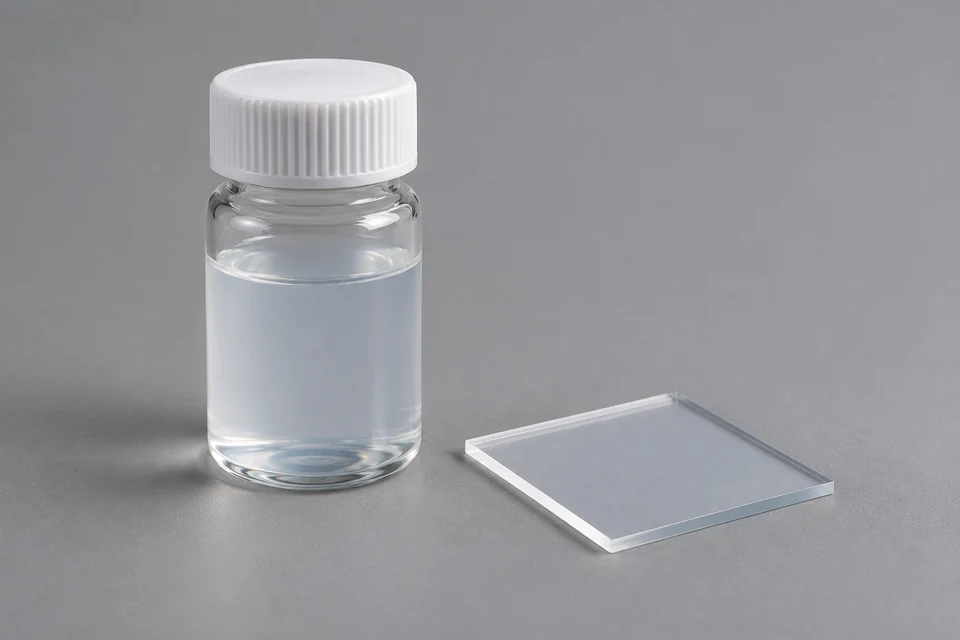
Hydrophilic coating materials are formulation-grade coating systems engineered to create a water-wettable surface that either maintains a continuous hydration layer or swells into a thin hydrogel film when exposed to aqueous media, thereby delivering wet-state lubricity, controlled wettability, and reduced interfacial drag on medical-device components. In practice they are supplied as ready-to-apply solutions or dispersions that form a permanent polymer network on the substrate through a primer–topcoat architecture or a direct-to-substrate grafted layer, with the hydrophilic phase designed to retain bound or absorbed water and the anchoring phase designed to couple the coating to low-energy polymers and metals used in device construction.
Composition is dominated by hydrophilic polymer backbones and crosslinkable functionality. Common hydrophilic segments include polyvinylpyrrolidone, polyvinyl alcohol, polyethylene glycol or polyethylene oxide, acrylic and methacrylic hydrophilic polymers, and ion-rich chemistries such as zwitterionic or phosphorylcholine-containing polymers when low nonspecific adsorption is targeted alongside wettability. These hydrophilic phases are paired with adhesion-promoting resins or coupling agents, reactive crosslinkers, photoinitiators for UV systems or thermal initiators and latent crosslinkers for heat systems, plus controlled levels of surfactants, wetting agents, and rheology modifiers to enable uniform film formation. Medical-grade systems are typically built to minimize mobile, low-molecular-weight species by driving the final coating toward an insoluble, crosslinked network rather than a merely adsorbed hydrophilic layer.
Manufacturing and application are centered on forming a thin, uniform coating on complex geometries while maintaining strong interfacial bonding to the substrate. Substrate preparation commonly involves cleaning and activation to raise surface energy, followed by a base layer or primer that provides chemical anchoring; the hydrophilic top layer is then deposited by dip coating, spray coating (including ultrasonic spray), flow coating, or controlled wipe/meniscus methods depending on part geometry and line layout. After deposition, curing converts the liquid film into a crosslinked hydrophilic network and locks the coating to the underlying primer or substrate. Film architecture is typically microns-scale or below, with thickness, crosslink density, and water uptake tuned so the surface remains highly wettable and, when intended, becomes markedly lubricious under hydration without losing adhesion.
Substrate coverage in medical devices is broad because the coating system is designed to bridge dissimilar materials. Typical substrates include thermoplastics used in catheters and tubing such as nylon, Pebax, TPU, PET, and polyolefins; fluoropolymers such as PTFE and FEP when an adhesion layer is used; silicones and elastomers in certain access components; and metallic substrates including stainless steel, nitinol, and aluminum in guidewires, hypotubes, and structural parts. For optical and endoscopic components, the same “hydrophilic” family is also formulated for transparent windows and lens-adjacent surfaces where the goal is rapid wetting and anti-fog behavior through stable water-film formation rather than maximum lubricity, which shifts formulation emphasis toward optical clarity and defect-free, thin-film uniformity.
By curing modality, UV-curing hydrophilic coating materials rely on photoinitiated polymerization or crosslinking of acrylate, methacrylate, vinyl, or hybrid chemistries to rapidly lock a hydrophilic network in place at relatively low bulk temperatures, supporting high-throughput lines and temperature-sensitive substrates. Heat-curing hydrophilic coating materials rely on thermally activated crosslinking reactions, latent curing agents, or thermally initiated polymerization to form a dense, durable network and are widely used where longer cure cycles are acceptable or where the chemistry is optimized for thermal consolidation and adhesion development.
By application, Interventional covers lubricious hydrophilic coatings used on catheters, microcatheters, sheaths, dilators, and guidewire-adjacent components where wet-state lubricity and controlled tracking dominate performance intent. Tubing and Access includes hydrophilic systems applied to urology and GI tubing, introducers, cannulas, and related access components where wettability and reduced insertion drag improve handling and tissue interaction. Medical Optics and Endoscopy includes hydrophilic anti-fog and wetting coatings used on endoscopic insertion sections, optical windows, lens-adjacent covers, and visualization hardware where continuous water-film formation is the primary functional outcome. IVD and Blood Processing includes hydrophilic surface treatments for microfluidic cartridges, diagnostic flow paths, filters, and blood-handling components where rapid wetting, stable capillary flow, and reduced nonspecific adsorption are frequently co-designed into the coating chemistry.
Composition, supplied form and processing history determine the usable material. Evaluate the property required by the actual application with the specified test method; a chemistry name alone does not define a finished grade.
What turns activity into demand
Qualified formulation or component output creates material purchases through loading, process yield and the supplied mass basis. Raw material, formulated blend and finished-part revenues describe separate transaction stages.
The commercial boundary
For Hydrophilic Coating Materials, distinguish the supplied product from its inputs and the complete application. Report types and applications may overlap; retain the selected edition's product definition, geography, period, unit and transaction basis when comparing estimates.
Which conditions determine usable hydrophilic coating materials performance?
Hydrophilic coating materials are formulation-grade coating systems engineered to create a water-wettable surface that either maintains a continuous hydration layer or swells into a thin hydrogel film when exposed to aqueous media, thereby delivering wet-state lubricity, controlled wettability, and reduced interfacial drag on medical-device components. Match formulation and impurity limits to the converting process, then verify the property after processing or curing. Compare like-for-like dry or as-supplied quantities; a finished component and its raw material represent different transaction stages.
Selected research
Market Outlook & Growth Opportunities
Global Hydrophilic Coating Materials Market Outlook and Growth Opportunities 2026
Market perspective
Hydrophilic coating materials are formulation-grade coating systems engineered to create a water-wettable surface that either maintains a continuous hydration layer or swells into a thin hydrogel film when exposed to aqueous media, thereby delivering wet-state lubricity, controlled wettability, and reduced interfacial drag on medical-device components. In practice they are supplied as ready-to-apply solutions or dispersions that form a permanent polymer network on the substrate through a primer–topcoat architecture or a direct-to-substrate grafted layer, with the hydrophilic phase designed to retain bound or absorbed water and the anchoring phase designed to couple the coating to low-energy polymers and metals used in device construction.
Composition is dominated by hydrophilic polymer backbones and crosslinkable functionality. Common hydrophilic segments include polyvinylpyrrolidone, polyvinyl alcohol, polyethylene glycol or polyethylene oxide, acrylic and methacrylic hydrophilic polymers, and ion-rich chemistries such as zwitterionic or phosphorylcholine-containing polymers when low nonspecific adsorption is targeted alongside wettability. These hydrophilic phases are paired with adhesion-promoting resins or coupling agents, reactive crosslinkers, photoinitiators for UV systems or thermal initiators and latent crosslinkers for heat systems, plus controlled levels of surfactants, wetting agents, and rheology modifiers to enable uniform film formation. Medical-grade systems are typically built to minimize mobile, low-molecular-weight species by driving the final coating toward an insoluble, crosslinked network rather than a merely adsorbed hydrophilic layer.
Manufacturing and application are centered on forming a thin, uniform coating on complex geometries while maintaining strong interfacial bonding to the substrate. Substrate preparation commonly involves cleaning and activation to raise surface energy, followed by a base layer or primer that provides chemical anchoring; the hydrophilic top layer is then deposited by dip coating, spray coating (including ultrasonic spray), flow coating, or controlled wipe/meniscus methods depending on part geometry and line layout. After deposition, curing converts the liquid film into a crosslinked hydrophilic network and locks the coating to the underlying primer or substrate. Film architecture is typically microns-scale or below, with thickness, crosslink density, and water uptake tuned so the surface remains highly wettable and, when intended, becomes markedly lubricious under hydration without losing adhesion.
Read the full market overview
Substrate coverage in medical devices is broad because the coating system is designed to bridge dissimilar materials. Typical substrates include thermoplastics used in catheters and tubing such as nylon, Pebax, TPU, PET, and polyolefins; fluoropolymers such as PTFE and FEP when an adhesion layer is used; silicones and elastomers in certain access components; and metallic substrates including stainless steel, nitinol, and aluminum in guidewires, hypotubes, and structural parts. For optical and endoscopic components, the same “hydrophilic” family is also formulated for transparent windows and lens-adjacent surfaces where the goal is rapid wetting and anti-fog behavior through stable water-film formation rather than maximum lubricity, which shifts formulation emphasis toward optical clarity and defect-free, thin-film uniformity.
By curing modality, UV-curing hydrophilic coating materials rely on photoinitiated polymerization or crosslinking of acrylate, methacrylate, vinyl, or hybrid chemistries to rapidly lock a hydrophilic network in place at relatively low bulk temperatures, supporting high-throughput lines and temperature-sensitive substrates. Heat-curing hydrophilic coating materials rely on thermally activated crosslinking reactions, latent curing agents, or thermally initiated polymerization to form a dense, durable network and are widely used where longer cure cycles are acceptable or where the chemistry is optimized for thermal consolidation and adhesion development.
By application, Interventional covers lubricious hydrophilic coatings used on catheters, microcatheters, sheaths, dilators, and guidewire-adjacent components where wet-state lubricity and controlled tracking dominate performance intent. Tubing and Access includes hydrophilic systems applied to urology and GI tubing, introducers, cannulas, and related access components where wettability and reduced insertion drag improve handling and tissue interaction. Medical Optics and Endoscopy includes hydrophilic anti-fog and wetting coatings used on endoscopic insertion sections, optical windows, lens-adjacent covers, and visualization hardware where continuous water-film formation is the primary functional outcome. IVD and Blood Processing includes hydrophilic surface treatments for microfluidic cartridges, diagnostic flow paths, filters, and blood-handling components where rapid wetting, stable capillary flow, and reduced nonspecific adsorption are frequently co-designed into the coating chemistry.
The Hydrophilic Coating Materials market is a regulated coating-platform business, monetized primarily through royalty and licensing fees tied to qualified coating lines, with reagent sales as a secondary, low-volume component. On this transaction-based definition, the global market reached 263.83 million US dollars in 2025, up from 204.67 million US dollars in 2021, and is projected to reach 455.21 million US dollars by 2032, yielding CAGRs of 6.55% for 2021–2025 and 8.59% for 2026–2032. Growth is concentrated in performance-critical programs and in the expansion of coating-execution capacity across OEM and CDMO networks, which drives monetization where catheters and guidewires are produced and coated rather than where finished devices are billed or clinically used.
By curing modality, UV curing remains the dominant value pool, rising from 183.97 million US dollars in 2025 to 328.16 million US dollars by 2032, reflecting tight process windows, lubricity durability requirements, and high switching friction once platforms are validated. Heat curing expands from 52.32 million US dollars in 2025 to 86.22 million US dollars by 2032, supported by manufacturability and throughput-aligned oven processes in broader medical-grade applications, while air-dry platforms grow from 27.54 million US dollars to 40.83 million US dollars over the same period, remaining structurally smaller and more stable. By application, Interventional is the largest segment at 131.26 million US dollars in 2025 and is projected to reach 225.24 million US dollars by 2032; tubing and access provides the second demand pillar, while medical optics and endoscopy and IVD and blood processing grow faster from smaller bases where wetting control, chemical cleanliness, and performance sensitivity impose conservative change control.
Regionally, North America and Europe remain the largest value pools in 2025 at 121.65 million US dollars and 66.43 million US dollars, respectively, while Asia-Pacific is the fastest-growing region, expanding from 61.37 million US dollars in 2025 to 110.62 million US dollars by 2032, corresponding to a CAGR of 9.14% for 2026–2032. Market structure is top-heavy: the top five suppliers accounted for 68.65% of 2025 value, reflecting qualification-protected platform stickiness in premium tiers alongside a long tail of smaller participants in regional and lower-complexity niches.
This report provides an overview of the global Hydrophilic Coating Materials market in terms of revenue and gross margin, analyzing global market trends using historical revenue data for 2021-2025, estimates for 2026, and projected CAGRs through 2032.
The study covers key producers of Hydrophilic Coating Materials and market revenue by major regions and countries, assesses future market potential, and highlights priority regions and countries for segmenting the market into sub-sectors, with country-specific market value data for the U.S., Canada, Mexico, Brazil, China, Japan, South Korea, Southeast Asia, India, Germany, the U.K., Italy, the Middle East, Africa, and other countries.
The report also presents Hydrophilic Coating Materials revenue, market share, and industry ranking for the main companies for 2021-2026, identifies the major stakeholders in the global market, and analyzes their competitive landscape and market positioning based on recent developments and segmental revenues.
Across the 2021-2026 period, the analysis compares revenue growth and profitability profiles by company, distinguishing participants with sustained expansion from those with more cyclical performance, and relates these patterns to differences in regional exposure, product portfolios, and application focus in the global Hydrophilic Coating Materials market.
Hydrophilic Coating Materials Segment by Company
Surmodics
DSM Biomedical
Biocoat Incorporated
Harland Medical Systems
Freudenberg Medical
Tokyo Ohka Kogyo
BioInteractions
AST Products
ISurTec
Surface Solutions Group
Noanix
Coatings2Go
Hydromer
AdvanSource (Mitsubishi Chemical America)
CUUMed Catheter Medical
Chengdu Daxan Innovative Medical
Aculon
Jiangsu Biosurf Biotech
Jmedtech
Bionational BioMaterials
Hydrophilic Coating Materials Segment by Curing Modality
UV Curing
Heat Curing
Air-dry (or Ambient-dry)
Hydrophilic Coating Materials Segment by Application
Interventional
Tubing and Access
Medical Optics and Endoscopy
IVD and Blood Processing
Hydrophilic Coating Materials Segment by Region
North America
United States
Canada
Mexico
Europe
Germany
France
U.K.
Italy
Russia
Spain
Netherlands
Switzerland
Sweden
Poland
Asia-Pacific
China
Japan
South Korea
India
Australia
Taiwan
Southeast Asia
South America
Brazil
Argentina
Chile
Colombia
Middle East & Africa
Egypt
South Africa
Israel
Türkiye
GCC Countries
Study Objectives
1. To analyze and research the global Hydrophilic Coating Materials status and future forecast, involving, revenue, growth rate (CAGR), market share, historical and forecast.
2. To present the Hydrophilic Coating Materials key companies, revenue, market share, and recent developments.
3. To split the Hydrophilic Coating Materials breakdown data by regions, type, companies, and application.
4. To analyze the global and key regions Hydrophilic Coating Materials market potential and advantage, opportunity and challenge, restraints, and risks.
5. To identify Hydrophilic Coating Materials significant trends, drivers, influence factors in global and regions.
6. To analyze Hydrophilic Coating Materials competitive developments such as expansions, agreements, new product launches, and acquisitions in the market.
Reasons to Buy This Report
1. This report will help the readers to understand the competition within the industries and strategies for the competitive environment to enhance the potential profit. The report also focuses on the competitive landscape of the global Hydrophilic Coating Materials market, and introduces in detail the market share, industry ranking, competitor ecosystem, market performance, new product development, operation situation, expansion, and acquisition. etc. of the main players, which helps the readers to identify the main competitors and deeply understand the competition pattern of the market.
2. This report will help stakeholders to understand the global industry status and trends of Hydrophilic Coating Materials and provides them with information on key market drivers, restraints, challenges, and opportunities.
3. This report will help stakeholders to understand competitors better and gain more insights to strengthen their position in their businesses. The competitive landscape section includes the market share and rank (in sales and value), competitor ecosystem, new product development, expansion, and acquisition.
4. This report stays updated with novel technology integration, features, and the latest developments in the market.
5. This report helps stakeholders to gain insights into which regions to target globally.
6. This report helps stakeholders to gain insights into the end-user perception concerning the adoption of Hydrophilic Coating Materials.
7. This report helps stakeholders to identify some of the key players in the market and understand their valuable contribution.
Chapter Outline
Chapter 1: Introduces the report scope of the report, global total market size.
Chapter 2: Analysis key trends, drivers, challenges, and opportunities within the global Hydrophilic Coating Materials industry.
Chapter 3: Detailed analysis of Hydrophilic Coating Materials company competitive landscape, revenue market share, latest development plan, merger, and acquisition information, etc.
Chapter 4: Provides the analysis of various market segments by type, covering the market size and development potential of each market segment, to help readers find the blue ocean market in different market segments.
Chapter 5: Provides the analysis of various market segments by application, covering the market size and development potential of each market segment, to help readers find the blue ocean market in different downstream markets.
Chapter 6: Sales value of Hydrophilic Coating Materials in regional level. It provides a quantitative analysis of the market size and development potential of each region and introduces the market development, future development prospects, market space, and market size of key country in the world.
Chapter 7: Sales value of Hydrophilic Coating Materials in country level. It provides sigmate data by type, and by application for each country/region.
Chapter 8: Provides profiles of key players, introducing the basic situation of the main companies in the market in detail, including revenue, gross margin, product introduction, recent development, etc.
Chapter 9: Concluding Insights.
More report detail
Tables and figures
Scope & coverage.
Types
- UV Curing
- Heat Curing
- Air-dry (or Ambient-dry)
Applications
- Interventional
- Tubing and Access
- Medical Optics and Endoscopy
- IVD and Blood Processing
Companies covered
- Surmodics
- DSM Biomedical
- Biocoat Incorporated
- Harland Medical Systems
- Freudenberg Medical
- Tokyo Ohka Kogyo
- BioInteractions
- AST Products
- ISurTec
- Surface Solutions Group
- Noanix
- Coatings2Go
- Hydromer
- AdvanSource (Mitsubishi Chemical America)
- CUUMed Catheter Medical
- Chengdu Daxan Innovative Medical
- Aculon
- Jiangsu Biosurf Biotech
- Jmedtech
- Bionational BioMaterials
Inside the report.
1 Market Overview
- 1.1 Product Definition
- 1.2 Global Hydrophilic Coating Materials Market Size, 2021 VS 2025 VS 2032
- 1.3 Global Hydrophilic Coating Materials Market Size (2021-2032)
- 1.4 Assumptions and Limitations
- 1.5 Study Goals and Objectives
2 Hydrophilic Coating Materials Market Dynamics
- 2.1 Hydrophilic Coating Materials Industry Trends
- 2.2 Hydrophilic Coating Materials Industry Drivers
- 2.3 Hydrophilic Coating Materials Industry Opportunities and Challenges
- 2.4 Hydrophilic Coating Materials Industry Restraints
3 Hydrophilic Coating Materials Market by Company
- 3.1 Global Hydrophilic Coating Materials Company Revenue Ranking in 2025
- 3.2 Global Hydrophilic Coating Materials Revenue by Company (2021-2026)
- 3.3 Global Hydrophilic Coating Materials Company Ranking (2024-2026)
- 3.4 Global Hydrophilic Coating Materials Company Manufacturing Base and Headquarters
- 3.5 Global Hydrophilic Coating Materials Company Product Type and Application
- 3.6 Global Hydrophilic Coating Materials Company Establishment Date
- 3.7 Market Competitive Analysis
- 3.7.1 Global Hydrophilic Coating Materials Market Concentration Ratio (CR5 and HHI)
- 3.7.2 Global Top 5 and 10 Company Market Share by Revenue in 2025
- 3.7.3 2025 Hydrophilic Coating Materials Tier 1, Tier 2, and Tier 3 Companies
- 3.8 Mergers and Acquisitions Expansion
4 Hydrophilic Coating Materials Market by Type
- 4.1 Hydrophilic Coating Materials Type Introduction
- 4.1.1 UV Curing
- 4.1.2 Heat Curing
- 4.1.3 Air-dry (or Ambient-dry)
- 4.2 Global Hydrophilic Coating Materials Sales Value by Type
- 4.2.1 Global Hydrophilic Coating Materials Sales Value by Type (2021 VS 2025 VS 2032)
- 4.2.2 Global Hydrophilic Coating Materials Sales Value by Type (2021-2032)
- 4.2.3 Global Hydrophilic Coating Materials Sales Value Share by Type (2021-2032)
5 Hydrophilic Coating Materials Market by Application
- 5.1 Hydrophilic Coating Materials Application Introduction
- 5.1.1 Interventional
- 5.1.2 Tubing and Access
- 5.1.3 Medical Optics and Endoscopy
- 5.1.4 IVD and Blood Processing
- 5.2 Global Hydrophilic Coating Materials Sales Value by Application
- 5.2.1 Global Hydrophilic Coating Materials Sales Value by Application (2021 VS 2025 VS 2032)
- 5.2.2 Global Hydrophilic Coating Materials Sales Value by Application (2021-2032)
- 5.2.3 Global Hydrophilic Coating Materials Sales Value Share by Application (2021-2032)
6 Hydrophilic Coating Materials Regional Value Analysis
- 6.1 Global Hydrophilic Coating Materials Sales Value by Region: 2021 VS 2025 VS 2032
- 6.2 Global Hydrophilic Coating Materials Sales Value by Region (2021-2032)
- 6.2.1 Global Hydrophilic Coating Materials Sales Value by Region: 2021-2026
- 6.2.2 Global Hydrophilic Coating Materials Sales Value by Region (2027-2032)
- 6.3 North America
- 6.3.1 North America Hydrophilic Coating Materials Sales Value (2021-2032)
- 6.3.2 North America Hydrophilic Coating Materials Sales Value Share by Country, 2025 VS 2032
- 6.4 Europe
- 6.4.1 Europe Hydrophilic Coating Materials Sales Value (2021-2032)
- 6.4.2 Europe Hydrophilic Coating Materials Sales Value Share by Country, 2025 VS 2032
- 6.5 Asia-Pacific
- 6.5.1 Asia-Pacific Hydrophilic Coating Materials Sales Value (2021-2032)
- 6.5.2 Asia-Pacific Hydrophilic Coating Materials Sales Value Share by Country, 2025 VS 2032
- 6.6 South America
- 6.6.1 South America Hydrophilic Coating Materials Sales Value (2021-2032)
- 6.6.2 South America Hydrophilic Coating Materials Sales Value Share by Country, 2025 VS 2032
- 6.7 Middle East & Africa
- 6.7.1 Middle East & Africa Hydrophilic Coating Materials Sales Value (2021-2032)
- 6.7.2 Middle East & Africa Hydrophilic Coating Materials Sales Value Share by Country, 2025 VS 2032
7 Hydrophilic Coating Materials Country-level Value Analysis
- 7.1 Global Hydrophilic Coating Materials Sales Value by Country: 2021 VS 2025 VS 2032
- 7.2 Global Hydrophilic Coating Materials Sales Value by Country (2021-2032)
- 7.2.1 Global Hydrophilic Coating Materials Sales Value by Country (2021-2026)
- 7.2.2 Global Hydrophilic Coating Materials Sales Value by Country (2027-2032)
- 7.3 USA
- 7.3.1 USA Hydrophilic Coating Materials Sales Value Growth Rate (2021-2032)
- 7.3.2 USA Hydrophilic Coating Materials Sales Value Share by Type, 2025 VS 2032
- 7.3.3 USA Hydrophilic Coating Materials Sales Value Share by Application, 2025 VS 2032
- 7.4 Canada
- 7.4.1 Canada Hydrophilic Coating Materials Sales Value Growth Rate (2021-2032)
- 7.4.2 Canada Hydrophilic Coating Materials Sales Value Share by Type, 2025 VS 2032
- 7.4.3 Canada Hydrophilic Coating Materials Sales Value Share by Application, 2025 VS 2032
- 7.5 Mexico
- 7.5.1 Mexico Hydrophilic Coating Materials Sales Value Growth Rate (2021-2032)
- 7.5.2 Mexico Hydrophilic Coating Materials Sales Value Share by Type, 2025 VS 2032
- 7.5.3 Mexico Hydrophilic Coating Materials Sales Value Share by Application, 2025 VS 2032
- 7.6 Germany
- 7.6.1 Germany Hydrophilic Coating Materials Sales Value Growth Rate (2021-2032)
- 7.6.2 Germany Hydrophilic Coating Materials Sales Value Share by Type, 2025 VS 2032
- 7.6.3 Germany Hydrophilic Coating Materials Sales Value Share by Application, 2025 VS 2032
- 7.7 France
- 7.7.1 France Hydrophilic Coating Materials Sales Value Growth Rate (2021-2032)
- 7.7.2 France Hydrophilic Coating Materials Sales Value Share by Type, 2025 VS 2032
- 7.7.3 France Hydrophilic Coating Materials Sales Value Share by Application, 2025 VS 2032
- 7.8 U.K.
- 7.8.1 U.K. Hydrophilic Coating Materials Sales Value Growth Rate (2021-2032)
- 7.8.2 U.K. Hydrophilic Coating Materials Sales Value Share by Type, 2025 VS 2032
- 7.8.3 U.K. Hydrophilic Coating Materials Sales Value Share by Application, 2025 VS 2032
- 7.9 Italy
- 7.9.1 Italy Hydrophilic Coating Materials Sales Value Growth Rate (2021-2032)
- 7.9.2 Italy Hydrophilic Coating Materials Sales Value Share by Type, 2025 VS 2032
- 7.9.3 Italy Hydrophilic Coating Materials Sales Value Share by Application, 2025 VS 2032
- 7.10 Spain
- 7.10.1 Spain Hydrophilic Coating Materials Sales Value Growth Rate (2021-2032)
- 7.10.2 Spain Hydrophilic Coating Materials Sales Value Share by Type, 2025 VS 2032
- 7.10.3 Spain Hydrophilic Coating Materials Sales Value Share by Application, 2025 VS 2032
- 7.11 Russia
- 7.11.1 Russia Hydrophilic Coating Materials Sales Value Growth Rate (2021-2032)
- 7.11.2 Russia Hydrophilic Coating Materials Sales Value Share by Type, 2025 VS 2032
- 7.11.3 Russia Hydrophilic Coating Materials Sales Value Share by Application, 2025 VS 2032
- 7.12 Netherlands
- 7.12.1 Netherlands Hydrophilic Coating Materials Sales Value Growth Rate (2021-2032)
- 7.12.2 Netherlands Hydrophilic Coating Materials Sales Value Share by Type, 2025 VS 2032
- 7.12.3 Netherlands Hydrophilic Coating Materials Sales Value Share by Application, 2025 VS 2032
- 7.13 Nordic Countries
- 7.13.1 Nordic Countries Hydrophilic Coating Materials Sales Value Growth Rate (2021-2032)
- 7.13.2 Nordic Countries Hydrophilic Coating Materials Sales Value Share by Type, 2025 VS 2032
- 7.13.3 Nordic Countries Hydrophilic Coating Materials Sales Value Share by Application, 2025 VS 2032
- 7.14 China
- 7.14.1 China Hydrophilic Coating Materials Sales Value Growth Rate (2021-2032)
- 7.14.2 China Hydrophilic Coating Materials Sales Value Share by Type, 2025 VS 2032
- 7.14.3 China Hydrophilic Coating Materials Sales Value Share by Application, 2025 VS 2032
- 7.15 Japan
- 7.15.1 Japan Hydrophilic Coating Materials Sales Value Growth Rate (2021-2032)
- 7.15.2 Japan Hydrophilic Coating Materials Sales Value Share by Type, 2025 VS 2032
- 7.15.3 Japan Hydrophilic Coating Materials Sales Value Share by Application, 2025 VS 2032
- 7.16 South Korea
- 7.16.1 South Korea Hydrophilic Coating Materials Sales Value Growth Rate (2021-2032)
- 7.16.2 South Korea Hydrophilic Coating Materials Sales Value Share by Type, 2025 VS 2032
- 7.16.3 South Korea Hydrophilic Coating Materials Sales Value Share by Application, 2025 VS 2032
- 7.17 India
- 7.17.1 India Hydrophilic Coating Materials Sales Value Growth Rate (2021-2032)
- 7.17.2 India Hydrophilic Coating Materials Sales Value Share by Type, 2025 VS 2032
- 7.17.3 India Hydrophilic Coating Materials Sales Value Share by Application, 2025 VS 2032
- 7.18 Australia
- 7.18.1 Australia Hydrophilic Coating Materials Sales Value Growth Rate (2021-2032)
- 7.18.2 Australia Hydrophilic Coating Materials Sales Value Share by Type, 2025 VS 2032
- 7.18.3 Australia Hydrophilic Coating Materials Sales Value Share by Application, 2025 VS 2032
- 7.19 Southeast Asia
- 7.19.1 Southeast Asia Hydrophilic Coating Materials Sales Value Growth Rate (2021-2032)
- 7.19.2 Southeast Asia Hydrophilic Coating Materials Sales Value Share by Type, 2025 VS 2032
- 7.19.3 Southeast Asia Hydrophilic Coating Materials Sales Value Share by Application, 2025 VS 2032
- 7.20 Brazil
- 7.20.1 Brazil Hydrophilic Coating Materials Sales Value Growth Rate (2021-2032)
- 7.20.2 Brazil Hydrophilic Coating Materials Sales Value Share by Type, 2025 VS 2032
- 7.20.3 Brazil Hydrophilic Coating Materials Sales Value Share by Application, 2025 VS 2032
- 7.21 Argentina
- 7.21.1 Argentina Hydrophilic Coating Materials Sales Value Growth Rate (2021-2032)
- 7.21.2 Argentina Hydrophilic Coating Materials Sales Value Share by Type, 2025 VS 2032
- 7.21.3 Argentina Hydrophilic Coating Materials Sales Value Share by Application, 2025 VS 2032
- 7.22 Chile
- 7.22.1 Chile Hydrophilic Coating Materials Sales Value Growth Rate (2021-2032)
- 7.22.2 Chile Hydrophilic Coating Materials Sales Value Share by Type, 2025 VS 2032
- 7.22.3 Chile Hydrophilic Coating Materials Sales Value Share by Application, 2025 VS 2032
- 7.23 Colombia
- 7.23.1 Colombia Hydrophilic Coating Materials Sales Value Growth Rate (2021-2032)
- 7.23.2 Colombia Hydrophilic Coating Materials Sales Value Share by Type, 2025 VS 2032
- 7.23.3 Colombia Hydrophilic Coating Materials Sales Value Share by Application, 2025 VS 2032
- 7.24 Peru
- 7.24.1 Peru Hydrophilic Coating Materials Sales Value Growth Rate (2021-2032)
- 7.24.2 Peru Hydrophilic Coating Materials Sales Value Share by Type, 2025 VS 2032
- 7.24.3 Peru Hydrophilic Coating Materials Sales Value Share by Application, 2025 VS 2032
- 7.25 Saudi Arabia
- 7.25.1 Saudi Arabia Hydrophilic Coating Materials Sales Value Growth Rate (2021-2032)
- 7.25.2 Saudi Arabia Hydrophilic Coating Materials Sales Value Share by Type, 2025 VS 2032
- 7.25.3 Saudi Arabia Hydrophilic Coating Materials Sales Value Share by Application, 2025 VS 2032
- 7.26 Israel
- 7.26.1 Israel Hydrophilic Coating Materials Sales Value Growth Rate (2021-2032)
- 7.26.2 Israel Hydrophilic Coating Materials Sales Value Share by Type, 2025 VS 2032
- 7.26.3 Israel Hydrophilic Coating Materials Sales Value Share by Application, 2025 VS 2032
- 7.27 UAE
- 7.27.1 UAE Hydrophilic Coating Materials Sales Value Growth Rate (2021-2032)
- 7.27.2 UAE Hydrophilic Coating Materials Sales Value Share by Type, 2025 VS 2032
- 7.27.3 UAE Hydrophilic Coating Materials Sales Value Share by Application, 2025 VS 2032
- 7.28 Turkey
- 7.28.1 Turkey Hydrophilic Coating Materials Sales Value Growth Rate (2021-2032)
- 7.28.2 Turkey Hydrophilic Coating Materials Sales Value Share by Type, 2025 VS 2032
- 7.28.3 Turkey Hydrophilic Coating Materials Sales Value Share by Application, 2025 VS 2032
- 7.29 Iran
- 7.29.1 Iran Hydrophilic Coating Materials Sales Value Growth Rate (2021-2032)
- 7.29.2 Iran Hydrophilic Coating Materials Sales Value Share by Type, 2025 VS 2032
- 7.29.3 Iran Hydrophilic Coating Materials Sales Value Share by Application, 2025 VS 2032
- 7.30 Egypt
- 7.30.1 Egypt Hydrophilic Coating Materials Sales Value Growth Rate (2021-2032)
- 7.30.2 Egypt Hydrophilic Coating Materials Sales Value Share by Type, 2025 VS 2032
- 7.30.3 Egypt Hydrophilic Coating Materials Sales Value Share by Application, 2025 VS 2032
8 Company Profiles
- 8.1 Surmodics
- 8.1.1 Surmodics Company Information
- 8.1.2 Surmodics Business Overview
- 8.1.3 Surmodics Hydrophilic Coating Materials Revenue and Gross Margin (2021-2026)
- 8.1.4 Surmodics Hydrophilic Coating Materials Product Portfolio
- 8.1.5 Surmodics Recent Developments
- 8.2 DSM Biomedical
- 8.2.1 DSM Biomedical Company Information
- 8.2.2 DSM Biomedical Business Overview
- 8.2.3 DSM Biomedical Hydrophilic Coating Materials Revenue and Gross Margin (2021-2026)
- 8.2.4 DSM Biomedical Hydrophilic Coating Materials Product Portfolio
- 8.2.5 DSM Biomedical Recent Developments
- 8.3 Biocoat Incorporated
- 8.3.1 Biocoat Incorporated Company Information
- 8.3.2 Biocoat Incorporated Business Overview
- 8.3.3 Biocoat Incorporated Hydrophilic Coating Materials Revenue and Gross Margin (2021-2026)
- 8.3.4 Biocoat Incorporated Hydrophilic Coating Materials Product Portfolio
- 8.3.5 Biocoat Incorporated Recent Developments
- 8.4 Harland Medical Systems
- 8.4.1 Harland Medical Systems Company Information
- 8.4.2 Harland Medical Systems Business Overview
- 8.4.3 Harland Medical Systems Hydrophilic Coating Materials Revenue and Gross Margin (2021-2026)
- 8.4.4 Harland Medical Systems Hydrophilic Coating Materials Product Portfolio
- 8.4.5 Harland Medical Systems Recent Developments
- 8.5 Freudenberg Medical
- 8.5.1 Freudenberg Medical Company Information
- 8.5.2 Freudenberg Medical Business Overview
- 8.5.3 Freudenberg Medical Hydrophilic Coating Materials Revenue and Gross Margin (2021-2026)
- 8.5.4 Freudenberg Medical Hydrophilic Coating Materials Product Portfolio
- 8.5.5 Freudenberg Medical Recent Developments
- 8.6 Tokyo Ohka Kogyo
- 8.6.1 Tokyo Ohka Kogyo Company Information
- 8.6.2 Tokyo Ohka Kogyo Business Overview
- 8.6.3 Tokyo Ohka Kogyo Hydrophilic Coating Materials Revenue and Gross Margin (2021-2026)
- 8.6.4 Tokyo Ohka Kogyo Hydrophilic Coating Materials Product Portfolio
- 8.6.5 Tokyo Ohka Kogyo Recent Developments
- 8.7 BioInteractions
- 8.7.1 BioInteractions Company Information
- 8.7.2 BioInteractions Business Overview
- 8.7.3 BioInteractions Hydrophilic Coating Materials Revenue and Gross Margin (2021-2026)
- 8.7.4 BioInteractions Hydrophilic Coating Materials Product Portfolio
- 8.7.5 BioInteractions Recent Developments
- 8.8 AST Products
- 8.8.1 AST Products Company Information
- 8.8.2 AST Products Business Overview
- 8.8.3 AST Products Hydrophilic Coating Materials Revenue and Gross Margin (2021-2026)
- 8.8.4 AST Products Hydrophilic Coating Materials Product Portfolio
- 8.8.5 AST Products Recent Developments
- 8.9 ISurTec
- 8.9.1 ISurTec Company Information
- 8.9.2 ISurTec Business Overview
- 8.9.3 ISurTec Hydrophilic Coating Materials Revenue and Gross Margin (2021-2026)
- 8.9.4 ISurTec Hydrophilic Coating Materials Product Portfolio
- 8.9.5 ISurTec Recent Developments
- 8.10 Surface Solutions Group
- 8.10.1 Surface Solutions Group Company Information
- 8.10.2 Surface Solutions Group Business Overview
- 8.10.3 Surface Solutions Group Hydrophilic Coating Materials Revenue and Gross Margin (2021-2026)
- 8.10.4 Surface Solutions Group Hydrophilic Coating Materials Product Portfolio
- 8.10.5 Surface Solutions Group Recent Developments
- 8.11 Noanix
- 8.11.1 Noanix Company Information
- 8.11.2 Noanix Business Overview
- 8.11.3 Noanix Hydrophilic Coating Materials Revenue and Gross Margin (2021-2026)
- 8.11.4 Noanix Hydrophilic Coating Materials Product Portfolio
- 8.11.5 Noanix Recent Developments
- 8.12 Coatings2Go
- 8.12.1 Coatings2Go Company Information
- 8.12.2 Coatings2Go Business Overview
- 8.12.3 Coatings2Go Hydrophilic Coating Materials Revenue and Gross Margin (2021-2026)
- 8.12.4 Coatings2Go Hydrophilic Coating Materials Product Portfolio
- 8.12.5 Coatings2Go Recent Developments
- 8.13 Hydromer
- 8.13.1 Hydromer Company Information
- 8.13.2 Hydromer Business Overview
- 8.13.3 Hydromer Hydrophilic Coating Materials Revenue and Gross Margin (2021-2026)
- 8.13.4 Hydromer Hydrophilic Coating Materials Product Portfolio
- 8.13.5 Hydromer Recent Developments
- 8.14 AdvanSource (Mitsubishi Chemical America)
- 8.14.1 AdvanSource (Mitsubishi Chemical America) Company Information
- 8.14.2 AdvanSource (Mitsubishi Chemical America) Business Overview
- 8.14.3 AdvanSource (Mitsubishi Chemical America) Hydrophilic Coating Materials Revenue and Gross Margin (2021-2026)
- 8.14.4 AdvanSource (Mitsubishi Chemical America) Hydrophilic Coating Materials Product Portfolio
- 8.14.5 AdvanSource (Mitsubishi Chemical America) Recent Developments
- 8.15 CUUMed Catheter Medical
- 8.15.1 CUUMed Catheter Medical Company Information
- 8.15.2 CUUMed Catheter Medical Business Overview
- 8.15.3 CUUMed Catheter Medical Hydrophilic Coating Materials Revenue and Gross Margin (2021-2026)
- 8.15.4 CUUMed Catheter Medical Hydrophilic Coating Materials Product Portfolio
- 8.15.5 CUUMed Catheter Medical Recent Developments
- 8.16 Chengdu Daxan Innovative Medical
- 8.16.1 Chengdu Daxan Innovative Medical Company Information
- 8.16.2 Chengdu Daxan Innovative Medical Business Overview
- 8.16.3 Chengdu Daxan Innovative Medical Hydrophilic Coating Materials Revenue and Gross Margin (2021-2026)
- 8.16.4 Chengdu Daxan Innovative Medical Hydrophilic Coating Materials Product Portfolio
- 8.16.5 Chengdu Daxan Innovative Medical Recent Developments
- 8.17 Aculon
- 8.17.1 Aculon Company Information
- 8.17.2 Aculon Business Overview
- 8.17.3 Aculon Hydrophilic Coating Materials Revenue and Gross Margin (2021-2026)
- 8.17.4 Aculon Hydrophilic Coating Materials Product Portfolio
- 8.17.5 Aculon Recent Developments
- 8.18 Jiangsu Biosurf Biotech
- 8.18.1 Jiangsu Biosurf Biotech Company Information
- 8.18.2 Jiangsu Biosurf Biotech Business Overview
- 8.18.3 Jiangsu Biosurf Biotech Hydrophilic Coating Materials Revenue and Gross Margin (2021-2026)
- 8.18.4 Jiangsu Biosurf Biotech Hydrophilic Coating Materials Product Portfolio
- 8.18.5 Jiangsu Biosurf Biotech Recent Developments
- 8.19 Jmedtech
- 8.19.1 Jmedtech Company Information
- 8.19.2 Jmedtech Business Overview
- 8.19.3 Jmedtech Hydrophilic Coating Materials Revenue and Gross Margin (2021-2026)
- 8.19.4 Jmedtech Hydrophilic Coating Materials Product Portfolio
- 8.19.5 Jmedtech Recent Developments
- 8.20 Bionational BioMaterials
- 8.20.1 Bionational BioMaterials Company Information
- 8.20.2 Bionational BioMaterials Business Overview
- 8.20.3 Bionational BioMaterials Hydrophilic Coating Materials Revenue and Gross Margin (2021-2026)
- 8.20.4 Bionational BioMaterials Hydrophilic Coating Materials Product Portfolio
- 8.20.5 Bionational BioMaterials Recent Developments
9 Concluding Insights
10 Appendix
- 10.1 Reasons for Doing This Study
- 10.2 Research Methodology
- 10.3 Research Process
- 10.4 Authors List of This Report
- 10.5 Data Source
- 10.5.1 Secondary Sources
- 10.5.2 Primary Sources
GET THE RESEARCH
Choose your license.
Choose who needs access.
All options are for this report and research series.
PDF by email within 3–5 working days after payment confirmation.
Talk to an analyst