
AI Powered Code Reader Industry Research Report 2026
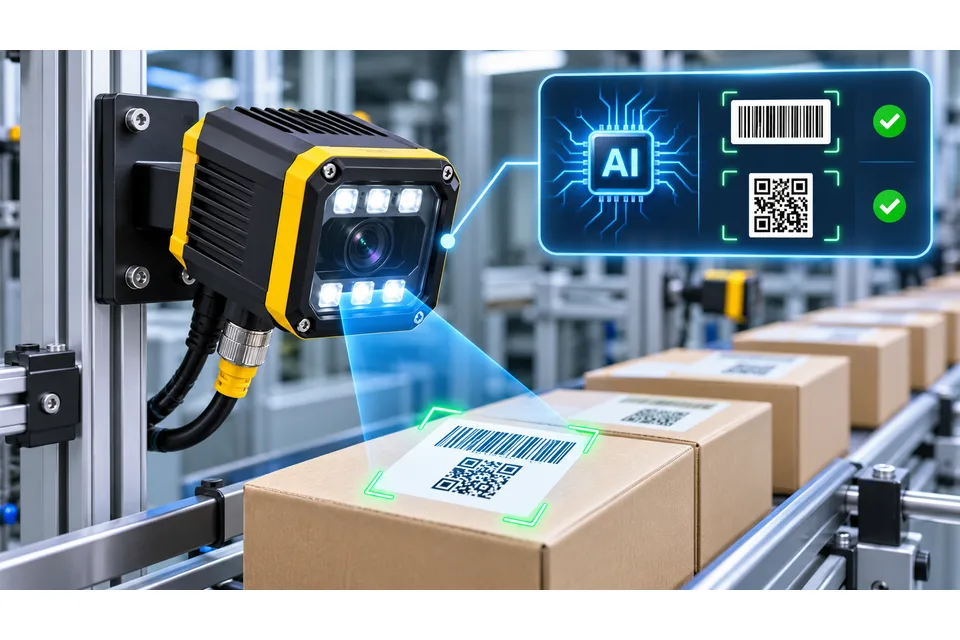
AI Powered Code Readers are electronic optical identification devices that integrate image acquisition, embedded artificial intelligence processing and barcode decoding to extract encoded information from printed, engraved, etched or otherwise marked symbols. Their operating principle is based on detecting spatial variations in reflected light, converting the optical image into digital pixel data and interpreting the geometric arrangement of bars, spaces or two dimensional code cells. A typical device incorporates a CMOS image sensor, optical lens assembly, controlled illumination, image signal processor, embedded computing hardware, memory, communication interfaces and dedicated decoding firmware. Depending on the product configuration, illumination may combine direct, diffuse, polarized or multispectral lighting to control reflections and improve the visibility of symbols on different surfaces. Artificial intelligence functions employ trained neural networks or machine learning algorithms for code localization, image enhancement, feature extraction and adaptive recognition under variations in illumination, perspective, contrast and marking condition. These functions interact with conventional geometric decoding, symbol reconstruction and error correction algorithms to recover encoded data from incomplete or degraded images. The computational architecture may incorporate dedicated neural processing units, embedded processors or specialized image processing accelerators, with image resolution, optical field of view, working distance, processing latency and available computing capacity jointly determining reading performance and operating throughput.
The principal technical distinction of AI Powered Code Readers is their ability to use learned visual representations to identify code regions and recover readable symbol structures under imaging conditions that limit conventional rule based processing. Relevant conditions include damaged labels, partially obscured symbols, uneven illumination, motion blur, reflective metallic surfaces, low contrast markings and geometric distortion. Direct Part Marking (DPM) applications introduce additional complexity because laser engraving, dot peening, chemical etching and other marking processes generate surface relief or reflectance variations whose optical appearance depends on material texture, illumination direction and viewing angle. AI assisted image processing can separate useful symbol features from background texture and adapt to variations in marking quality, while optical resolution, image exposure, illumination geometry and decoder constraints establish the physical limits of recoverable information. Commercial devices include fixed mount industrial code readers, handheld scanners, presentation scanners and mobile data collection terminals incorporating identifiable AI assisted code reading capabilities. They are deployed in automotive and electronics manufacturing, pharmaceutical and medical product identification, food and beverage processing, packaging, retail operations and automated logistics, where decoded identifiers connect physical items with production, inventory and transaction records. The product scope covers complete commercial hardware devices with integrated AI assisted barcode recognition functions, including embedded decoding firmware supplied as part of the equipment. Conventional readers without identifiable AI recognition capabilities, standalone decoding software, software development kits, external machine vision systems lacking integrated code reading functionality, dedicated barcode verification instruments and independent services fall outside the product boundary.
Product & engineering
Understand the product.
AI Powered Code Readers are electronic optical identification devices that integrate image acquisition, embedded artificial intelligence processing and barcode decoding to extract encoded information from printed, engraved, etched or otherwise marked symbols. Their operating principle is based on detecting spatial variations in reflected light, converting the optical image into digital pixel data and interpreting the geometric arrangement of bars, spaces or two dimensional code cells. A typical device incorporates a CMOS image sensor, optical lens assembly, controlled illumination, image signal processor, embedded computing hardware, memory, communication interfaces and dedicated decoding firmware. Depending on the product configuration, illumination may combine direct, diffuse, polarized or multispectral lighting to control reflections and improve the visibility of symbols on different surfaces. Artificial intelligence functions employ trained neural networks or machine learning algorithms for code localization, image enhancement, feature extraction and adaptive recognition under variations in illumination, perspective, contrast and marking condition. These functions interact with conventional geometric decoding, symbol reconstruction and error correction algorithms to recover encoded data from incomplete or degraded images. The computational architecture may incorporate dedicated neural processing units, embedded processors or specialized image processing accelerators, with image resolution, optical field of view, working distance, processing latency and available computing capacity jointly determining reading performance and operating throughput.
The principal technical distinction of AI Powered Code Readers is their ability to use learned visual representations to identify code regions and recover readable symbol structures under imaging conditions that limit conventional rule based processing. Relevant conditions include damaged labels, partially obscured symbols, uneven illumination, motion blur, reflective metallic surfaces, low contrast markings and geometric distortion. Direct Part Marking (DPM) applications introduce additional complexity because laser engraving, dot peening, chemical etching and other marking processes generate surface relief or reflectance variations whose optical appearance depends on material texture, illumination direction and viewing angle. AI assisted image processing can separate useful symbol features from background texture and adapt to variations in marking quality, while optical resolution, image exposure, illumination geometry and decoder constraints establish the physical limits of recoverable information. Commercial devices include fixed mount industrial code readers, handheld scanners, presentation scanners and mobile data collection terminals incorporating identifiable AI assisted code reading capabilities. They are deployed in automotive and electronics manufacturing, pharmaceutical and medical product identification, food and beverage processing, packaging, retail operations and automated logistics, where decoded identifiers connect physical items with production, inventory and transaction records. The product scope covers complete commercial hardware devices with integrated AI assisted barcode recognition functions, including embedded decoding firmware supplied as part of the equipment. Conventional readers without identifiable AI recognition capabilities, standalone decoding software, software development kits, external machine vision systems lacking integrated code reading functionality, dedicated barcode verification instruments and independent services fall outside the product boundary.
Selected research
Industry Research
AI Powered Code Reader Industry Research Report 2026
MARKET AT A GLANCE
Scale & outlook
- 2025
- 211.38USD million
- 2032
- 851.18USD million
Select a bar to inspect its value.
Source: APO Research, Inc.
Market perspective
According to APO Research, Inc, the global AI Powered Code Reader market was valued at USD 211.38 million in 2025, is estimated to reach USD 282.79 million in 2026 and is projected to increase to USD 851.18 million by 2032, representing a CAGR of 20.16% from 2026 to 2032. Global shipments of qualifying AI enabled code reading devices are estimated at 219,000 units in 2025, 319,000 units in 2026 and 1.315 million units in 2032, while weighted average manufacturer selling prices decline from approximately USD 965 to USD 886 and USD 647 per unit, respectively. The projected USD 568.39 million revenue increase between 2026 and 2032 reflects the deployment of AI capable fixed readers, handheld scanners and mobile data terminals across industrial traceability, automated distribution and commercial data collection. The principal economic mechanism is the reduction of unsuccessful identification events involving damaged labels, low contrast symbols, reflective surfaces and direct part markings, where manual intervention, interrupted production and repeated scanning create measurable operating costs. Estimated device shipments increase approximately 4.12 times between 2026 and 2032, while average selling prices decline by approximately 27% as embedded AI processing becomes available across a wider range of hardware configurations and procurement volumes increase.
Industrial automation and logistics provide an established customer base for advanced code reading equipment. Cognex reported consolidated revenue of USD 994.36 million in 2025, an increase of 9%, primarily reflecting stronger demand from logistics and consumer electronics customers. Its DataMan 290 and 390 series incorporate AI assisted code localization executed on dedicated neural processing units, improving the detection of difficult symbols before conventional decoding algorithms recover the encoded information. The additional inference workload can increase processing latency under relatively simple reading conditions, making the technology particularly relevant where the reduction in failed reads outweighs incremental processing time. Japan's KEYENCE applies a related approach in its SR X300 series, which incorporates a 2.3 megapixel CMOS image sensor and AI filtering developed using more than 100,000 training images. The SR X100 series does not incorporate the corresponding AI filter, establishing a distinct hardware and processing configuration within the manufacturer's code reader product range. For automotive components, electronics assembly and precision manufacturing, equipment selection therefore depends on the interaction between code contrast, surface reflectivity, working distance, production cycle time and the financial consequences of a failed identification event.
Italy's Datalogic introduced its Matrix 220 XAI industrial reader in February 2025, applying machine learning algorithms to direct part marking applications involving scratched, discolored and stamped surfaces in automotive, electronics and packaging production. These applications require reliable identification after successive manufacturing operations have altered surface texture or marking contrast, increasing the value of integrated illumination, optical imaging and embedded image processing. In China, Newland Digital Technology disclosed that shipments of its industrial identification products increased by nearly 45% in 2025, while identification equipment incorporating its AI decoding capabilities had entered small batch production. Its commercial NVH220 handheld reader combines AI assisted barcode positioning with adaptive processing for difficult industrial markings. The reported industrial shipment increase covers a broader product category, while the small batch production disclosure establishes the earlier commercial stage of its AI enabled equipment. China's electronics manufacturing and industrial traceability activities provide applications for domestically supplied readers, with competition extending from specialized fixed industrial systems toward handheld devices incorporating intelligent decoding capabilities.
Full market overview
North America and Europe remain important markets for automated warehousing, distribution infrastructure and industrial identification equipment, while China, Japan and other Asian manufacturing economies combine substantial production traceability requirements with established scanner manufacturing and electronics supply chains. Fixed readers are generally purchased according to the number of automated inspection stations, conveyor identification points and production lines, making equipment demand sensitive to factory automation investment, production capacity additions and replacement of conventional optical readers. Automotive and electronics manufacturing require recognition of permanent component markings throughout sequential production operations, whereas pharmaceutical, food and beverage, and packaging applications depend on consistent identification across production, labeling and distribution processes. Logistics operators prioritize the ability to identify irregularly oriented packages and damaged shipping labels without interrupting conveyor throughput. Retail and healthcare applications rely more heavily on handheld and mobile equipment, where purchase decisions are additionally constrained by acquisition cost, scanning latency, battery consumption and operator productivity. Advanced fixed readers can retain higher unit values because of specialized optics, lighting and processing requirements, while increasing penetration of AI functionality into handheld and mobile devices expands shipment volumes at lower average prices. The resulting product mix accounts for the projected combination of substantial unit growth and declining weighted selling prices across the global market.
Report Scope
This report quantifies the global AI Powered Code Reader market in revenue (US$ million) and, where applicable, sales volume (k units), using 2025 as the base year and providing annual historical and forecast data for 2021–2032.
It standardizes definitions of types and applications, harmonizes vendor attribution, and presents comparable time series by company, type, application, and region/country, including indicative price bands (US$/k units) and concentration ratios (CR5/CR10).
The outputs are intended to support strategy development, budgeting, and performance benchmarking for manufacturers, new entrants, channel partners, and investors; the report also reviews technology shifts and notable product introductions relevant to AI Powered Code Reader.
Key Companies & Market Share Insights
This section profiles leading manufacturers, combining 2021–2025 results with a 2026–2032 outlook. It reports revenue, market share, price bands, product and application mix, regional and channel mix, and key developments (M&A, capacity additions, certifications). It also provides global revenue, average price, and—where applicable—sales volume by manufacturer, and calculates CR5/CR10 and rank changes to support comparative benchmarking.
AI Powered Code Reader Market by Company
- Cognex
- KEYENCE
- Zebra Technologies
- Brady
- Datalogic
- SICK
- Newland AIDC
- Hikrobot
- Dahua Technology
- OPT
- SEUIC
- iData
- EVOC Group
- SmartMore
- Cino
AI Powered Code Reader Segment By Barcode Type
- 1D
- 2D
- DPM
AI Powered Code Reader Segment By Form Factor
- Handheld Scanners
- Presentation Scanners
- Fixed Mount Readers
- Mobile Computers
AI Powered Code Reader Segment by Application
- Automotive
- Electronics & Semiconductors
- Pharmaceuticals
- Food & Beverage
- Printing & Packaging
- Healthcare
- Retail
- Logistics & Distribution
- Others
AI Powered Code Reader Segment by Region
- North America
- United States
- Canada
- Mexico
- Europe
- Germany
- France
- U.K.
- Italy
- Russia
- Spain
- Netherlands
- Switzerland
- Sweden
- Poland
- Asia-Pacific
- China
- Japan
- South Korea
- India
- Australia
- Taiwan
- Southeast Asia
- South America
- Brazil
- Argentina
- Chile
- Middle East & Africa
- Egypt
- South Africa
- Israel
- Türkiye
- GCC Countries
Key Drivers & Barriers
High-impact rendering factors and drivers have been studied in this report to aid the readers to understand the general development. Moreover, the report includes restraints and challenges that may act as stumbling blocks on the way of the players. This will assist the users to be attentive and make informed decisions related to business. Specialists have also laid their focus on the upcoming business prospects.
Reasons to Buy This Report
- This report will help the readers to understand the competition within the industries and strategies for the competitive environment to enhance the potential profit. The report also focuses on the competitive landscape of the global AI Powered Code Reader market, and introduces in detail the market share, industry ranking, competitor ecosystem, market performance, new product development, operation situation, expansion, and acquisition. etc. of the main players, which helps the readers to identify the main competitors and deeply understand the competition pattern of the market.
- This report will help stakeholders to understand the global industry status and trends of AI Powered Code Reader and provides them with information on key market drivers, restraints, challenges, and opportunities.
- This report will help stakeholders to understand competitors better and gain more insights to strengthen their position in their businesses. The competitive landscape section includes the market share and rank (in volume and value), competitor ecosystem, new product development, expansion, and acquisition.
- This report stays updated with novel technology integration, features, and the latest developments in the market
- This report helps stakeholders to gain insights into which regions to target globally
- This report helps stakeholders to gain insights into the end-user perception concerning the adoption of AI Powered Code Reader.
- This report helps stakeholders to identify some of the key players in the market and understand their valuable contribution.
Chapter Outline
- Chapter 1: Research objectives, research methods, data sources, data cross-validation;
- Chapter 2: Introduces the report scope of the report, executive summary of different market segments (by region, product type, application, etc), including the market size of each market segment, future development potential, and so on. It offers a high-level view of the current state of the market and its likely evolution in the short to mid-term, and long term.
- Chapter 3: Detailed analysis of AI Powered Code Reader manufacturers competitive landscape, price, production and value market share, latest development plan, merger, and acquisition information, etc.
- Chapter 4: Provides profiles of key players, introducing the basic situation of the main companies in the market in detail, including product production/output, value, price, gross margin, product introduction, recent development, etc.
- Chapter 5: Production/output, value of AI Powered Code Reader by region/country. It provides a quantitative analysis of the market size and development potential of each region in the next six years.
- Chapter 6: Consumption of AI Powered Code Reader in regional level and country level. It provides a quantitative analysis of the market size and development potential of each region and its main countries and introduces the market development, future development prospects, market space, and production of each country in the world.
- Chapter 7: Provides the analysis of various market segments by barcode type, covering the market size and development potential of each market segment, to help readers find the blue ocean market in different market segments.
- Chapter 8: Provides the analysis of various market segments by form factor, covering the market size and development potential of each market segment, to help readers find the blue ocean market in different market segments.
- Chapter 9: Provides the analysis of various market segments by application, covering the market size and development potential of each market segment, to help readers find the blue ocean market in different downstream markets.
- Chapter 10: Analysis of industrial chain, including the upstream and downstream of the industry.
- Chapter 11: Introduces the market dynamics, latest developments of the market, the driving factors and restrictive factors of the market, the challenges and risks faced by manufacturers in the industry, and the analysis of relevant policies in the industry.
- Chapter 12: The main points and conclusions of the report.
More report detail
Tables and figures
List of Tables
- Table 1. Secondary Sources
- Table 2. Primary Sources
- Table 3. Market Value Comparison By Barcode Type (2021 VS 2025 VS 2032) & (US$ Million)
- Table 4. Market Value Comparison By Form Factor (2021 VS 2025 VS 2032) & (US$ Million)
- Table 5. Market Value Comparison by Application (2021 VS 2025 VS 2032) & (US$ Million)
- Table 6. Global AI Powered Code Reader Production by Manufacturers (k units) & (2021-2026)
- Table 7. Global AI Powered Code Reader Production Market Share by Manufacturers
- Table 8. Global AI Powered Code Reader Production Value by Manufacturers (US$ Million) & (2021-2026)
- Table 9. Global AI Powered Code Reader Production Value Market Share by Manufacturers (2021-2026)
- Table 10. Global AI Powered Code Reader Average Price (USD/unit) of Manufacturers (2021-2026)
- Table 11. Global AI Powered Code Reader Industry Manufacturers Ranking, 2024 VS 2025 VS 2026
- Table 12. Global AI Powered Code Reader Key Manufacturers, Manufacturing Sites & Headquarters
- Table 13. Global AI Powered Code Reader Manufacturers, Product Type & Application
- Table 14. Global AI Powered Code Reader Manufacturers Established Date
- Table 15. Global Manufacturers Market Concentration Ratio (CR5 and HHI)
- Table 16. Global AI Powered Code Reader by Manufacturers Type (Tier 1, Tier 2, and Tier 3) & (based on the Production Value of 2025)
- Table 17. Manufacturers Mergers & Acquisitions, Expansion Plans
- Table 18. Cognex Company Information
- Table 19. Cognex Business Overview
- Table 20. Cognex AI Powered Code Reader Production (k units), Value (US$ Million), Price (USD/unit) and Gross Margin (2021-2026)
- Table 21. Cognex AI Powered Code Reader Product Portfolio
- Table 22. Cognex Recent Development
- Table 23. KEYENCE Company Information
- Table 24. KEYENCE Business Overview
- Table 25. KEYENCE AI Powered Code Reader Production (k units), Value (US$ Million), Price (USD/unit) and Gross Margin (2021-2026)
- Table 26. KEYENCE AI Powered Code Reader Product Portfolio
- Table 27. KEYENCE Recent Development
- Table 28. Zebra Technologies Company Information
- Table 29. Zebra Technologies Business Overview
- Table 30. Zebra Technologies AI Powered Code Reader Production (k units), Value (US$ Million), Price (USD/unit) and Gross Margin (2021-2026)
- Table 31. Zebra Technologies AI Powered Code Reader Product Portfolio
- Table 32. Zebra Technologies Recent Development
- Table 33. Brady Company Information
- Table 34. Brady Business Overview
- Table 35. Brady AI Powered Code Reader Production (k units), Value (US$ Million), Price (USD/unit) and Gross Margin (2021-2026)
- Table 36. Brady AI Powered Code Reader Product Portfolio
- Table 37. Brady Recent Development
- Table 38. Datalogic Company Information
- Table 39. Datalogic Business Overview
- Table 40. Datalogic AI Powered Code Reader Production (k units), Value (US$ Million), Price (USD/unit) and Gross Margin (2021-2026)
- Table 41. Datalogic AI Powered Code Reader Product Portfolio
- Table 42. Datalogic Recent Development
- Table 43. SICK Company Information
- Table 44. SICK Business Overview
- Table 45. SICK AI Powered Code Reader Production (k units), Value (US$ Million), Price (USD/unit) and Gross Margin (2021-2026)
- Table 46. SICK AI Powered Code Reader Product Portfolio
- Table 47. SICK Recent Development
- Table 48. Newland AIDC Company Information
- Table 49. Newland AIDC Business Overview
- Table 50. Newland AIDC AI Powered Code Reader Production (k units), Value (US$ Million), Price (USD/unit) and Gross Margin (2021-2026)
- Table 51. Newland AIDC AI Powered Code Reader Product Portfolio
- Table 52. Newland AIDC Recent Development
- Table 53. Hikrobot Company Information
- Table 54. Hikrobot Business Overview
- Table 55. Hikrobot AI Powered Code Reader Production (k units), Value (US$ Million), Price (USD/unit) and Gross Margin (2021-2026)
- Table 56. Hikrobot AI Powered Code Reader Product Portfolio
- Table 57. Hikrobot Recent Development
- Table 58. Dahua Technology Company Information
- Table 59. Dahua Technology Business Overview
- Table 60. Dahua Technology AI Powered Code Reader Production (k units), Value (US$ Million), Price (USD/unit) and Gross Margin (2021-2026)
- Table 61. Dahua Technology AI Powered Code Reader Product Portfolio
- Table 62. Dahua Technology Recent Development
- Table 63. OPT Company Information
- Table 64. OPT Business Overview
- Table 65. OPT AI Powered Code Reader Production (k units), Value (US$ Million), Price (USD/unit) and Gross Margin (2021-2026)
- Table 66. OPT AI Powered Code Reader Product Portfolio
- Table 67. OPT Recent Development
- Table 68. SEUIC Company Information
- Table 69. SEUIC Business Overview
- Table 70. SEUIC AI Powered Code Reader Production (k units), Value (US$ Million), Price (USD/unit) and Gross Margin (2021-2026)
- Table 71. SEUIC AI Powered Code Reader Product Portfolio
- Table 72. SEUIC Recent Development
- Table 73. iData Company Information
- Table 74. iData Business Overview
- Table 75. iData AI Powered Code Reader Production (k units), Value (US$ Million), Price (USD/unit) and Gross Margin (2021-2026)
- Table 76. iData AI Powered Code Reader Product Portfolio
- Table 77. iData Recent Development
- Table 78. EVOC Group Company Information
- Table 79. EVOC Group Business Overview
- Table 80. EVOC Group AI Powered Code Reader Production (k units), Value (US$ Million), Price (USD/unit) and Gross Margin (2021-2026)
- Table 81. EVOC Group AI Powered Code Reader Product Portfolio
- Table 82. EVOC Group Recent Development
- Table 83. SmartMore Company Information
- Table 84. SmartMore Business Overview
- Table 85. SmartMore AI Powered Code Reader Production (k units), Value (US$ Million), Price (USD/unit) and Gross Margin (2021-2026)
- Table 86. SmartMore AI Powered Code Reader Product Portfolio
- Table 87. SmartMore Recent Development
- Table 88. Cino Company Information
- Table 89. Cino Business Overview
- Table 90. Cino AI Powered Code Reader Production (k units), Value (US$ Million), Price (USD/unit) and Gross Margin (2021-2026)
- Table 91. Cino AI Powered Code Reader Product Portfolio
- Table 92. Cino Recent Development
- Table 93. Global AI Powered Code Reader Production Comparison by Region: 2021 VS 2025 VS 2032 (k units)
- Table 94. Global AI Powered Code Reader Production by Region (2021-2026) & (k units)
- Table 95. Global AI Powered Code Reader Production Market Share by Region (2021-2026)
- Table 96. Global AI Powered Code Reader Production Forecast by Region (2027-2032) & (k units)
- Table 97. Global AI Powered Code Reader Production Market Share Forecast by Region (2027-2032)
- Table 98. Global AI Powered Code Reader Production Value Comparison by Region: 2021 VS 2025 VS 2032 (US$ Million)
- Table 99. Global AI Powered Code Reader Production Value by Region (2021-2026) & (US$ Million)
- Table 100. Global AI Powered Code Reader Production Value Market Share by Region (2021-2026)
- Table 101. Global AI Powered Code Reader Production Value Forecast by Region (2027-2032) & (US$ Million)
- Table 102. Global AI Powered Code Reader Market Average Price (USD/unit) by Region (2021-2026)
- Table 103. Global AI Powered Code Reader Market Average Price (USD/unit) by Region (2027-2032)
- Table 104. Global AI Powered Code Reader Consumption Comparison by Region: 2021 VS 2025 VS 2032 (k units)
- Table 105. Global AI Powered Code Reader Consumption by Region (2021-2026) & (k units)
- Table 106. Global AI Powered Code Reader Consumption Market Share by Region (2021-2026)
- Table 107. Global AI Powered Code Reader Forecasted Consumption by Region (2027-2032) & (k units)
- Table 108. Global AI Powered Code Reader Forecasted Consumption Market Share by Region (2027-2032)
- Table 109. North America AI Powered Code Reader Consumption Growth Rate by Country: 2021 VS 2025 VS 2032 (k units)
- Table 110. North America AI Powered Code Reader Consumption by Country (2021-2026) & (k units)
- Table 111. North America AI Powered Code Reader Consumption by Country (2027-2032) & (k units)
- Table 112. Europe AI Powered Code Reader Consumption Growth Rate by Country: 2021 VS 2025 VS 2032 (k units)
- Table 113. Europe AI Powered Code Reader Consumption by Country (2021-2026) & (k units)
- Table 114. Europe AI Powered Code Reader Consumption by Country (2027-2032) & (k units)
- Table 115. Asia Pacific AI Powered Code Reader Consumption Growth Rate by Country: 2021 VS 2025 VS 2032 (k units)
- Table 116. Asia Pacific AI Powered Code Reader Consumption by Country (2021-2026) & (k units)
- Table 117. Asia Pacific AI Powered Code Reader Consumption by Country (2027-2032) & (k units)
- Table 118. South America, Middle East & Africa AI Powered Code Reader Consumption Growth Rate by Country: 2021 VS 2025 VS 2032 (k units)
- Table 119. South America, Middle East & Africa AI Powered Code Reader Consumption by Country (2021-2026) & (k units)
- Table 120. South America, Middle East & Africa AI Powered Code Reader Consumption by Country (2027-2032) & (k units)
- Table 121. Global AI Powered Code Reader Production By Barcode Type (2021-2026) & (k units)
- Table 122. Global AI Powered Code Reader Production By Barcode Type (2027-2032) & (k units)
- Table 123. Global AI Powered Code Reader Production Market Share By Barcode Type (2021-2026)
- Table 124. Global AI Powered Code Reader Production Market Share By Barcode Type (2027-2032)
- Table 125. Global AI Powered Code Reader Production Value By Barcode Type (2021-2026) & (US$ Million)
- Table 126. Global AI Powered Code Reader Production Value By Barcode Type (2027-2032) & (US$ Million)
- Table 127. Global AI Powered Code Reader Production Value Market Share By Barcode Type (2021-2026)
- Table 128. Global AI Powered Code Reader Production Value Market Share By Barcode Type (2027-2032)
- Table 129. Global AI Powered Code Reader Price By Barcode Type (2021-2026) & (USD/unit)
- Table 130. Global AI Powered Code Reader Price By Barcode Type (2027-2032) & (USD/unit)
- Table 131. Global AI Powered Code Reader Production By Form Factor (2021-2026) & (k units)
- Table 132. Global AI Powered Code Reader Production By Form Factor (2027-2032) & (k units)
- Table 133. Global AI Powered Code Reader Production Market Share By Form Factor (2021-2026)
- Table 134. Global AI Powered Code Reader Production Market Share By Form Factor (2027-2032)
- Table 135. Global AI Powered Code Reader Production Value By Form Factor (2021-2026) & (US$ Million)
- Table 136. Global AI Powered Code Reader Production Value By Form Factor (2027-2032) & (US$ Million)
- Table 137. Global AI Powered Code Reader Production Value Market Share By Form Factor (2021-2026)
- Table 138. Global AI Powered Code Reader Production Value Market Share By Form Factor (2027-2032)
- Table 139. Global AI Powered Code Reader Price By Form Factor (2021-2026) & (USD/unit)
- Table 140. Global AI Powered Code Reader Price By Form Factor (2027-2032) & (USD/unit)
- Table 141. Global AI Powered Code Reader Production by Application (2021-2026) & (k units)
- Table 142. Global AI Powered Code Reader Production by Application (2027-2032) & (k units)
- Table 143. Global AI Powered Code Reader Production Market Share by Application (2021-2026)
- Table 144. Global AI Powered Code Reader Production Market Share by Application (2027-2032)
- Table 145. Global AI Powered Code Reader Production Value by Application (2021-2026) & (US$ Million)
- Table 146. Global AI Powered Code Reader Production Value by Application (2027-2032) & (US$ Million)
- Table 147. Global AI Powered Code Reader Production Value Market Share by Application (2021-2026)
- Table 148. Global AI Powered Code Reader Production Value Market Share by Application (2027-2032)
- Table 149. Global AI Powered Code Reader Price by Application (2021-2026) & (USD/unit)
- Table 150. Global AI Powered Code Reader Price by Application (2027-2032) & (USD/unit)
- Table 151. Key Raw Materials
- Table 152. Raw Materials Key Suppliers
- Table 153. AI Powered Code Reader Distributors List
- Table 154. AI Powered Code Reader Customers List
- Table 155. AI Powered Code Reader Industry Trends
- Table 156. AI Powered Code Reader Industry Drivers
- Table 157. AI Powered Code Reader Industry Restraints
- Table 158. Authors List of This Report
List of Figures
- Figure 1. Research Methodology
- Figure 2. Research Process
- Figure 3. Key Executives Interviewed
- Figure 4. AI Powered Code Reader Product Image
- Figure 5. Market Value Comparison By Barcode Type (2021 VS 2025 VS 2032) & (US$ Million)
- Figure 6. 1D Product Image
- Figure 7. 2D Product Image
- Figure 8. DPM Product Image
- Figure 9. Market Value Comparison By Form Factor (2021 VS 2025 VS 2032) & (US$ Million)
- Figure 10. Handheld Scanners Product Image
- Figure 11. Presentation Scanners Product Image
- Figure 12. Fixed Mount Readers Product Image
- Figure 13. Mobile Computers Product Image
- Figure 14. Automotive Product Image
- Figure 15. Electronics & Semiconductors Product Image
- Figure 16. Pharmaceuticals Product Image
- Figure 17. Food & Beverage Product Image
- Figure 18. Printing & Packaging Product Image
- Figure 19. Healthcare Product Image
- Figure 20. Retail Product Image
- Figure 21. Logistics & Distribution Product Image
- Figure 22. Others Product Image
- Figure 23. Global AI Powered Code Reader Production Value (US$ Million), 2021 VS 2025 VS 2032
- Figure 24. Global AI Powered Code Reader Production Value (2021-2032) & (US$ Million)
- Figure 25. Global AI Powered Code Reader Production Capacity (2021-2032) & (k units)
- Figure 26. Global AI Powered Code Reader Production (2021-2032) & (k units)
- Figure 27. Global AI Powered Code Reader Average Price (USD/unit) & (2021-2032)
- Figure 28. Global AI Powered Code Reader Key Manufacturers, Manufacturing Sites & Headquarters
- Figure 29. Global Top 5 and 10 AI Powered Code Reader Players Market Share by Production Value in 2025
- Figure 30. Manufacturers Type (Tier 1, Tier 2, and Tier 3): 2021 VS 2025
- Figure 31. Global AI Powered Code Reader Production Comparison by Region: 2021 VS 2025 VS 2032 (k units)
- Figure 32. Global AI Powered Code Reader Production Market Share by Region: 2021 VS 2025 VS 2032
- Figure 33. Global AI Powered Code Reader Production Value Comparison by Region: 2021 VS 2025 VS 2032 (US$ Million)
- Figure 34. Global AI Powered Code Reader Production Value Market Share by Region: 2021 VS 2025 VS 2032
- Figure 35. North America AI Powered Code Reader Production Value (US$ Million) Growth Rate (2021-2032)
- Figure 36. Europe AI Powered Code Reader Production Value (US$ Million) Growth Rate (2021-2032)
- Figure 37. China AI Powered Code Reader Production Value (US$ Million) Growth Rate (2021-2032)
- Figure 38. Japan AI Powered Code Reader Production Value (US$ Million) Growth Rate (2021-2032)
- Figure 39. Global AI Powered Code Reader Consumption Comparison by Region: 2021 VS 2025 VS 2032 (k units)
- Figure 40. Global AI Powered Code Reader Consumption Market Share by Region: 2021 VS 2025 VS 2032
- Figure 41. North America AI Powered Code Reader Consumption and Growth Rate (2021-2032) & (k units)
- Figure 42. North America AI Powered Code Reader Consumption Market Share by Country (2021-2032)
- Figure 43. United States AI Powered Code Reader Consumption and Growth Rate (2021-2032) & (k units)
- Figure 44. United States AI Powered Code Reader Consumption and Growth Rate (2021-2032) & (k units)
- Figure 45. Canada AI Powered Code Reader Consumption and Growth Rate (2021-2032) & (k units)
- Figure 46. Mexico AI Powered Code Reader Consumption and Growth Rate (2021-2032) & (k units)
- Figure 47. Europe AI Powered Code Reader Consumption and Growth Rate (2021-2032) & (k units)
- Figure 48. Europe AI Powered Code Reader Consumption Market Share by Country (2021-2032)
- Figure 49. Germany AI Powered Code Reader Consumption and Growth Rate (2021-2032) & (k units)
- Figure 50. France AI Powered Code Reader Consumption and Growth Rate (2021-2032) & (k units)
- Figure 51. U.K. AI Powered Code Reader Consumption and Growth Rate (2021-2032) & (k units)
- Figure 52. Italy AI Powered Code Reader Consumption and Growth Rate (2021-2032) & (k units)
- Figure 53. Russia AI Powered Code Reader Consumption and Growth Rate (2021-2032) & (k units)
- Figure 54. Spain AI Powered Code Reader Consumption and Growth Rate (2021-2032) & (k units)
- Figure 55. Netherlands AI Powered Code Reader Consumption and Growth Rate (2021-2032) & (k units)
- Figure 56. Switzerland AI Powered Code Reader Consumption and Growth Rate (2021-2032) & (k units)
- Figure 57. Sweden AI Powered Code Reader Consumption and Growth Rate (2021-2032) & (k units)
- Figure 58. Poland AI Powered Code Reader Consumption and Growth Rate (2021-2032) & (k units)
- Figure 59. Asia Pacific AI Powered Code Reader Consumption and Growth Rate (2021-2032) & (k units)
- Figure 60. Asia Pacific AI Powered Code Reader Consumption Market Share by Country (2021-2032)
- Figure 61. China AI Powered Code Reader Consumption and Growth Rate (2021-2032) & (k units)
- Figure 62. Japan AI Powered Code Reader Consumption and Growth Rate (2021-2032) & (k units)
- Figure 63. South Korea AI Powered Code Reader Consumption and Growth Rate (2021-2032) & (k units)
- Figure 64. India AI Powered Code Reader Consumption and Growth Rate (2021-2032) & (k units)
- Figure 65. Australia AI Powered Code Reader Consumption and Growth Rate (2021-2032) & (k units)
- Figure 66. Taiwan AI Powered Code Reader Consumption and Growth Rate (2021-2032) & (k units)
- Figure 67. Southeast Asia AI Powered Code Reader Consumption and Growth Rate (2021-2032) & (k units)
- Figure 68. South America, Middle East & Africa AI Powered Code Reader Consumption and Growth Rate (2021-2032) & (k units)
- Figure 69. South America, Middle East & Africa AI Powered Code Reader Consumption Market Share by Country (2021-2032)
- Figure 70. Brazil AI Powered Code Reader Consumption and Growth Rate (2021-2032) & (k units)
- Figure 71. Argentina AI Powered Code Reader Consumption and Growth Rate (2021-2032) & (k units)
- Figure 72. Chile AI Powered Code Reader Consumption and Growth Rate (2021-2032) & (k units)
- Figure 73. Turkey AI Powered Code Reader Consumption and Growth Rate (2021-2032) & (k units)
- Figure 74. GCC Countries AI Powered Code Reader Consumption and Growth Rate (2021-2032) & (k units)
- Figure 75. Global AI Powered Code Reader Production Market Share By Barcode Type (2021-2032)
- Figure 76. Global AI Powered Code Reader Production Value Market Share By Barcode Type (2021-2032)
- Figure 77. Global AI Powered Code Reader Price (USD/unit) By Barcode Type (2021-2032)
- Figure 78. Global AI Powered Code Reader Production Market Share By Form Factor (2021-2032)
- Figure 79. Global AI Powered Code Reader Production Value Market Share By Form Factor (2021-2032)
- Figure 80. Global AI Powered Code Reader Price (USD/unit) By Form Factor (2021-2032)
- Figure 81. Global AI Powered Code Reader Production Market Share by Application (2021-2032)
- Figure 82. Global AI Powered Code Reader Production Value Market Share by Application (2021-2032)
- Figure 83. Global AI Powered Code Reader Price (USD/unit) by Application (2021-2032)
- Figure 84. AI Powered Code Reader Value Chain
- Figure 85. AI Powered Code Reader Production Mode & Process
- Figure 86. Direct Comparison with Distribution Share
- Figure 87. Distributors Profiles
- Figure 88. AI Powered Code Reader Industry Opportunities and Challenges
Scope & coverage.
By Barcode Type
- 1D
- 2D
- DPM
By Form Factor
- Handheld Scanners
- Presentation Scanners
- Fixed Mount Readers
- Mobile Computers
By Application
- Automotive
- Electronics & Semiconductors
- Pharmaceuticals
- Food & Beverage
- Printing & Packaging
- Healthcare
- Retail
- Logistics & Distribution
- Others
Companies covered
- Cognex
- KEYENCE
- Zebra Technologies
- Brady
- Datalogic
- SICK
- Newland AIDC
- Hikrobot
- Dahua Technology
- OPT
- SEUIC
- iData
- EVOC Group
- SmartMore
- Cino
Inside the report.
1 Preface
- 1.1 Scope of Report
- 1.2 Reasons for Doing This Study
- 1.3 Research Methodology
- 1.4 Research Process
- 1.5 Data Source
- 1.5.1 Secondary Sources
- 1.5.2 Primary Sources
2 Market Overview
- 2.1 Product Definition
- 2.2 AI Powered Code Reader By Barcode Type
- 2.2.1 Market Value Comparison By Barcode Type (2021 VS 2025 VS 2032) & (US$ Million)
- 2.2.2 1D
- 2.2.3 2D
- 2.2.4 DPM
- 2.3 AI Powered Code Reader By Form Factor
- 2.3.1 Market Value Comparison By Form Factor (2021 VS 2025 VS 2032) & (US$ Million)
- 2.3.2 Handheld Scanners
- 2.3.3 Presentation Scanners
- 2.3.4 Fixed Mount Readers
- 2.3.5 Mobile Computers
- 2.4 AI Powered Code Reader by Application
- 2.4.1 Market Value Comparison by Application (2021 VS 2025 VS 2032) & (US$ Million)
- 2.4.2 Automotive
- 2.4.3 Electronics & Semiconductors
- 2.4.4 Pharmaceuticals
- 2.4.5 Food & Beverage
- 2.4.6 Printing & Packaging
- 2.4.7 Healthcare
- 2.4.8 Retail
- 2.4.9 Logistics & Distribution
- 2.4.10 Others
- 2.5 Global Market Growth Prospects
- 2.5.1 Global AI Powered Code Reader Production Value Estimates and Forecasts (2021-2032)
- 2.5.2 Global AI Powered Code Reader Production Capacity Estimates and Forecasts (2021-2032)
- 2.5.3 Global AI Powered Code Reader Production Estimates and Forecasts (2021-2032)
- 2.5.4 Global AI Powered Code Reader Market Average Price (2021-2032)
3 Market Competitive Landscape by Manufacturers
- 3.1 Global AI Powered Code Reader Production by Manufacturers (2021-2026)
- 3.2 Global AI Powered Code Reader Production Value by Manufacturers (2021-2026)
- 3.3 Global AI Powered Code Reader Average Price by Manufacturers (2021-2026)
- 3.4 Global AI Powered Code Reader Industry Manufacturers Ranking, 2024 VS 2025 VS 2026
- 3.5 Global AI Powered Code Reader Key Manufacturers, Manufacturing Sites & Headquarters
- 3.6 Global AI Powered Code Reader Manufacturers, Product Type & Application
- 3.7 Global AI Powered Code Reader Manufacturers Established Date
- 3.8 Global AI Powered Code Reader Market CR5 and HHI
- 3.9 Global Manufacturers Mergers & Acquisition
4 Manufacturers Profiled
- 4.1 Cognex
- 4.1.1 Cognex AI Powered Code Reader Company Information
- 4.1.2 Cognex AI Powered Code Reader Business Overview
- 4.1.3 Cognex AI Powered Code Reader Production, Value and Gross Margin (2021-2026)
- 4.1.4 Cognex Product Portfolio
- 4.1.5 Cognex Recent Developments
- 4.2 KEYENCE
- 4.2.1 KEYENCE AI Powered Code Reader Company Information
- 4.2.2 KEYENCE AI Powered Code Reader Business Overview
- 4.2.3 KEYENCE AI Powered Code Reader Production, Value and Gross Margin (2021-2026)
- 4.2.4 KEYENCE Product Portfolio
- 4.2.5 KEYENCE Recent Developments
- 4.3 Zebra Technologies
- 4.3.1 Zebra Technologies AI Powered Code Reader Company Information
- 4.3.2 Zebra Technologies AI Powered Code Reader Business Overview
- 4.3.3 Zebra Technologies AI Powered Code Reader Production, Value and Gross Margin (2021-2026)
- 4.3.4 Zebra Technologies Product Portfolio
- 4.3.5 Zebra Technologies Recent Developments
- 4.4 Brady
- 4.4.1 Brady AI Powered Code Reader Company Information
- 4.4.2 Brady AI Powered Code Reader Business Overview
- 4.4.3 Brady AI Powered Code Reader Production, Value and Gross Margin (2021-2026)
- 4.4.4 Brady Product Portfolio
- 4.4.5 Brady Recent Developments
- 4.5 Datalogic
- 4.5.1 Datalogic AI Powered Code Reader Company Information
- 4.5.2 Datalogic AI Powered Code Reader Business Overview
- 4.5.3 Datalogic AI Powered Code Reader Production, Value and Gross Margin (2021-2026)
- 4.5.4 Datalogic Product Portfolio
- 4.5.5 Datalogic Recent Developments
- 4.6 SICK
- 4.6.1 SICK AI Powered Code Reader Company Information
- 4.6.2 SICK AI Powered Code Reader Business Overview
- 4.6.3 SICK AI Powered Code Reader Production, Value and Gross Margin (2021-2026)
- 4.6.4 SICK Product Portfolio
- 4.6.5 SICK Recent Developments
- 4.7 Newland AIDC
- 4.7.1 Newland AIDC AI Powered Code Reader Company Information
- 4.7.2 Newland AIDC AI Powered Code Reader Business Overview
- 4.7.3 Newland AIDC AI Powered Code Reader Production, Value and Gross Margin (2021-2026)
- 4.7.4 Newland AIDC Product Portfolio
- 4.7.5 Newland AIDC Recent Developments
- 4.8 Hikrobot
- 4.8.1 Hikrobot AI Powered Code Reader Company Information
- 4.8.2 Hikrobot AI Powered Code Reader Business Overview
- 4.8.3 Hikrobot AI Powered Code Reader Production, Value and Gross Margin (2021-2026)
- 4.8.4 Hikrobot Product Portfolio
- 4.8.5 Hikrobot Recent Developments
- 4.9 Dahua Technology
- 4.9.1 Dahua Technology AI Powered Code Reader Company Information
- 4.9.2 Dahua Technology AI Powered Code Reader Business Overview
- 4.9.3 Dahua Technology AI Powered Code Reader Production, Value and Gross Margin (2021-2026)
- 4.9.4 Dahua Technology Product Portfolio
- 4.9.5 Dahua Technology Recent Developments
- 4.10 OPT
- 4.10.1 OPT AI Powered Code Reader Company Information
- 4.10.2 OPT AI Powered Code Reader Business Overview
- 4.10.3 OPT AI Powered Code Reader Production, Value and Gross Margin (2021-2026)
- 4.10.4 OPT Product Portfolio
- 4.10.5 OPT Recent Developments
- 4.11 SEUIC
- 4.11.1 SEUIC AI Powered Code Reader Company Information
- 4.11.2 SEUIC AI Powered Code Reader Business Overview
- 4.11.3 SEUIC AI Powered Code Reader Production, Value and Gross Margin (2021-2026)
- 4.11.4 SEUIC Product Portfolio
- 4.11.5 SEUIC Recent Developments
- 4.12 iData
- 4.12.1 iData AI Powered Code Reader Company Information
- 4.12.2 iData AI Powered Code Reader Business Overview
- 4.12.3 iData AI Powered Code Reader Production, Value and Gross Margin (2021-2026)
- 4.12.4 iData Product Portfolio
- 4.12.5 iData Recent Developments
- 4.13 EVOC Group
- 4.13.1 EVOC Group AI Powered Code Reader Company Information
- 4.13.2 EVOC Group AI Powered Code Reader Business Overview
- 4.13.3 EVOC Group AI Powered Code Reader Production, Value and Gross Margin (2021-2026)
- 4.13.4 EVOC Group Product Portfolio
- 4.13.5 EVOC Group Recent Developments
- 4.14 SmartMore
- 4.14.1 SmartMore AI Powered Code Reader Company Information
- 4.14.2 SmartMore AI Powered Code Reader Business Overview
- 4.14.3 SmartMore AI Powered Code Reader Production, Value and Gross Margin (2021-2026)
- 4.14.4 SmartMore Product Portfolio
- 4.14.5 SmartMore Recent Developments
- 4.15 Cino
- 4.15.1 Cino AI Powered Code Reader Company Information
- 4.15.2 Cino AI Powered Code Reader Business Overview
- 4.15.3 Cino AI Powered Code Reader Production, Value and Gross Margin (2021-2026)
- 4.15.4 Cino Product Portfolio
- 4.15.5 Cino Recent Developments
5 Global AI Powered Code Reader Production by Region
- 5.1 Global AI Powered Code Reader Production Estimates and Forecasts by Region: 2021 VS 2025 VS 2032
- 5.2 Global AI Powered Code Reader Production by Region: 2021-2032
- 5.2.1 Global AI Powered Code Reader Production by Region: 2021-2026
- 5.2.2 Global AI Powered Code Reader Production Forecast by Region (2027-2032)
- 5.3 Global AI Powered Code Reader Production Value Estimates and Forecasts by Region: 2021 VS 2025 VS 2032
- 5.4 Global AI Powered Code Reader Production Value by Region: 2021-2032
- 5.4.1 Global AI Powered Code Reader Production Value by Region: 2021-2026
- 5.4.2 Global AI Powered Code Reader Production Value Forecast by Region (2027-2032)
- 5.5 Global AI Powered Code Reader Market Price Analysis by Region (2021-2026)
- 5.6 Global AI Powered Code Reader Production and Value, YOY Growth
- 5.6.1 North America AI Powered Code Reader Production Value Estimates and Forecasts (2021-2032)
- 5.6.2 Europe AI Powered Code Reader Production Value Estimates and Forecasts (2021-2032)
- 5.6.3 China AI Powered Code Reader Production Value Estimates and Forecasts (2021-2032)
- 5.6.4 Japan AI Powered Code Reader Production Value Estimates and Forecasts (2021-2032)
6 Global AI Powered Code Reader Consumption by Region
- 6.1 Global AI Powered Code Reader Consumption Estimates and Forecasts by Region: 2021 VS 2025 VS 2032
- 6.2 Global AI Powered Code Reader Consumption by Region (2021-2032)
- 6.2.1 Global AI Powered Code Reader Consumption by Region: 2021-2026
- 6.2.2 Global AI Powered Code Reader Forecasted Consumption by Region (2027-2032)
- 6.3 North America
- 6.3.1 North America AI Powered Code Reader Consumption Growth Rate by Country: 2021 VS 2025 VS 2032
- 6.3.2 North America AI Powered Code Reader Consumption by Country (2021-2032)
- 6.3.3 United States
- 6.3.4 Canada
- 6.3.5 Mexico
- 6.4 Europe
- 6.4.1 Europe AI Powered Code Reader Consumption Growth Rate by Country: 2021 VS 2025 VS 2032
- 6.4.2 Europe AI Powered Code Reader Consumption by Country (2021-2032)
- 6.4.3 Germany
- 6.4.4 France
- 6.4.5 U.K.
- 6.4.6 Italy
- 6.4.7 Russia
- 6.4.8 Spain
- 6.4.9 Netherlands
- 6.4.10 Switzerland
- 6.4.11 Sweden
- 6.4.12 Poland
- 6.5 Asia Pacific
- 6.5.1 Asia Pacific AI Powered Code Reader Consumption Growth Rate by Country: 2021 VS 2025 VS 2032
- 6.5.2 Asia Pacific AI Powered Code Reader Consumption by Country (2021-2032)
- 6.5.3 China
- 6.5.4 Japan
- 6.5.5 South Korea
- 6.5.6 India
- 6.5.7 Australia
- 6.5.8 Taiwan
- 6.5.9 Southeast Asia
- 6.6 South America, Middle East & Africa
- 6.6.1 South America, Middle East & Africa AI Powered Code Reader Consumption Growth Rate by Country: 2021 VS 2025 VS 2032
- 6.6.2 South America, Middle East & Africa AI Powered Code Reader Consumption by Country (2021-2032)
- 6.6.3 Brazil
- 6.6.4 Argentina
- 6.6.5 Chile
- 6.6.6 Turkey
- 6.6.7 GCC Countries
7 Segment By Barcode Type
- 7.1 Global AI Powered Code Reader Production By Barcode Type (2021-2032)
- 7.1.1 Global AI Powered Code Reader Production By Barcode Type (2021-2032) & (k units)
- 7.1.2 Global AI Powered Code Reader Production Market Share By Barcode Type (2021-2032)
- 7.2 Global AI Powered Code Reader Production Value By Barcode Type (2021-2032)
- 7.2.1 Global AI Powered Code Reader Production Value By Barcode Type (2021-2032) & (US$ Million)
- 7.2.2 Global AI Powered Code Reader Production Value Market Share By Barcode Type (2021-2032)
- 7.3 Global AI Powered Code Reader Price By Barcode Type (2021-2032)
8 Segment By Form Factor
- 8.1 Global AI Powered Code Reader Production By Form Factor (2021-2032)
- 8.1.1 Global AI Powered Code Reader Production By Form Factor (2021-2032) & (k units)
- 8.1.2 Global AI Powered Code Reader Production Market Share By Form Factor (2021-2032)
- 8.2 Global AI Powered Code Reader Production Value By Form Factor (2021-2032)
- 8.2.1 Global AI Powered Code Reader Production Value By Form Factor (2021-2032) & (US$ Million)
- 8.2.2 Global AI Powered Code Reader Production Value Market Share By Form Factor (2021-2032)
- 8.3 Global AI Powered Code Reader Price By Form Factor (2021-2032)
9 Segment by Application
- 9.1 Global AI Powered Code Reader Production by Application (2021-2032)
- 9.1.1 Global AI Powered Code Reader Production by Application (2021-2032) & (k units)
- 9.1.2 Global AI Powered Code Reader Production Market Share by Application (2021-2032)
- 9.2 Global AI Powered Code Reader Production Value by Application (2021-2032)
- 9.2.1 Global AI Powered Code Reader Production Value by Application (2021-2032) & (US$ Million)
- 9.2.2 Global AI Powered Code Reader Production Value Market Share by Application (2021-2032)
- 9.3 Global AI Powered Code Reader Price by Application (2021-2032)
10 Value Chain and Sales Channels Analysis of the Market
- 10.1 AI Powered Code Reader Value Chain Analysis
- 10.1.1 AI Powered Code Reader Key Raw Materials
- 10.1.2 Raw Materials Key Suppliers
- 10.1.3 AI Powered Code Reader Production Mode & Process
- 10.2 AI Powered Code Reader Sales Channels Analysis
- 10.2.1 Direct Comparison with Distribution Share
- 10.2.2 AI Powered Code Reader Distributors
- 10.2.3 AI Powered Code Reader Customers
11 Global AI Powered Code Reader Analyzing Market Dynamics
- 11.1 AI Powered Code Reader Industry Trends
- 11.2 AI Powered Code Reader Industry Drivers
- 11.3 AI Powered Code Reader Industry Opportunities and Challenges
- 11.4 AI Powered Code Reader Industry Restraints
12 Report Conclusion
13 Disclaimer
GET THE RESEARCH
Choose your license.
PDF by email within 3–5 working days after payment confirmation.
Talk to an analyst