Chemical & Material
Global Polycarbonate Resin Outlook 2025–2032: Asia-Led Growth and Rising Non-Phosgene Share
19 January 2026
January 19, 2026—According to the latest 2026 forecast released by APO Research, the global polycarbonate (PC) resin production value is assessed at US$18.51 billion in 2025 and is forecast to rise to US$21.14 billion in 2026 as electronics, mobility, and industrial demand rebalance after the 2022 peak and the 2023 correction. Under the baseline scenario that factors in ongoing capacity additions, cost pass-through discipline, and a normalized inventory cycle, the market is projected to reach about US$23.63 billion by 2032, implying a 2026 C2032 CAGR of about 1.87%.
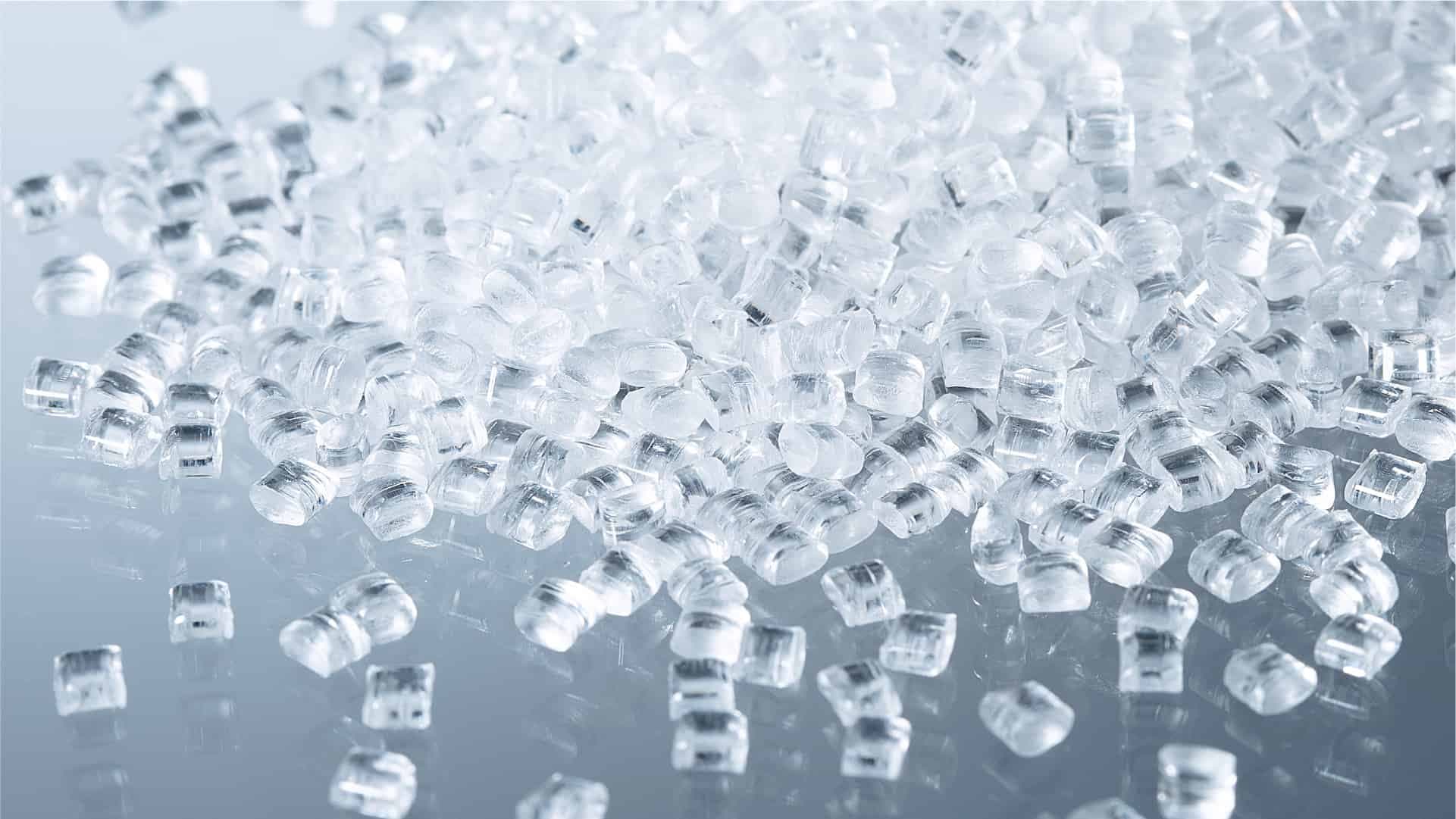
Polycarbonate (PC) resin is an engineering thermoplastic polymer family characterized by carbonate linkages in the main chain and a combination of high optical clarity, high impact strength, dimensional stability, and heat resistance that positions it between commodity plastics and high-performance polymers. Commercial PC is dominated by bisphenol-A polycarbonate (BPA-PC), supplied as neat resin and as formulated compounds where performance is tuned for flame retardancy, UV durability, hydrolysis resistance, scratch resistance, optical grade purity, or targeted rheology for injection molding and extrusion. In material terms, the resin is a base polymer plus a controlled additive package: thermal stabilizers, antioxidants, UV absorbers, mold-release agents, pigments, impact modifiers, flame retardants (halogen-free phosphorus systems are common in many electronics grades), and where required fillers or reinforcing fibers; PC is also widely sold as blends (notably PC-ABS, PC-PBT, and PC-PET) to balance low-temperature toughness, processability, chemical resistance, and cost.
Industrial PC production is executed via two mature chemistries that determine plant design, cost structure, and impurity profile. The legacy, large-scale route is interfacial polymerization using phosgene and BPA in a biphasic system, delivering high molecular weight resin with strong optical performance but requiring stringent handling of phosgene, chlorinated solvents, and salt byproducts. The increasingly favored alternative is melt transesterification (non-phosgene) using BPA and dialkyl/diphenyl carbonate (commonly diphenyl carbonate), which avoids phosgene and can offer a cleaner environmental footprint, but demands tight control of catalysts, vacuum, and devolatilization to achieve target molecular weight while suppressing discoloration and residual volatiles. After polymerization, the resin is melt-filtered, devolatilized, and pelletized; many grades then undergo compounding in twin-screw extrusion to incorporate additives and modifiers, followed by pellet finishing, drying specifications, and product certification. Manufacturing quality is controlled through molecular weight distribution (melt flow rate or intrinsic viscosity), residual monomers/oligomers, volatiles, yellowness index, haze and transmittance for optical grades, moisture and hydrolysis stability, and mechanical and thermal benchmarks (impact, tensile, HDT/Vicat, flammability ratings such as UL 94 where relevant), because small deviations directly translate into molding window stability, optical defects qb, and long-term durability in the field.
The PC resin value chain begins with petrochemical aromatics and phenol-acetone chemistry feeding BPA production, and with carbonyl sources supplying phosgene or carbonate intermediates (including the upstream integration that enables diphenyl carbonate availability). Resin producers convert these feedstocks into base PC and a portfolio of specialized grades, typically supported by application engineering, regulatory compliance documentation, and long-cycle qualification with OEMs for electrical/electronics, automotive, medical, and building applications. Compounders and converters (injection molders, sheet and film extruders, profile extruders, and thermoformers) translate resin into parts and semi-finished products such as glazing sheets, lighting optics, electrical housings, connectors, battery and charging components, medical device housings, and protective equipment, with downstream performance shaped by design for stress cracking, heat aging, and flame retardancy as well as by mold design and drying discipline (moisture control is critical for PC). End markets are sensitive to regulatory dynamics (food-contact, medical biocompatibility, E&E fire safety, BPA-related restrictions) and to sustainability requirements, so recycled and mass-balance PC pathways are increasingly embedded in procurement; mechanically recycled PC is viable in many non-optical and less demanding applications, while chemical recycling and depolymerization routes are being developed to recover monomers or carbonate intermediates where closed-loop quality is required.
Regionally, China remains the structural growth engine of PC resin production value, moving from US$8.87 billion in 2025 to US$10.31 billion in 2026, supported by downstream absorption in consumer electronics, electrical and electronics, and automotive chains; by 2032, China is expected to sustain a low-single-digit growth profile on an expanded base. Europe and North America are forecast to grow more steadily from US$3.10 billion and US$2.36 billion in 2025 to US$3.48 billion and US$2.66 billion in 2026, respectively, reflecting a more mature end-market mix and tighter environmental and permitting constraints that shape capacity expansion and operating rates.
By process route, the market continues to tilt toward non-phosgene PC, which is positioned as the primary incremental growth pool in value terms. Non-phosgene production value is estimated at US$10.10 billion in 2025 and US$11.71 billion in 2026, versus US$8.41 billion and US$9.43 billion for phosgene PC, respectively. The relative momentum of non-phosgene is underpinned by regulatory pressure, customer ESG procurement screening, and the steady industrialization of alternative process platforms, while phosgene PC remains competitively entrenched in established commodity-to-engineering grades where scale economics and product qualification histories are decisive.
From the demand side, electronic appliances remain the dominant value sink, expanding from US$8.75 billion in 2025 to US$9.91 billion in 2026, reflecting both volume resilience and a continuing shift toward higher-specification grades for housings, optical components, and electrical safety applications. Automotive follows as the second pillar, rising from US$3.38 billion to US$3.90 billion over the same period, with growth tied to lightweighting, EV interior and exterior applications, and glazing and lighting design trends. Construction and packaging show a more tempered trajectory in 2026, with performance driven less by step-change volume growth and more by regional project cycles, substitution dynamics, and compliance-driven material selection.