Automobile & Transportation
Driver-Occupant Monitoring Systems (DMS-OMS) Moving from Optional Features to Mandatory Compliance: Expanded Cockpit Awareness Drives Nearly $19.8 Billion Growth Path to 2032
21 January 2026
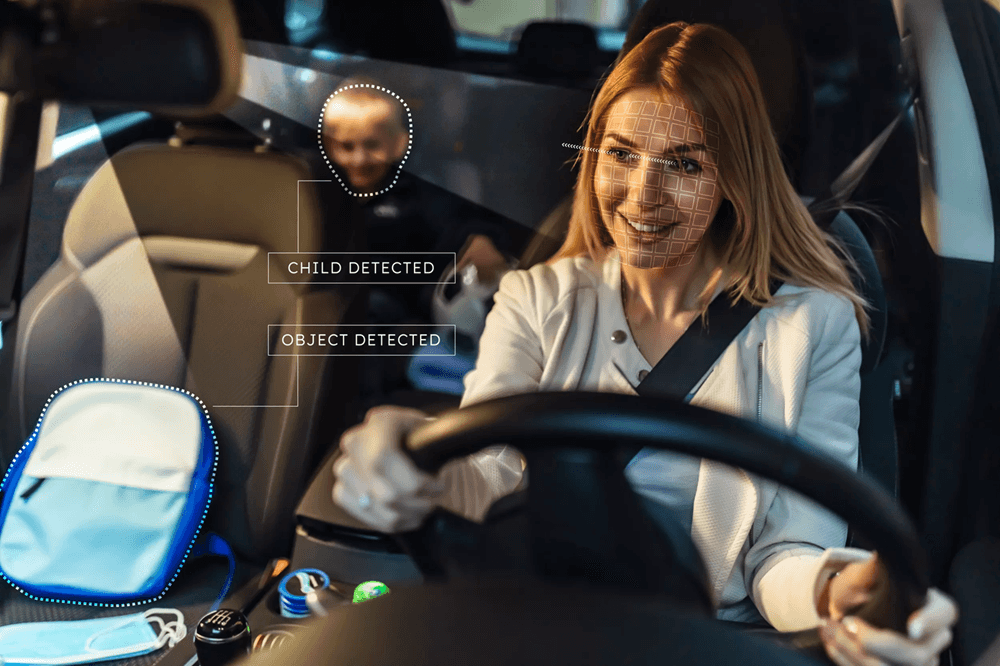
January 21, 2026—According to APO Research’s latest 2026 report, the global Automotive Driver-Occupant Monitoring System (DMS-OMS) market delivered about US$2.5 billion in 2025; it is expected to reach around US$3.5 billion in 2026 and approach US$19.8 billion by 2032, implying a projected CAGR of approximately 34% from 2026 to 2032. In day-to-day OEM sourcing, DMS-OMS is no longer treated as a nice-to-have cockpit feature; it is increasingly specified as a safety and compliance enabler that influences vehicle safety ratings, platform E E architecture decisions, and how occupant-state signals are consumed by restraint, HMI, and driver-assist systems across the vehicle.
Automotive Driver-Occupant Monitoring Systems are in-cabin safety functions that sense the driver’s attention state and the occupants’ presence, position, posture, and belt and child-related status, then publish machine-readable state estimates to downstream consumers such as the restraint controller, HMI, and driver-assist domain controllers. They are not braking or steering systems; they are perception and interpretation layers that run on automotive compute and provide bounded, validated state variables to other functions through well-defined interfaces and fault-containment boundaries. In production vehicles, DMS-OMS is delivered as tangible hardware plus embedded software, typically combining imaging and or radar sensor modules with controlled illumination where applicable, seat-sensing elements integrated into the seating system, and an ECU or domain controller that executes real-time vision and signal-processing pipelines under automotive functional-safety, SOTIF, and cybersecurity engineering processes.
A typical architecture is organized around three tiers. First, sensor nodes capture in-cabin observables. Near-infrared imaging is the dominant modality for driver monitoring because it can resolve facial landmarks, eyelids, pupils, and head pose across day and night conditions; camera modules commonly pair NIR sensors and band-pass optics with 850 or 940 nm illumination, with optical power and duty-cycle managed to meet applicable eye-safety and photobiological safety requirements and with on-board diagnostics tracking thermal behavior, aging, and contamination. Occupant monitoring extends sensing beyond the driver and is implemented through wide-FOV NIR cameras for cabin coverage, seat-sensing chains such as load cells, pressure films, buckle status and position encoders for occupant classification and restraint logic, and, in some designs, in-cabin millimeter-wave radar to detect fine motion and micro-Doppler signatures for presence and life-sign proxies under soft occlusions such as blankets. Second, transport links convey signals to compute. Camera streams are carried internally over CSI-2 or over serialized links such as GMSL or FPD-Link to a domain controller, while radar and seat-sensing signals arrive as Ethernet, CAN FD, or LIN frames; timestamps are synchronized via hardware triggers or PTP-style mechanisms to support multi-sensor fusion. Third, compute executes perception and fusion and exposes state to the vehicle, ranging from smart-camera implementations running embedded inference to centralized domain or zonal controllers consolidating multiple cabin sensors; in all cases, production interfaces emphasize typed state outputs rather than raw imagery.
The sensing modalities admit a production-grade taxonomy. Camera-only refers to NIR imaging, optionally extended with depth via stereo, time-of-flight, or structured light, and remains the canonical path for DMS while also supporting OMS posture and belt analytics in many platforms. Radar-only refers to in-cabin 60 or 77 GHz sensing used for occupant presence and micro-motion detection; it is not a substitute for ocular-feature-based attention estimation and is therefore not used to infer eyelid state or gaze with the same fidelity as camera-based DMS. Seat-sensing-only refers to the occupant classification chain integrated into seats and buckles that feeds restraint logic with weight, belt usage, and position descriptors and remains foundational for airbag enable disable decisions. Sensor fusion refers to combinations such as camera plus seat sensing for robust restraint decisions, radar plus camera for occlusion-tolerant child-presence detection, or three-way fusion for premium packages, implemented with time-aligned tracks, plausibility checks, and deterministic degradation strategies when one input is unavailable or out of bounds.
The algorithmic stack begins with signal conditioning, synchronization, and camera ISP tuned for NIR scenes, including flicker mitigation for 100 and 120 Hz LED lighting and HDR exposure control to handle sun-loads, tunnels, and backlighting. Driver pipelines detect and track the face, regress landmarks, estimate head pose by solving a PnP model against a generic or personalized face mesh, compute eyelid aperture and blink statistics, and infer gaze vectors relative to the road; temporal logic then derives attention and drowsiness indicators such as eyes-off-road duration, fixation behavior, head-down time, frequent-blink patterns, and yawning proxies. Occupant pipelines detect seats, occupants, and child seats, infer seating position and leaning posture, reconcile buckle status from the vehicle network, and, when radar is present, estimate presence and micro-motion consistent with breathing; seat-sensing chains estimate weight and center-of-mass with compensation for foam hysteresis and temperature effects. Fusion layers reconcile competing hypotheses, enforce spatial consistency, and output stable state variables with confidence and freshness metadata. Robustness measures target sunglasses, masks, hats, glare, night driving, and partial occlusions through NIR-specific preprocessing, augmentation strategies, and out-of-distribution detection. Software is optimized for quantized or fixed-point inference on automotive SoCs with NPUs, DSPs, and GPUs under bounded end-to-end latency budgets, so warnings and downstream gating decisions are timely and repeatable.
Installation and calibration constrain achievable accuracy and must be treated as first-order engineering requirements. Driver cameras are typically placed in the interior mirror shroud, cluster brow, or steering-column cover to minimize parallax and steering-wheel occlusion while maintaining optical axis and working distance; wide-FOV occupant cameras are often mounted in the overhead console or headliner and, for larger cabins, may be positioned to cover rear rows. In-cabin radar modules are commonly installed in the headliner center to view the cabin volume while controlling multipath and interference, and seat-sensing transducers are integrated into seat pans, rails, and buckle assemblies and must be aligned to restraint logic through vehicle-level calibration. Each installation requires intrinsic and extrinsic calibration, illumination tuning where relevant, and self-tests at start-up and periodically in use, including checks for lens contamination or misalignment, emitter aging or open circuits, radar noise-floor drift or interference, and seat-sensing zero-point drift. Vehicle interfaces publish driver-attention and drowsiness state, eyes-off-road timers, occupant presence and classification, posture and position descriptors, belt status, and child-presence state, together with diagnostic trouble codes and freeze-frame data that enable manufacturing validation and field troubleshooting.
Safety, SOTIF, and cybersecurity govern development and validation. Functional-safety engineering allocates safety goals across sensors and compute, assigns ASIL targets consistent with the OEM’s chosen fallback strategies in the ADAS and restraint chains, and ensures freedom-from-interference between safety-related and non-safety software. SOTIF engineering addresses performance limitations without faults, covering edge cases such as sunglasses and heavy tint, blankets and child seats, cargo on seats, sun flares and reflections from glossy trim, and vibration on poor roads. Cybersecurity engineering covers secure boot, authenticated updates, key management, tamper-evident logging, and hardened network interfaces. Field diagnostics typically include occlusion or saturation detection, illumination current deviations, calibration validity, radar interference, and seat-sensing plausibility checks against occupant and belt contradictions; degradation strategies may include reduced-capability modes with driver prompts, selective suppression of certain outputs, and controlled handover to alternative proxies where available.
Performance engineering is expressed in measurable, repeatable metrics rather than qualitative claims. For DMS, OEM scorecards commonly track gaze or attention classification accuracy, eyelid-state detection and blink timing, head-pose error, eyes-off-road and distraction-duration detection, false-positive and false-negative rates, capture-to-publication latency, and robustness across eyewear, masks, and diverse facial characteristics under specified illuminance and temperature ranges. For OMS, performance focuses on seat-occupancy sensitivity and specificity, occupant-classification confusion matrices across adults, children, and CRS variants, posture and position precision sufficient for restraint tuning, belt detection reliability, and child-presence detection probability under occlusions and minimal motion. Environmental qualification covers automotive temperature, vibration, electrical stress, and EMC ESD behavior with production diagnostics, while data coverage is engineered across geographies, demographics, seating configurations, and interior accessory variations to avoid biased performance and brittle regressions.
Human-machine interaction and vehicle integration close the loop. Attention and drowsiness warnings are staged to minimize nuisance while preventing complacency through clear escalation and cancellation logic; occupant findings drive restraint decisions, belt reminders, and cabin notifications such as child-presence alerts when the vehicle is locked. In integrated ADAS stacks, DMS outputs are increasingly consumed by feature-availability management, takeover strategy, and alerting logic, rather than acting as direct control of braking or steering. Data-handling architectures typically favor on-device processing and state-only publication, so downstream systems consume bounded variables rather than raw imagery unless explicit purpose, consent, and policy permit otherwise.
Deployment patterns differ by segment and channel. In passenger cars, DMS is now mainstream and largely camera-based, while OMS ranges from camera plus seat-sensing in volume segments to fusion with in-cabin radar for occlusion-tolerant child-presence detection in higher trims. In commercial vehicles, the dominant form is camera-based DMS delivered either as factory-installed modules tied to the driver-assist stack or as integrated aftermarket units focused on alerts and fleet event capture; OMS concentrates on belt and occupancy compliance, with radar used selectively. Across both segments, architecture is shifting from isolated smart-camera islands toward domain and central compute, supported by deterministic networking and time synchronization that simplify multi-sensor fusion, over-the-air updates, and lifecycle management.
From a systems viewpoint, DMS-OMS succeeds when it behaves like a dependable sensor suite rather than a monolithic black box. Hardware must be serviceable and diagnostically transparent; software must be explainable through intermediate states, confidences, and clear failure-mode behavior; interfaces must remain stable across vehicle variants; and the overall function must degrade gracefully. The most resilient production designs pair the modality that uniquely solves the driver problem—camera-based ocular and head-pose sensing—with modalities that best resolve occupant presence and posture—seat-sensing and, where appropriate, in-cabin radar—and fuse them on a controller integrated into the vehicle’s safety case. This preserves the essential boundary: DMS-OMS perceives and informs, while the vehicle’s driver-assist and restraint systems decide and act.
Procurement reality also explains why the market monetizes as systems rather than software alone. Winning programs typically require a shippable, vehicle-grade package that combines an infrared camera and illumination subsystem, perception algorithms, compute and interface integration in the cockpit domain, and a validation narrative that survives edge cases such as night driving, glare, partial occlusions, cabin clutter, and diverse occupant postures. OEM and Tier 1 buyers tend to judge suppliers by failure-mode behavior, stability across variants, and the cost and discipline of sustaining the model and calibration lifecycle over multiple model years.
APO Research’s unit view reinforces the industrialization curve: roughly 9.7 million systems shipped in 2025, expected to rise to about 16.0 million in 2026, and likely to exceed 87 million by the end of 2032. Scaling to that level introduces predictable constraints, including BOM compression, sensor and optics supply consistency, cockpit compute budgets, and the non-trivial cost of data curation, labeling, and regression testing that must keep pace with new platforms and interior designs.
The supplier landscape remains concentrated, but competitive dynamics are shifting toward integration capability and delivery reliability. APO Research estimates the global top five accounted for about 70% of the market in 2025, with the top three at roughly 56%, led by Valeo, Aumovio (Continental Automotive), and Magna alongside Denso and Hyundai Mobis across many mainstream platform awards; the top-five share in 2026 is projected to remain around 70% in practice. At the same time, Desay SV, Minieye Technology, Foryou, INVO Automotive Electronics, and others are increasingly visible in selected regional programs where local engineering support, fast integration cycles, and cockpit-domain collaboration are decisive.
From a technology standpoint, camera-led architectures still dominate value in 2025 at well above 90%, anchored by infrared imaging as the primary sensing modality. Radar remains smaller in revenue, yet strategically important for occupant presence in occlusion-heavy scenarios and for certain privacy-sensitive design choices, most often deployed as a complementary input in sensor-fusion designs rather than a full replacement. Geographically, Europe was the largest market in 2025 at about US$0.9 billion, followed by China at about US$0.6 billion and North America at about US$0.4 billion, reflecting how regulatory tempo, platform architecture, and local supply chains jointly shape where DMS-OMS scales fastest through the forecast period.