Chemical & Material
Thermoplastic Polyester Elastomer (TPEE)are moving towards higher specifications: price support outweighs volume growth, with automotive and electronic platforms driving growth until 2031.
30 December 2025
December 30, 2025—According to the latest report from APO Research in 2026, The global Thermoplastic Polyester Elastomer (TPEE) market reached USD 1,221.7 million in 2024, supported by total production of 210.3 kt. After a brief volume adjustment in 2025, the market is projected to expand steadily, reaching USD 2,118.9 million by 2031, corresponding to a 2025–2031 revenue CAGR of 9.20% and a production CAGR of 6.43%, reflecting a structurally price-supported growth trajectory rather than pure volume expansion.
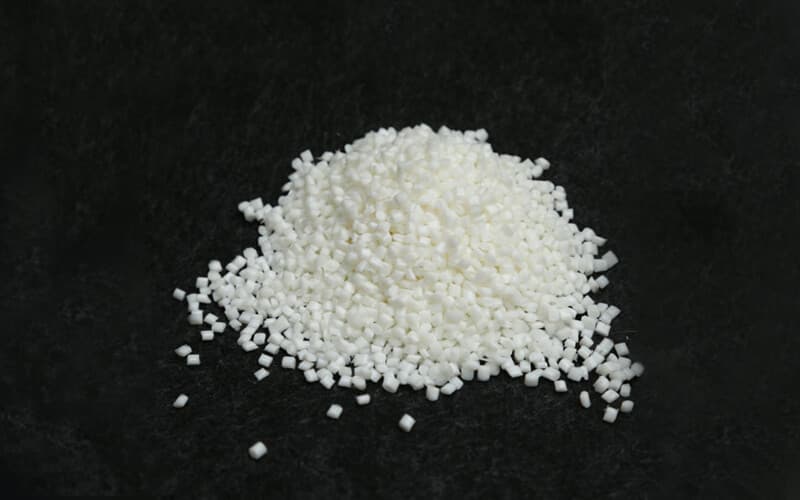
Thermoplastic polyester elastomer (TPEE) is a class of segmented block copolymers in which semicrystalline polyester “hard” segments, typically based on poly(butylene terephthalate) or related aromatic polyesters, are chemically linked to flexible “soft” segments derived from aliphatic polyester or polyether diols, forming a microphase-separated morphology that combines melt-processable thermoplastic behavior with rubber-like elasticity at service temperatures. The crystalline polyester domains provide tensile strength, stiffness, heat resistance and dimensional stability, while the amorphous soft segments impart high resilience, flex-fatigue resistance, low-temperature flexibility and good impact performance across a broad hardness range (roughly Shore D 30–70). Because the elastomeric properties arise from physical (reversible) phase separation rather than chemical crosslinking, TPEEs can be processed and reprocessed by conventional thermoplastic methods such as injection molding, extrusion, blow molding and profile coating, and they are recyclable as thermoplastics. Compared with many other thermoplastic elastomers, TPEEs offer a distinctive balance of mechanical strength, creep and fatigue resistance, and resistance to oils, fuels, many solvents and hydrolysis, making them widely used in automotive boots and bellows, constant-velocity joint parts, hoses and tubing, cable and fiber sheathing, industrial belts and conveyor components, engineered films and profiles, and other dynamic applications that require durable elastic performance under thermal and chemical stress.
From a regional perspective, Asia-Pacific remains the core demand center, accounting for 59.6% of global consumption in 2024, with total regional consumption of 125.2 kt, driven primarily by China, Japan, South Korea, India, and Southeast Asia. China alone consumed 70.8 kt in 2024 and is expected to exceed 106.5 kt by 2031, underpinned by automotive platforms, electrical connectors, and industrial extrusion applications. Europe represented 22.7% of global consumption in 2024, led by Germany, France, Italy, and Central & Eastern Europe, where automotive and industrial upgrading continue to support above-average value growth. North America accounted for 13.1% of global consumption, with the United States remaining the dominant end market, characterized by higher average selling prices and specification-driven demand.
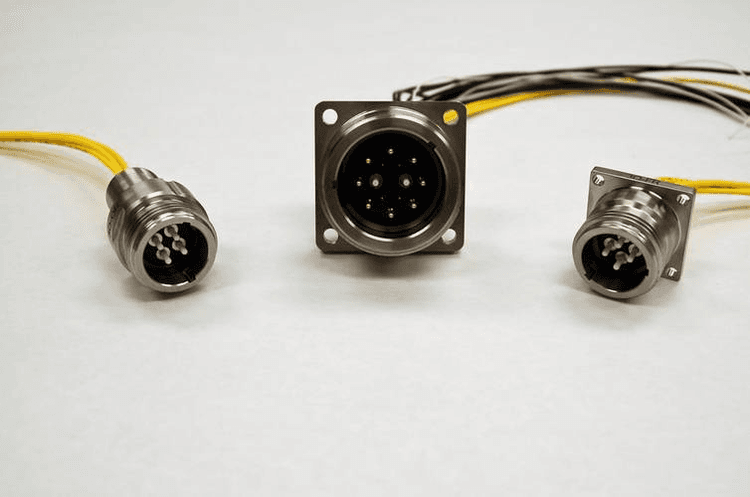
In terms of application structure, Automotive and Transportation is the single largest end-use segment, consuming 96.7 kt in 2024 and representing 44.8% of global revenue, reflecting TPEE’s entrenched role in high-fatigue, abrasion-resistant, and temperature-stable components. Electrical and Electronics is the fastest-growing value segment, supported by connector-adjacent parts, wire and cable systems, and precision components, with segment revenue expected to increase from USD 280.0 million in 2024 to USD 518.5 million by 2031. Industrial Products remain a structurally stable pillar, while Consumer Products continue to decline gradually as a share of total demand, reflecting TPEE’s progressive shift toward performance-critical applications.
By processing route, Extrusion grades dominate the market, accounting for 47.8% of total revenue in 2024, followed by Injection Molding grades at 45.0%, while Blow Molding remains structurally niche and continues to lose share over time. This processing mix underscores the material’s strong positioning in tubing, profiles, cable jacketing, and structural elastomeric components rather than packaging-type uses.
The competitive landscape is moderately concentrated at the high end and long-tailed at the regional level. In 2024, leading producers including Celanese, Envalior, SK Chemicals, Chang Chun Group, Jiangsu Heshili New Material, LG Chem, Toyobo, Samyang, and Radici Group collectively accounted for the majority of global supply, with Celanese alone producing 69.6 kt. In 2024, the top five manufacturers held 72.52% of the market for TPEE value. Pricing dispersion remains pronounced, reflecting differences in grade positioning, regional mix, and customer certification depth, with global average prices increasing from USD 5,810/t in 2024 to over USD 7,060/t by 2031.
Overall, the TPEE market is transitioning from a phase of rapid volume expansion to one of quality-driven growth, characterized by tighter application specifications, rising certification barriers, and increasing emphasis on durability, lifecycle performance, and regulatory compliance. Future growth will be shaped less by capacity additions alone and more by application substitution dynamics, platform-level adoption in automotive and electronics, and the ability of suppliers to deliver engineered grades with consistent global supply and pricing discipline.