Pharma & Healthcare
GLP-1: A Global Therapeutic Trend Moving from $50 Billion to $500 Billion
01 December 2025
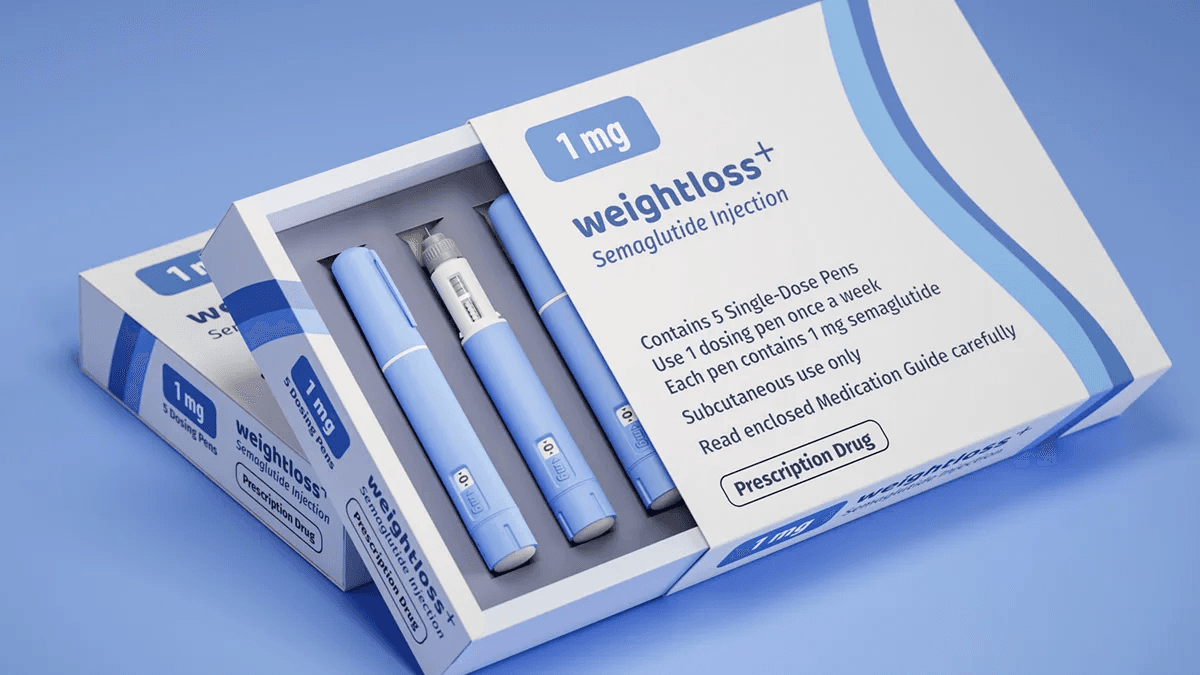
According to APO Research, The global market for GLP-1–based prescription therapeutics expanded to US$54,015.22 million in 2024 and is forecast to reach US$482,068.71 million by 2031. Growth is overwhelmingly volume-led: treated patient-months rise from 106,199.35 thousand in 2024 to 886,728.17 thousand by 2031 (2025–2031 CAGR 34.51%), while the global average realized net price per patient-month remains broadly stable around the low-US$500s, edging from US$508.62 in 2024 to US$543.65 in 2031 (2025–2031 CAGR 0.93%). Long-acting agents define the category. They account for 94.8% of 2024 revenue (US$51,185.09 million) and 92.5% of patient-months, and are projected to capture 99.6% of revenue and 99.4% of patient-months by 2031, as daily formulations normalize into a durable but small tail.
By clinical application, type 2 diabetes remains the anchor of demand and value, contributing US$31,118.80 million in 2024 (57.6% share) and an estimated US$302,964.94 million by 2031 (62.8% share; 2025–2031 CAGR 35.94%). Cardiovascular-risk reduction adds a second pillar with US$15,981.61 million in 2024 and US$94,741.75 million by 2031 (share ~19.6%; CAGR 29.13%) as guideline adoption broadens. Obesity is the fastest-compounding use case, increasing from US$6,914.81 million in 2024 to US$84,362.02 million by 2031 (CAGR 46.51%); pricing bands sit near type-2-diabetes levels, so value growth tracks patient-month accumulation rather than list-price inflation.
Regional dynamics remain asymmetric but consistent with scale-up. North America generates the majority of absolute revenue and is expected to grow from US$37,022.03 million in 2024 (68.6% of global revenue) to US$324,554.51 million by 2031 (67.3% share; 2025–2031 CAGR 35.82%), supported by rapid initiation, strong persistence, and mature coverage frameworks. Europe increases from US$8,939.52 million to US$83,227.41 million over the same period (share rising from 16.6% to 17.3%; CAGR 34.94%) as reimbursement widens and delivery constraints ease. Asia Pacific scales from US$7,054.39 million to US$66,380.86 million (share from 13.1% to 13.8%; CAGR 36.85%) as local access pathways, hospital procurement norms, and cold-chain infrastructure adapt to weekly volume. South America and the Middle East & Africa together remain small in value terms but grow from a combined US$999.28 million in 2024 to US$7,905.93 million by 2031 as tenders and public coverage expand.
Industry structure is highly concentrated and capacity-driven. In 2024 Novo Nordisk and Eli Lilly together accounted for the vast majority of global GLP-1 revenue, at US$31,752.39 million and US$21,719.30 million respectively, with all other participants materially smaller. The mix reflects the dominance of weekly semaglutide and dulaglutide franchises alongside the rapid emergence of next-generation incretin programs that build on a GLP-1 backbone. Manufacturing scale in peptide synthesis, device/pen assembly, and sterile fill-finish remains the near-term governor of growth; as new trains, sites, and CDMO partnerships come online, deferred prescriptions convert to active therapy and persistence on treatment becomes the primary determinant of patient-months treated.